

In This Article
Everyone shops for jets. Nobody shops for the thing that quietly decides whether your hot tub costs £2 a day or £5. That thing is the heater, and choosing an energy saving hot tub heater is the single biggest lever on your running costs.

The timing matters, too. Ofgem’s price cap for October to December 2026 sets the average electricity rate at 26.32p per kWh. A heater pulling 1.8 to 2.2kW for hours on end isn’t a rounding error on that bill. For a hot tub heater for large 6 person spa use, where you’re warming roughly a tonne of water, it’s the main event.
This guide compares seven real six-seater tubs through the lens of their heating systems. It looks at the heater, the insulation and cover quality, the heating time per degree, and the heater cut-out safety features that stop a hot element becoming a hazard. Where I couldn’t verify independent review data, I say so rather than invent it.
What Is an Energy Saving Hot Tub Heater?
An energy saving hot tub heater is a heating system that warms spa water to around 40°C using as little electricity as possible. It usually pairs an efficient element, or a heat pump, with good insulation, a timer and a thermal cover. Together these cut the energy lost between heating cycles.
Quick Comparison: Energy Saving Hot Tub Heater Options at a Glance
Here is the field before we dig in. Prices are indicative ranges from retailer listings at the time of research. Check current price before buying, as prices may vary.
| Product | Heater and heat-up rate | Build | Best For | Price range |
|---|---|---|---|---|
| Wave Como 6 Person Eco Foam | 1,800W eco heater, about 1.5°C/hr | Rigid foam walls | Low running costs, regular use | Around £1,000–£1,200 |
| MSpa Duet Eco | 1.5–2.0°C/hr | Drop-stitch inflatable | Budget six-seater | Around £600–£700 |
| MSpa Mono-Eco | 1.5–2.0°C/hr | Inflatable | Mid-range value with app control | Around £700–£850 |
| MSpa Tribeca | 1.6–2.2°C/hr | Inflatable, 850L | Faster warm-up | Around £1,400–£1,600 |
| Lay-Z-Spa Carrara AirJet 6 | Integrated UltraFit heater | Rigid foam construction | Space-saving, smart control | Check current price |
| Wave Pacific 6 | Integrated heater, 40°C max | Inflatable | Simple plug-and-play | Check current price |
| Lay-Z-Spa Paris AirJet 6 | Pump-integrated, 12–24 hrs from cold | Inflatable | Heat, filter and massage together | Check current price |
Look at the pattern. The foam-walled options (Wave Como 6 Person Eco Foam, Lay-Z-Spa Carrara AirJet 6) are priced as long-term investments. The inflatables win on upfront cost but rely heavily on the cover. If you’ll soak most weekends, the foam tub’s lower heat loss tends to repay its premium. If you’ll use it a few times a season, MSpa Duet Eco keeps your outlay modest. Those saving hours, not pennies, should look at MSpa Tribeca.
💬 Just one click — help others make better buying decisions too!😊
Top 7 Energy Saving Hot Tub Heater Picks for a 6 Person Spa: Expert Analysis
1. Wave Como 6 Person Eco Foam — foam walls that hold heat like a flask
The headline trick is the rigid foam wall. A PU-insulated core wraps the water, and Wave claims up to 50% better thermal efficiency than standard portable tubs.
The integrated 1,800W eco heater is rated to warm water at about 1.5°C an hour up to a 40°C ceiling. That is roughly 40 minutes per degree. With 985 litres to heat, it’s a marathon runner, not a sprinter. Wave’s published figure of about 8 kWh a day for a foam spa works out near £2.10 a day to hold temperature at 26.32p per kWh.
Based on the spec comparison, this suits households who soak most weekends and leave the tub ticking over under its cover. It isn’t built for impulse soaks from cold, so plan a day ahead.
Reviewers’ feedback is thin on independent sites. Wave’s own page hosts an owner who upgraded from an inflatable and calls it sturdier and roomier. That’s brand-hosted, so treat it as indicative. I couldn’t verify a large independent review set, so check recent verified purchaser reviews.
Pros:
- ✅ Foam walls cut heat loss noticeably
- ✅ Steady heater suits regular-use households
- ✅ Wi-Fi control for scheduling heating
Cons:
- ❌ Slow from cold, around 40 minutes per degree
- ❌ Highest upfront cost on the shortlist bar one
Price: around £1,000–£1,200 at the time of research; check current price. Verdict: strong value if running costs drive your decision, overkill for occasional use.

2. MSpa Duet Eco — cheapest way into a six-seater
The standout is the price-to-capacity ratio. This is a 5cm drop-stitch inflatable with six-layer material that seats six without a four-figure outlay.
MSpa lists a heat-up rate of 1.5–2.0°C an hour to a 40°C maximum, which is 30 to 40 minutes per degree. The 138 air jets run at three intensity levels, and the MSpa app 2.0 handles scheduling. I didn’t find the Duet’s heater wattage in the listing. Other six-person MSpa models I checked list 2,200W, which suggests the same class of element.
On paper, a faster heat-up than the Como means the Duet suits people who switch it on Friday morning for a Friday night soak. The trade-off is that inflatables lose heat faster, so the cover does more of the work (see the insulation section).
I couldn’t verify aggregated review sentiment for this exact model, so I won’t characterise it. Read recent verified reviews for long-term cover and valve durability.
Pros:
- ✅ Lowest upfront cost of the seven
- ✅ Faster heat-up than foam-wall rivals
- ✅ App control and timer scheduling
Cons:
- ❌ Inflatable walls lose heat quicker
- ❌ Cover quality drives real running costs
Price: around £600–£700 at the time of research; check current price. Verdict: good value for weekend users who’ll use the cover religiously.
3. MSpa Mono-Eco — the sensible middle child
The hook here is balance. It delivers the same 138-jet, six-seat experience as the Duet but in a styled, WiFi-controlled package.
It shares the 1.5–2.0°C an hour heat-up rate and 40°C maximum, with a 1,800 litres per hour filter pump. At the slow end that’s 40 minutes per degree. A good pump flow matters for energy saving because water that circulates well heats evenly. The element isn’t forced into hot spots, and the filter is less likely to clog and make the pump work harder.
What most buyers overlook is the app: remote scheduling lets you warm the tub only when needed. Used well, it can save more than any spec upgrade. Pair it with a thermal cover and floor mat.
Independent review sentiment for this specific model wasn’t something I could verify, so I’ll point you to verified purchaser reviews instead of guessing.
Pros:
- ✅ WiFi control enables smart scheduling
- ✅ Strong 1,800L/hr filter flow
- ✅ Same heat-up rate as pricier tubs
Cons:
- ❌ Needs a good cover to be efficient
- ❌ Little real difference from the cheaper Duet
Price: around £700–£850 at the time of research; check current price. Verdict: worth the small step up only if the styling or WiFi control matters to you.
4. MSpa Tribeca — the faster-warming premium inflatable
Its standout is speed. MSpa quotes 1.6–2.2°C an hour, the quickest published rate in this group. That’s roughly 27 to 38 minutes per degree.
The 850-litre capacity helps. Less water means fewer kilowatt-hours to move each degree, and the energy-saving timer and anti-icing system manage idle time and cold snaps. With 120 jets rather than 138, it trades a little bubble coverage for a smaller, easier-to-heat volume.
Here’s the practical reading. If you want to decide at 4pm and soak at 8pm, this is the most realistic of the seven. Even so, a cold start in winter will still take many hours, as with every portable tub.
I couldn’t verify independent aggregated reviews for the Tribeca, so check current buyer reviews. Note that the capacity is smaller than some rivals, which affects how roomy six adults will feel.
Pros:
- ✅ Fastest published heat-up rate here
- ✅ Smaller water volume, lower energy per degree
- ✅ Anti-icing and energy-saving timer included
Cons:
- ❌ Highest price among the inflatables
- ❌ Tighter space with six adults
Price: around £1,400–£1,600 at the time of research; check current price. Verdict: pays off for spontaneous soakers, harder to justify for planners.
5. Lay-Z-Spa Carrara AirJet 6 — rigid foam plus a space-saving heater
The hook is the combination of rigid foam construction with an integrated UltraFit heater, in a compact 1.7m square footprint.
It offers 140 AirJets, a digital panel and WiFi app control, plus a two-year guarantee. The brand positions its range as energy efficient, and the rigid walls should hold heat better than air-filled sides. I couldn’t find a published heater wattage or heat-up rate for this model, so I can’t give you a minutes-per-degree figure without inventing one.
Pairing foam walls with an integrated heater suggests a design aimed at lower idle losses. Note that Lay-Z-Spa advises that if you soak three or more times a week, leaving the heater active at your preferred temperature is the cheapest way to run it.
On review sentiment: the brand cites strong Trustpilot and Amazon ratings, but that’s its own claim. I couldn’t independently verify model-specific reviews.
Pros:
- ✅ Rigid foam construction aids insulation
- ✅ Compact footprint for small gardens
- ✅ WiFi app control and digital panel
Cons:
- ❌ Heater wattage and heat rate not published
- ❌ Seats fewer comfortably than the larger tubs
Price: check current price; foam-wall models tend to sit above basic inflatables. Verdict: a tidy choice for smaller gardens if you value the brand’s support.
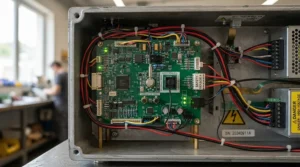
6. Wave Pacific 6 — plug-and-play with an integrated heater
Its standout feature is simplicity. It comes with an integrated heater and a 40°C rapid heating system, and the listing promises 130 air jets for a six-person capacity.
Wave’s Pacific specification elsewhere lists an 1,800W eco heater, 910 litres for the six-person size, and a 4.5m cable with an RCD plug. That RCD matters for safety and is covered in the cut-out section below. I couldn’t find a published heat-up rate for the Pacific, so I’d assume roughly the same ballpark as other 1,800W portable heaters while checking Wave’s current manual.
Wave publishes about 16 kWh a day for an inflatable spa. At 26.32p per kWh that’s roughly £4.20 a day, double the foam Como’s figure. That gap is the cost of cheaper walls.
I couldn’t verify independent aggregated reviews for this model.
Pros:
- ✅ Simple setup, integrated heater
- ✅ RCD plug supplied on the cable
- ✅ Two-year guarantee noted on the listing
Cons:
- ❌ Daily running cost double the foam Como
- ❌ Heat-up rate not published
Price: larger inflatables typically sit in the £500–£800 bracket according to HouseholdMoneySaving’s 2026 round-up; check current price. Verdict: acceptable if you’ll add a good thermal cover.
7. Lay-Z-Spa Paris AirJet 6 — heat, filter and massage in one go
The hook is that the pump heats the water, filters it and runs the massage system simultaneously.
Lay-Z-Spa says to expect 12 to 24 hours to heat cold water to 40°C, and a cover on speeds it up. That’s a wide window, and honest. Starting water temperature and weather decide where you land. Lay-Z-Spa also publishes a figure of about 2,050W for its heater element on the heat setting, and 600W when only inflating or running the massage.
Analytically, “everything at once” is a convenience, not an efficiency gain. Bubbles cool the water, so you’ll still want to turn them off while heating from cold. The Paris’s honest advantage is simplicity.
I couldn’t verify independent aggregated reviews for this specific model.
Pros:
- ✅ Heating, filtering and massage run simultaneously
- ✅ Energy-saving features as standard
- ✅ Freeze Shield protects the pump in cold snaps
Cons:
- ❌ Wide 12–24 hour heat-up window
- ❌ Inflatable walls lose heat faster
Price: larger inflatables typically sit in the £500–£800 bracket; check current price. Verdict: a sensible, no-fuss choice for family use.
How to Choose an Energy Saving Hot Tub Heater for a Large 6 Person Spa
Choosing a hot tub heater for large 6 person spa use comes down to six steps.
- Decide how often you’ll soak. Three or more times a week favours a foam-wall tub held at temperature. Occasional use favours a cheaper inflatable you heat on demand.
- Read the heat-up rate, then do the sum. Divide 60 by the °C-per-hour figure. 1.5°C an hour means 40 minutes per degree. That tells you how far ahead to plan.
- Check the insulation, not just the heater. A strong element in a leaky tub is like filling a bath with the plug out.
- Confirm the heater cut-out safety features. Look for an overheat cut-out and an RCD on the supply.
- Look for a timer and app control. Scheduling stops you heating water you won’t use.
- Match the heater to your supply. Portable tubs run on a 13A plug. Hard-shell tubs with 3kW elements may need a dedicated circuit.

Heating Time Per Degree: What the Published Numbers Really Mean
Heating time per degree is the most practical number on any spec sheet. Divide 60 minutes by the °C-per-hour rate and you get your real wait. At 1.5°C an hour it’s 40 minutes per degree; at 2.0°C an hour it’s 30.
The physics gives a sanity check. Warming one litre of water by one degree takes about 1.16 Wh, so 985 litres needs roughly 1.15 kWh per degree. At the current cap that’s around 30p per degree before losses. Heating from 10°C to 40°C needs about 34 kWh, or roughly £9. An 1,800W heater running for 20 hours uses about 36 kWh, which matches the 1.5°C an hour claim nicely.
| Product | Published rate | Minutes per degree | Rough 10→40°C wait* | Best For |
|---|---|---|---|---|
| Wave Como 6 Person Eco Foam | 1.5°C/hr | 40 | About 20 hrs | Leave-on foam tub owners |
| MSpa Duet Eco | 1.5–2.0°C/hr | 30–40 | About 15–20 hrs | Weekend planners |
| MSpa Mono-Eco | 1.5–2.0°C/hr | 30–40 | About 15–20 hrs | App-scheduling users |
| MSpa Tribeca | 1.6–2.2°C/hr | 27–38 | About 14–19 hrs | Faster turnarounds |
| Lay-Z-Spa Paris AirJet 6 | 12–24 hrs from cold (brand estimate) | Not published | 12–24 hrs | Family use |
*Arithmetic from published rates in ideal conditions, not a guarantee. Lay-Z-Spa Carrara AirJet 6 and Wave Pacific 6 don’t publish a rate I could verify.
The table shows that real-world differences between the MSpa tubs are modest. A few minutes per degree adds up to hours across a cold start, though, which is why scheduling matters more than raw speed. The Energy Saving Trust notes Ofgem reviews the cap every three months, so your cost per degree will shift. The next change is due on 1 January 2027.
Insulation and Cover Quality: Where the Savings Are Hiding
Insulation and cover quality decide whether your heater runs in bursts or grinds all day. The heater replaces lost heat, so less loss means less heating.
Foam walls attack heat loss through the sides. Wave claims up to 50% better efficiency on its foam range. The other leak is the top. Lay-Z-Spa says a thermal cover can cut energy use by up to 40%, and that its tubs heat 17% faster and cool 25% slower. Those are brand claims, so read them as directional.
Here’s what to weigh:
- Cover fit. A cover with gaps is a chimney. Check the seal around the edge.
- Floor insulation. A floor protector or foam mat reduces heat loss into cold ground. Wave’s bundle pairs its tub with one.
- Wind and placement. A sheltered spot beats a windswept patio.
Insulation and cover quality also affect the heater’s lifespan. A heater that cycles less ages slower. If your budget is tight, spend on the cover before upgrading the heater.
Heater Cut-Out Safety: What Protects You and the Tub
Heater cut-out safety is the part nobody photographs for the brochure, and the part you’ll most want to work. A cut-out is a thermal safety device that switches the heater off if water overheats, separate from the normal thermostat.
One published spa-heater manual describes a manual-reset overheating thermostat that cuts out at about 50°C. To reset it, you switch off the RCD or circuit breaker for 15 to 30 minutes. The same document says that if the high-limit trips repeatedly, you shouldn’t use the tub until it’s serviced. That’s the rule worth remembering: repeated trips mean a fault, not a nuisance.
Spa heaters are covered by the product standard BS EN 60335-2-60 for whirlpool baths and spas. Look for CE or UKCA marking on any tub you buy.
Cold weather is the other safety factor. Lay-Z-Spa’s Freeze Shield runs the pump below 6°C. Wave advises moving its tubs indoors below 5°C, or protecting the heater unit from the elements. Never bypass a cut-out, and never run a heater dry.
Common Mistakes When Buying an Energy Saving Hot Tub Heater
Most regrets come from the same few errors.
- Buying on jets, not heat retention. More jets mean more bubbles, and bubbles cool water.
- Ignoring the cover. A cheap or ill-fitting cover can wipe out a heater’s efficiency.
- Heating from scratch every time. Reheating a cold tub is the costliest way to run it if you soak often.
- Assuming wattage equals speed. Volume, ambient temperature and insulation matter as much as watts.
- Skipping the safety checks. Confirm the RCD and cut-out arrangement before you plug in.
- Setting the thermostat too high. Every extra degree costs about 30p to add and more to maintain.
Each is avoidable with the checklist above.
Energy Saving Hot Tub Heater vs Heat Pump vs Standard Element
An energy saving hot tub heater can be a well-insulated integrated element, a hard-shell 3kW element, or a heat pump. They suit different tubs.
| Heater type | Typical power | Upfront cost | Running-cost direction | Best For |
|---|---|---|---|---|
| Integrated inflatable heater (e.g. MSpa Duet Eco) | About 1.8–2.2kW | Low | Moderate, cover-dependent | Occasional users |
| Foam-wall integrated heater (e.g. Wave Como 6 Person Eco Foam) | 1.8kW | Medium | Lower thanks to insulation | Regular users |
| Hard-shell 3kW element | 3kW | Element under £50 as a replacement part | Depends on tub insulation | Plumbed hard-shell tubs |
| Air source heat pump | Retailer lists 3–4kW output | Highest | Lowest, retailer claims up to 50% saving | High-use hard-shell and swim spas |
A heat pump moves heat rather than making it, so it can deliver more heat per unit of electricity. One UK retailer lists a 4kW model with a coefficient of performance up to 5, and 3.7 under stated test conditions. Treat those as maker figures that vary with weather. Heat pumps connect to plumbed tubs, so they aren’t an option for the integrated heaters in the portable tubs above.
The takeaway: for portable six-seaters, insulation is your realistic efficiency upgrade. For a hard-shell tub used heavily, a heat pump may repay its cost over several years.
✨ Don’t Miss These Exclusive Deals!
🔍 Take your hot tub heating to the next level with these carefully selected tubs. Click on any highlighted item to check current pricing and availability. These picks will help you create a warm, low-cost soak your family will love!

Long-Term Cost and Maintenance: The Real Total
Purchase price is only the entry fee. Running costs decide the total.
At 26.32p per kWh, Wave’s foam-spa figure of about 8 kWh a day is roughly £2.10, and its inflatable figure of 16 kWh is roughly £4.20. Over an eight-month season, that gap is substantial. Lay-Z-Spa publishes its own weekend-use costs, and HouseholdMoneySaving’s 2026 round-up puts inflatable running costs at roughly £60–£80 a month. These come from different methods, so use them as ranges.
Maintenance also moves the dial:
- Clean filters regularly. A clogged filter strains the pump and slows heating.
- Check the cover seal each season and replace it if it’s waterlogged.
- Keep water chemistry balanced. Scale on a heater element reduces efficiency.
Total cost of ownership favours foam and good covers if you use the tub often. If you use it rarely, a cheaper inflatable can win on total spend.
Features That Actually Matter (And Those That Don’t)
Features that matter:
- Insulation and cover quality. The biggest saving, bar none.
- A scheduling timer or app. Heat only when needed.
- Overheat cut-out and RCD protection. Non-negotiable.
- Filter pump flow. Good circulation heats evenly.
Features that don’t:
- Jet count. Sixty more bubble holes won’t warm the water.
- LED lights. Pretty, and a tiny load.
- Headline wattage on its own. Volume and insulation matter as much.
If your budget is limited, spend on the first list.
Practical Usage Guide: Cut Your Heating Time Per Degree
Setup and habits matter as much as the heater. Here’s a practical routine.
- Fill with hot tap water where you can. Lay-Z-Spa recommends it, and it skips hours of heating.
- Heat with the cover on and bubbles off. Bubbles cool the water.
- Insulate underneath. Use a floor protector or foam mat.
- Use the timer. Schedule heating to finish just before you soak.
- Hold a sensible set-point. 38°C versus 40°C saves energy every hour.
- Run the electrics correctly. Domestic hot tub supplies should be protected by a 30mA RCD, according to the IET’s guidance on domestic electrical supplies to hot tubs. Use a qualified electrician for hard-wired installs.
- Mind the first 30 days. Check the cover fit, test the RCD, and note how many hours your tub takes to heat.
Real-World Scenarios: Which Tub Fits Which Household?
The weekend family of five. Budget is moderate, and soaks happen Friday to Sunday. MSpa Duet Eco with a thermal cover and timer is the sensible fit. Schedule heating to finish Friday evening, and cover tightly between soaks.
The year-round couple who soak four nights a week. Frequent use favours holding temperature, so the Wave Como 6 Person Eco Foam makes sense. Its foam walls reduce idle loss, and at roughly £2 a day to hold heat, it can beat a leaky inflatable over a season.
The spontaneous host. You decide on the day and want it warm by evening. MSpa Tribeca‘s faster published rate suits this best. Add a floor mat and keep the cover on whenever it’s idle.
The small-garden household. Space is tight. Lay-Z-Spa Carrara AirJet 6 offers a compact foam-built option, while Lay-Z-Spa Paris AirJet 6 gives an inflatable alternative with all-in-one pumping.

FAQ
❓ How much does an energy saving hot tub heater cost to run per day?
❓ Is it cheaper to leave a hot tub heater on or switch it off?
❓ What heater size does a large 6 person spa need?
❓ Can I fit a heat pump to an inflatable hot tub?
❓ What should happen when a hot tub heater cuts out?
Conclusion
The best energy saving hot tub heater is rarely the one with the biggest wattage. It’s the one fitted to a tub that wastes the least heat. For heavy, regular use, the Wave Como 6 Person Eco Foam makes the strongest case thanks to its foam walls. For the lowest entry price, MSpa Duet Eco is the practical pick. If speed matters, MSpa Tribeca has the fastest published heat-up rate here. MSpa Mono-Eco, Lay-Z-Spa Carrara AirJet 6, Wave Pacific 6 and Lay-Z-Spa Paris AirJet 6 each suit a particular household, as the scenarios above show.
Whichever you choose, put the cover, insulation and heater cut-out safety checks on your shortlist before the jets. Prices and electricity rates change, so check current figures before you buy.
Recommended for You
- Hot Tub Electric Heater: 7 Proven Picks For UK Owners (2026)
- Hot Tub Pump Motor Vs Full Pump Replacement: 7 Smart Fixes (2026)
- Replacement Hot Tub Pump Motor: 7 Proven Fixes For UK Tubs (2026)
Disclaimer: This article contains affiliate links. As an Amazon Associate, I earn from qualifying purchases. If you purchase products through these links, we may earn a small commission at no additional cost to you.
✨ Found this helpful? Share it with your friends! 💬🤗
