
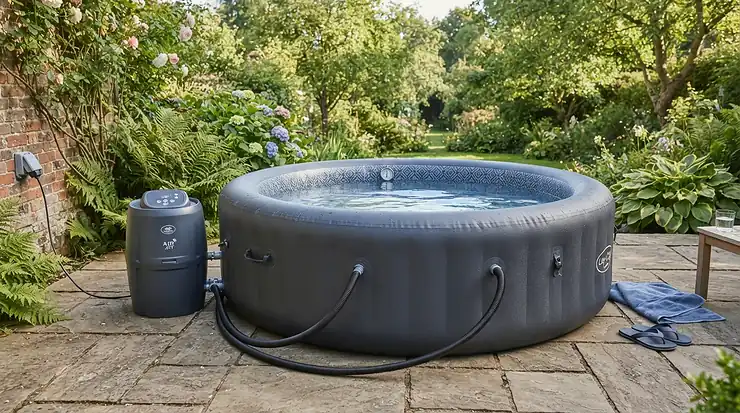
In This Article
Your hot tub electric heater is the unglamorous hero of every soak. The jets get the glory, but a humble 3kW element does the heavy lifting. It drags a thousand-odd litres of cold British tap water up to a civilised 38°C while the patio frosts over. When it fails, usually on the first properly cold weekend of the year, you find out how much you relied on it.
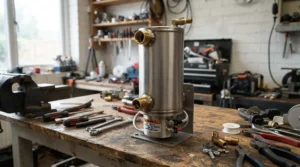
The trouble is that “hot tub electric heater” covers wildly different hardware. A flow-through assembly in a Balboa spa pack has little in common with the plug-in unit on an inflatable. A bare element is not an assembly, and neither is an auxiliary booster. Buy the wrong one and you’re out of pocket, with a tub that still won’t heat.
This guide cuts through that. It covers every angle: an electric heater for inflatable hot tub owners, a hot tub heater with thermostat replacement for hardwired tubs, and where to buy 230v 3kW hot tub heater parts without paying over the odds. It also looks at Lay-Z-Spa style heater units, the thermostat probe that tells your heater when to stop, and the dry-fire protection that stops a dry element cooking itself. One safety anchor before we start: HSE guidance on spa pools (HSG282) and UK trade bodies recommend a maximum water temperature of 40°C, so any heater you buy should be capable of respecting that ceiling.
Quick Comparison Table: Hot Tub Electric Heater Options at a Glance
Here is the whole field on one screen. Prices are ranges only and shift constantly, so check current listings before buying.
| Product | Type | Power | Best For | Price Range |
|---|---|---|---|---|
| Balboa M7 Plug n Click 3kW | Complete flow-through assembly | 3kW / 230V | Modern Balboa BP-series packs | Around £100-£150 |
| Balboa M7 58061 Metal Box 3kW | Complete flow-through assembly | 3kW / 230V | Older metal-box Balboa packs | Around £150-£180 |
| LX H30-R2 3kW | Flow-type heater with pressure switch | 3kW / 230V | Budget whirlpool/spa retrofits | Under £100 |
| Balboa 3kW Heater Element | Element only | 3kW / 230V | Confident DIY element swaps | Under £50 |
| Harvia HYB300230S | Auxiliary heater | 3kW / 230V | Wood-fired tubs needing a booster | Check retailer |
| Lay-Z-Spa Heater Pump Unit | Complete plug-in pump and heater | Model-dependent | Inflatable tub owners | Check retailer |
| Spa Workshop Lay-Z-Spa PTC 2kW | Heater assembly with sensors | 2kW | Repairing inflatable heater pumps | Under £100 |
The pattern is clear. Complete flow-through assemblies cost more but remove guesswork, because sensors and unions come in the box. Element-only parts are cheapest but assume the rest of the system is healthy. Inflatables sit in a separate world of plug-and-play units, where repair is often swap-the-module rather than rewire-the-pack.
💬 Just one click — help others make better buying decisions too!😊
Top 7 Hot Tub Electric Heater Picks: Expert Analysis
1. Balboa M7 Plug n Click 3kW — fastest drop-in swap for BP packs
The standout feature is the pre-wired plug. According to listings, the heater terminals connect straight to the circuit board, so there are no copper straps or terminal screws to fiddle with. That matters because over-tightened terminals are a classic cause of premature heater failure.
On paper, this is the sensible default hot tub heater with thermostat replacement for modern Balboa BP-series spa packs. UK listings cite BP601 and BP2100 compatibility. It uses an Incoloy element and Balboa’s M7 sensors, one at each end of the tube, which monitor both temperature and flow. Here is what the spec sheet won’t shout: sensor length varies between listings (12-inch on some, 24-inch on others), so match your existing part rather than trusting the headline wattage. One UK retailer also warns the unit is not compatible with the BP200 pack.
Public review depth is thin. I could only verify a couple of positive ratings on a European retailer’s page, so treat this as a solid-spec pick rather than a crowd-validated one. Who is it for? Anyone with a compatible BP pack who wants a clean, no-fuss swap.
Pricing sits around £100-£150 at most UK specialists, though some charge notably more. Value verdict: good, provided you’ve confirmed fitment first.
Pros:
- ✅ Pre-wired plug removes fiddly terminal wiring
- ✅ Includes M7 sensors, gaskets and unions
- ✅ Incoloy element suits most UK water
Cons:
- ❌ Sensor lengths differ between listings
- ❌ Not suited to every older Balboa pack
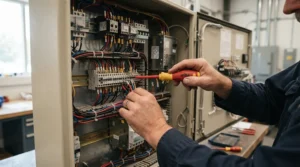
2. Balboa M7 58061 Metal Box 3kW — anti-vibration build for metal control boxes
This one is for the older generation of spa packs. The 58061 is built for metal control boxes, and it comes with vibration strips that stop the tube rattling against the housing. Anyone who has chased a mysterious buzz around a hot tub cabinet will appreciate that small detail.
The spec list reads well: 3kW, Incoloy element, and two 24-inch M7 sensors monitoring temperature and flow. Listings say it suits control boxes such as the Balboa M3 TUV, Elite, Value 5 M7, 2005 LE and GL-series packs. It is also commonly mentioned alongside brands like Spaform, Hydrospa and Leisure Bay. What most buyers overlook is that this assembly is a flow-through design with sensors at both ends, which is why it can spot a flow problem before the element overheats. That is the practical meaning of built-in dry-fire protection: the pack cuts power when flow disappears.
Review evidence I could verify for this specific part was minimal, so rely on the spec match. Pricing sits around £150-£180 at the time of research, noticeably above the plug-in version. The extra cost buys compatibility with older packs, not extra performance. Value verdict: fair, and best treated as a repair part, not an upgrade.
Pros:
- ✅ Anti-vibration strips reduce cabinet rattle
- ✅ 24-inch sensors suit larger metal packs
- ✅ Wide compatibility with older Balboa systems
Cons:
- ❌ Pricier than plastic-box equivalents
- ❌ Only useful if your pack matches
3. LX H30-R2 3kW — budget flow-type heater with a pressure switch
If you’re searching to buy 230v 3kW hot tub heater hardware without a premium badge, this is the value contender. It is an L-shaped flow-type heater, rated 3kW at 230V/50Hz, with IPX5 protection.
The feature that matters is the safety logic. Per retailer listings, it has a 0.3 bar water pressure switch, a control light and a manual reset. In plain English, if flow drops, the pressure switch stops the heating. That is a basic form of dry-fire protection, and it is why this kind of unit suits whirlpool baths and small spas rather than being a bare element. Retailers state it can heat tubs of roughly 340 gallons (around 1,300 litres), though that is a seller claim worth sanity-checking against your own volume.
Sibling model LX H30-R1 3kW is the I-shaped version at a similar price, drawing about 13 amps. Choose by plumbing orientation, not performance. There is no meaningful public review pool for either, so judge them on specs and warranty terms.
Expect pricing under £100, roughly in the £80-£90 range at the time of research. That makes the LX H30-R2 3kW the cheapest complete flow-type route here, with the caveat that it is a retrofit part and not a pack-matched Balboa replacement.
Pros:
- ✅ Pressure switch and manual reset included
- ✅ Typically cheapest complete 3kW flow heater
- ✅ L-shape suits tight plumbing runs
Cons:
- ❌ Little verifiable review feedback
- ❌ Not a sensor-matched Balboa replacement
4. Balboa 3kW Heater Element — cheapest fix if the tube is sound
When the tube, sensors and unions are fine but the element has burned out, replacing only the element is the thrifty route. The Balboa 3kW Heater Element is listed as fitting Balboa and Gecko systems and is the standard style found in a 15-inch heater assembly.
A close alternative is the Happy Hot Tubs 3kW Heater Element. Its listing gives 230V, 50Hz and 11.5-12 amps, with an element about 23cm long. It claims compatibility with Balboa M7, Gecko, Hydroquip, Thermcore, Aquatemp and Spa Builders heaters. That amperage figure is worth remembering: 3kW at 230V is roughly 13 amps, which affects your fuse and circuit sizing.
Here’s the honest analysis. An element is only the right purchase if you can diagnose why the old one failed. Dry-fire damage, trapped air and a chattering contactor will kill the replacement just as quickly. The only public review I could verify for a 3kW Balboa-compatible element was a single five-star rating, which is not enough to generalise from.
Pricing is under £50, making this the lowest-cost route to a working hot tub electric heater. Value verdict: excellent if you’re competent with a multimeter and wrenches, poor if you’re guessing.
Pros:
- ✅ Lowest cost route back to heat
- ✅ Widely compatible with Balboa-style tubes
- ✅ Simple swap for confident DIYers
Cons:
- ❌ Does not fix faulty sensors or controls
- ❌ Misdiagnosis wastes money fast
5. Harvia HYB300230S — Finnish-made booster for wood-fired tubs
This is the odd one out, deliberately. The Harvia HYB300230S is a 3000W/230V additional heater made and designed in Finland for outdoor hot tubs. It can run next to a wood-fired stove to speed up heating, or independently to hold water temperature.
Do not buy it for an inflatable or a standard acrylic spa pack. It exists for hybrid setups, where a stove does the heavy lifting and the electric unit tops up. The spec sheet lists CE and EAC certificates, and the maker says it plugs into the mains and connects alongside the stove. What the datasheet won’t tell you is how that suits British winters: a booster lets you hold a stove-heated tub at temperature overnight without relighting.
I could not verify a current UK price range or a meaningful body of customer reviews, so I won’t pretend otherwise. Check the supplier listing for price, availability and fitment guidance.
Who should consider it? Owners of wood-fired tubs who want convenience on top of tradition. Everyone else can skip straight to the next entries.
Pros:
- ✅ Designed for outdoor hot tub use
- ✅ Works alongside a wood stove or alone
- ✅ CE-certificated 3000W/230V unit
Cons:
- ❌ Niche; useless for standard spa packs
- ❌ UK pricing and reviews hard to verify

6. Lay-Z-Spa Heater Pump Unit — plug-in replacement for inflatable tubs
For an electric heater for inflatable hot tub owners, the realistic purchase is rarely a bare element. It is a whole heater pump. The Lay-Z-Spa Heater Pump Unit is listed as a replacement for the unit supplied with your Lay-Z-Spa. It heats and filters the water and runs the massage system, with Freeze Shield technology for year-round use and a UK plug.
The critical caveat is fitment. Listings note that some versions lack Wi-Fi capability, so models like the Milan, Havana, Singapore or Barbados 2021 would lose app control. Bestway also sells separate pumps for different generations, such as HydroJet Pro 2021 and AirJet 2021 models. Match your model year before ordering.
Third-party versions exist too, such as a bar@drinkstuff-branded listing describing heating up to 40°C, a digital control panel and tool-free fitting. Public review depth on individual listings is difficult to verify, so lean on model-match accuracy.
Pricing is the murky part. Used units appeared around £140 at the time of research, and new pricing varies by seller, so check current listings. Value verdict: worth it when the pump has failed outright, but not when a £20 sensor or £8 thermal fuse is the real culprit.
Pros:
- ✅ Complete unit restores heating, filtering and jets
- ✅ Freeze Shield protects in cold weather
- ✅ Simple swap-out design
Cons:
- ❌ Must match your exact model year
- ❌ Some versions drop Wi-Fi functionality
7. Spa Workshop Lay-Z-Spa PTC 2kW — repair-level heater with sensors
The best of the Lay-Z-Spa style heater units for repairers is a component-level fix. The Spa Workshop Lay-Z-Spa PTC 2kW is an aluminium PTC 2000W heater assembly sold with seals and all sensors. It targets owners whose pump still works but whose heater has died.
A few things stand out. This is a 2kW unit, around a third less raw power than a 3kW element, which is why inflatables heat slower. The same seller lists separate E03/E04 thermostat temperature sensors, plus blue BF104 thermal fuses. That granularity is useful, because the cheapest fix is often the sensor or fuse, not the heater.
The seller has thousands of feedback entries on its marketplace store. Seller feedback is not product-specific proof, though, so read that as a signal about service, not about this exact assembly.
Pricing is under £100 at the time of research. Value verdict: strong for confident DIYers, as long as you accept that heater internals are safety-critical. One UK repair guide describes the thermal fuse and dry-run sensor as safety-critical parts, so know your limits.
Pros:
- ✅ Includes seals and sensors in one kit
- ✅ Cheaper than replacing the whole pump
- ✅ Separate thermostat sensors available
Cons:
- ❌ Only 2kW, so slower heat-up
- ❌ Repair needs care and electrical competence
Top 7 Specs and Evidence Comparison
| Product | Fits | Flow/Dry-Fire Protection | Public Review Depth | Best For |
|---|---|---|---|---|
| Balboa M7 Plug n Click 3kW | BP-series packs | Two M7 sensors | Thin | Easy pack upgrades |
| Balboa M7 58061 Metal Box 3kW | Metal-box packs | Two 24-inch M7 sensors | Thin | Older spa packs |
| LX H30-R2 3kW | Generic retrofit | Pressure switch | Very thin | Budget builds |
| Balboa 3kW Heater Element | Balboa/Gecko tubes | None (element only) | One rating found | Experienced DIYers |
| Harvia HYB300230S | Wood-fired tubs | Check datasheet | Unverified | Hybrid tubs |
| Lay-Z-Spa Heater Pump Unit | Lay-Z-Spa models | Built-in cut-outs | Hard to verify | Inflatable owners |
| Spa Workshop Lay-Z-Spa PTC 2kW | Lay-Z-Spa pumps | Sensors supplied | Seller-level only | Repair projects |
The honest takeaway is that verified review depth is thin across the whole category. Specification matching beats star ratings here, which is why part numbers matter more than brand names. If one thing separates safe purchases from risky ones, it is whether the part includes working flow detection, because that single feature is your dry-fire protection.
What Is a Hot Tub Electric Heater?
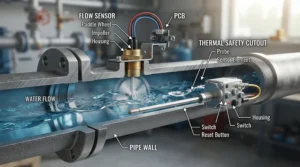
A hot tub electric heater is a resistance-heating device, usually a 2kW-3kW element inside a flow-through tube, that warms spa water as the pump circulates it past the element. Sensors monitor temperature and water flow so the control board can switch the element off at the target temperature, or when flow stops.
How it works in practice
Water leaves the tub, passes through the filter, flows through the heater tube, and returns warm. The element never sees still water if everything is healthy. That is the entire design philosophy behind modern units: heat only while water moves.
Why wattage is not the whole story
A 3kW element draws roughly 13 amps at 230V, which is why it demands a properly rated circuit. Meanwhile, a 2kW inflatable heater is gentler on your electrics but slower on your patience. Balboa’s M7 design adds sensors at each end of the tube to track temperature and flow. That sensor pair acts as your hot tub heater thermostat and your flow safeguard rolled into one. Different brands use different layouts, so wattage alone never tells you what will fit.
How to Choose a Hot Tub Electric Heater
Follow these seven steps in order. Skipping the first one causes most wrong purchases.
- Identify your tub type. Inflatable, acrylic spa pack, or wood-fired each demands a different hot tub electric heater. An inflatable needs a complete pump-heater unit; a pack-based tub needs a flow-through assembly.
- Find the existing part number. Check the label on your current heater or the control box. Balboa produced multiple similar assemblies, so dimensions alone can mislead.
- Match the control box type. Metal and plastic boxes use different heater variants, as the Balboa listings make clear.
- Confirm sensor type and length. M7 sensors differ by length, and an incompatible sensor set will not communicate properly with your control board.
- Check power and circuit capacity. A 3kW unit means roughly 13 amps. Industry guidance such as IET advice on domestic electrical supplies to hot tubs says the supply should be protected by a 30 mA RCD.
- Verify dry-fire protection. Look for sensors or a pressure switch that stop heating when flow drops.
- Compare parts against replacement cost. If an element costs under £50 and the tube is sound, a full assembly may be overkill.
Pick your path with discipline and the rest of the buying process becomes remarkably simple.
Features That Actually Matter (And Those That Don’t)
Dry-fire protection: non-negotiable
Dry-fire protection stops the element from running without adequate water. One heater-repair guide explains that dry fire can melt the coil or outer sheath, and that safety devices, like any component, can themselves fail. So choose a unit with proper sensors or a pressure switch, then keep the filter clean because poor flow is the usual trigger.
The thermostat probe: the quiet decision-maker
The thermostat probe reads water temperature and tells the board when to cut power. On Balboa M7 systems, the sensors also monitor flow. On Lay-Z-Spa units, a faulty sensor can trigger E03/E04-style errors. A drifting probe is more dangerous than a dead one, because it can let water run hotter than you think. Always check the display against a separate thermometer.
Features worth ignoring
Marketing loves shiny extras. Ignore the colourful “smart” labels unless they solve a real problem. Element material (Incoloy versus titanium) matters only in unusually aggressive water. A manual reset is handy; an app is a nice-to-have. Voltage and amperage compatibility matter far more than any brochure badge.
Electric Heater for Inflatable Hot Tub vs Flow-Through Heater
The phrase electric heater for inflatable hot tub usually means one thing: a heater integrated into the pump base. A flow-through heater, by contrast, sits in your plumbing and is wired to a dedicated control pack.
| Factor | Inflatable Pump-Heater | Flow-Through Heater |
|---|---|---|
| Power | Typically around 2kW | Typically 3kW |
| Installation | Plug and play | Often hardwired, electrician advised |
| Repair route | Swap pump or sensor | Replace element or assembly |
| Dry-fire protection | Built-in cut-outs | Sensors or pressure switch |
| Best For | Seasonal garden use | Permanent spa packs |
The comparison shows why you can’t simply drop a spa-pack heater into an inflatable. The architectures differ at every level. Inflatable owners generally benefit from Lay-Z-Spa Heater Pump Unit or Spa Workshop Lay-Z-Spa PTC 2kW style parts, while pack-based owners want Balboa M7 Plug n Click 3kW or Balboa M7 58061 Metal Box 3kW. In short, buy for your architecture, not your wattage.
Hot Tub Electric Heater Safety, Regulations and Compliance Guide
Electrical rules
Electrical supply work in a dwelling falls under Part P. In England, Approved Document P on gov.uk sets out when a professional electrician must be involved. A UK installation guide notes that a new circuit is notifiable work and that the supply should be protected by a 30 mA RCD, with an isolator at least 2 metres from the tub.
Where DIY stops
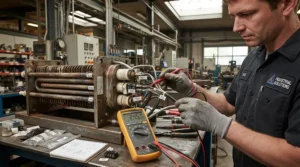
Swapping a plug-in inflatable unit is straightforward. Rewiring a 3kW heater inside a spa pack is different. If you are not competent with mains work, stop and hire a qualified electrician. That is not caution theatre; it is where fires and shocks start.
Temperature safety
Keep the setpoint at or below 40°C, which UK guidance recommends as the ceiling. Comfortable bathing is typically 36-38°C. Children need extra care, and a separate thermometer remains the only reliable arbiter.
UKCA and CE marking
Look for UKCA or CE marking on new heaters. The Harvia listing, for example, notes CE certification. A missing mark on a mains-connected heater should make you hesitate.
Long-Term Cost and Maintenance of a Hot Tub Electric Heater
Buying price is only part of the story. Running costs dominate over the years.
A back-of-envelope energy calculation
Physics gives us a handy benchmark. Heating 1,200 litres by 28°C (say, 10°C to 38°C) needs roughly 39 kWh in a perfect world. At an illustrative 25p per kWh, that is around £10 for a cold-fill heat-up, before heat losses. Swap in your own tariff for a real figure.
Price and value summary
| Product | Typical Role | Price Range | Long-Term Value |
|---|---|---|---|
| Balboa M7 Plug n Click 3kW | Full assembly | £100-£150 | High if compatible |
| Balboa M7 58061 Metal Box 3kW | Legacy assembly | £150-£180 | Moderate |
| LX H30-R2 3kW | Budget retrofit | Under £100 | Good, with caveats |
| Balboa 3kW Heater Element | Element only | Under £50 | Excellent if diagnosed |
| Spa Workshop Lay-Z-Spa PTC 2kW | Inflatable repair | Under £100 | Good |
Read this table as a repair-versus-replace ladder. Spending under £50 on an element makes sense only when the tube and sensors are healthy. Otherwise, a complete assembly like the Balboa M7 Plug n Click 3kW avoids repeat call-outs. Meanwhile, the Spa Workshop Lay-Z-Spa PTC 2kW sits neatly in the middle for inflatable owners who don’t want a full pump replacement.
Maintenance that saves money
A clean filter protects flow, and flow protects the element. Descale when water is hard. Fit a good cover to cut heat loss, because that reduces running time more than any heater upgrade.
Common Mistakes When Buying a Hot Tub Electric Heater
Matching on wattage alone
A 3kW label tells you nothing about terminal spacing, union size or sensor type. Balboa listings give terminal distance (31.75mm on one model) and 2-inch plumbing unions for a reason.
Ignoring why the old heater died
Replace a burned-out element without fixing trapped air, a chattering contactor or poor flow, and the new one dies the same way. A repair guide advises loosening a union after refilling to bleed trapped air before powering up. Most buyers skip this.
Buying the wrong voltage
Some inflatable heater listings carry 220V ratings while UK mains is nominally 230V. Always confirm UK-plug versions and regional compatibility.
Trusting thin reviews
A single five-star rating is encouraging, but it isn’t evidence. With review pools this small, specs and fitment details are more reliable than stars.
Forgetting the electrics
A 3kW load plus pump demands a correctly rated, RCD-protected circuit. A heater that keeps tripping may be telling you the supply is undersized, not that the heater is faulty.
✨ Don’t Miss These Exclusive Deals!
🔍 Take your hot tub electric heater upgrade to the next level with these carefully selected products. Click on any highlighted item to check current pricing and availability. These parts will help you create the warm, reliable soak your whole family will love! 🛁
What to Expect: Real-World Performance from a Hot Tub Electric Heater
Heat-up times
Using the earlier maths, a 3kW heater adds roughly 2.5°C per hour to 1,000 litres in ideal conditions. Real-world losses mean slower progress, especially in wind and cold. A 2kW inflatable unit has about a third less raw power, so expect longer waits.
Holding temperature
Holding heat takes far less energy than raising it. A well-fitted cover is the single biggest influence on your running costs, and a heater cycling on and off every few minutes may signal poor insulation or a drifting thermostat probe.
Noise and behaviour
A healthy heater is nearly silent. Buzzing in a metal control box can mean a loose tube, which is why the Balboa M7 58061 Metal Box 3kW includes vibration strips. Clicking contactors that chatter rapidly warrant investigation, because rapid cycling shortens element life.
Errors you may meet
Inflatable owners often meet E03/E04-type messages. One UK repair guide describes E04 as a thermal cut-out or dry-run protection alert, triggered by water above 50°C or inadequate flow past the heater. Think of it as the tub saying “check my water first”.
Practical Guide: Hot Tub Heater with Thermostat Replacement (Step by Step)
This section is a general process, not a substitute for the manufacturer’s manual or a qualified electrician.
Before you start
Switch off and isolate the supply at the isolator and the consumer unit. Photograph every wire and sensor position before touching anything. Confirm the part number against your replacement, whether that is the Balboa M7 Plug n Click 3kW or another match.
The swap
- Drain enough water to get below the heater, or close any isolation valves.
- Disconnect the unions and release the old assembly.
- Fit new gaskets and the new heater, hand-tightening unions evenly.
- Reconnect the sensors in their original positions.
- Refill, then bleed trapped air by loosening a union slightly until you hear it escape.
First-use checks
Power up with water circulating, then watch the temperature climb against a separate thermometer. Any hot smell, rapid clicking or unexpected error means switch off and investigate.
The first 30 days
Check unions for weeping. Clean the filter weekly. Compare the display and thermometer readings regularly. A drifting thermostat probe is easier to catch early than after a scalding soak.
Problem to Solution Guide: Fixing Common Hot Tub Electric Heater Faults
Problem 1: No heat, pump runs
Likely causes: failed element, tripped high-limit, or a faulty sensor. Test element resistance, check the limit and inspect sensors. A Balboa 3kW Heater Element or Happy Hot Tubs 3kW Heater Element fixes only the first.
Problem 2: Heat cuts out intermittently
Check flow first: filter, air locks, clogged inlets. Poor flow trips protection long before the element is the problem.
Problem 3: E04-style dry-run alerts on an inflatable
One UK guide lists thermal fuses around £5-£10 as a DIY part, dry-run sensors around £15-£30, and PTC heater elements around £40-£80. Start with cool-down and a water-level check. If the alert recurs, the Spa Workshop Lay-Z-Spa PTC 2kW with sensors may be the sensible route.
Problem 4: Temperature reading looks wrong
Compare with a trusted thermometer. A consistently wrong thermostat probe reading means replace the sensor, not the heater.
Problem 5: Repeated RCD trips
Moisture ingress or a failing element can leak current to earth. Do not keep resetting it. Call an electrician. Hygiene matters too: warm water is ideal for bacteria, so follow NHS information on Legionnaires’ disease and keep sanitiser levels maintained once you’re up and running again.
Real-World Scenarios: Which Hot Tub Electric Heater for Which Owner?
Scenario 1: The inflatable owner on a budget
Profile: two adults, a four-person inflatable, used most weekends, kept in a sheltered garden. A dead heater but a working pump points to the Spa Workshop Lay-Z-Spa PTC 2kW. If the pump itself has failed, the Lay-Z-Spa Heater Pump Unit is cleaner, provided the model year matches.
Scenario 2: The family with a pack-based acrylic spa
Profile: five seats, used almost daily, wired by an electrician years ago. Heat loss is the enemy here, so confirm the cover is sound. For a BP-series pack, the Balboa M7 Plug n Click 3kW is the logical swap. For an older metal-box system, the Balboa M7 58061 Metal Box 3kW fits where the plastic version won’t.
Scenario 3: The confident DIYer with a tight budget
Profile: handy with a multimeter, element has failed, tube and sensors are healthy. The Balboa 3kW Heater Element costs the least and teaches you the most. If the tub’s plumbing is bespoke or a retrofit, the LX H30-R2 3kW is worth a look.
Scenario 4: The wood-fired enthusiast
Profile: a stove-heated tub that is slow to warm on cold evenings. The Harvia HYB300230S acts as a booster and holder. It is the only entry here designed for that job.
Frequently Asked Questions About Hot Tub Electric Heaters
❓ Can a 3kW heater run safely from a standard 13A socket?
❓ How long does a 3kW heater take to warm a full tub?
❓ Where can I buy 230v 3kW hot tub heater parts without paying a premium?
❓ Will Lay-Z-Spa style heater units fit other inflatable brands?
❓ What should I do if my heater trips the RCD repeatedly?
Conclusion: Choosing Your Hot Tub Electric Heater with Confidence
The best hot tub electric heater is the one that matches your tub, your electrics and your repair confidence, not the one with the biggest number on the box. For modern Balboa BP packs, the Balboa M7 Plug n Click 3kW is the tidy, low-fuss answer. For older metal-box systems, the Balboa M7 58061 Metal Box 3kW earns its higher price through fitment. Budget retrofits lean toward the LX H30-R2 3kW, while the Balboa 3kW Heater Element rewards careful diagnosis with the lowest bill.
Inflatable owners have their own path. The Lay-Z-Spa Heater Pump Unit restores a whole system, whereas the Spa Workshop Lay-Z-Spa PTC 2kW targets the heater alone. Wood-fired fans have the Harvia HYB300230S as a specialist booster.
Three habits matter more than any purchase. Confirm the part number before ordering, protect flow so dry-fire protection never has to act, and verify temperature with a separate thermometer. Keep the setpoint at or below 40°C, and bring in a qualified electrician whenever mains wiring is involved.
Whatever you choose, check current pricing and availability before buying, since both change often.
✨ Ready to get your hot tub electric heater sorted?
🔥 Pick the option that matches your tub, check the current listing, and get back to the soak you’ve been dreaming about. Your next steaming, star-gazing evening is closer than you think!
Recommended for You
- Hot Tub Pump Motor Vs Full Pump Replacement: 7 Smart Fixes (2026)
- Replacement Hot Tub Pump Motor: 7 Proven Fixes For UK Tubs (2026)
- Hot Tub Pump Motor: 7 Proven Picks & Costly Mistakes (2026)
Disclaimer: This article contains affiliate links. As an Amazon Associate, I earn from qualifying purchases. If you purchase products through these links, we may earn a small commission at no additional cost to you.
✨ Found this helpful? Share it with your friends! 💬🤗
