
In This Article
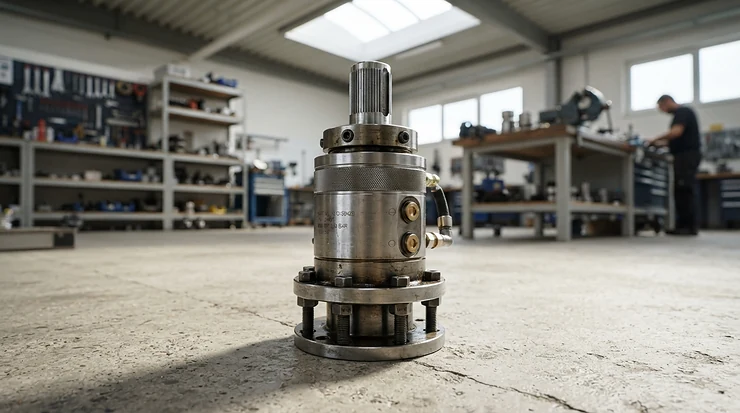
Your tub is lukewarm, the jets sound like a disgruntled hornet, and there’s a faint whiff of hot varnish drifting from the cabinet. Welcome to the moment every owner meets their hot tub pump motor. It’s the unglamorous cylinder that does the real work while you soak.
Replacing one is far less mysterious than it looks. The catch is that a few details can turn a “should fit” into a returns parcel: frame size, voltage, speed windings, even where the capacitor lives. This guide covers seven real, specifiable options, from motor-only swaps to complete pumps. It also unpacks the vocabulary suppliers assume you already know. That means motor frame sizes, capacitor and start winding behaviour, and how a hot tub pump motor replacement 2 speed job differs from a single-speed one.
A quick word on method. These are real parts stocked by UK spa-parts suppliers. Availability on Amazon UK and elsewhere shifts week to week, so treat the product names as search terms and check everything against your old motor’s nameplate. Prices are ranges, not quotes. I haven’t tested any of these parts. What follows is spec analysis plus aggregated buyer sentiment where it genuinely exists.
Why do motors fail at all? The single-phase induction motor in your tub relies on a capacitor-fed auxiliary winding to get the rotor turning. Every link in that chain (bearings, windings, capacitor) ages in a warm, damp cabinet. Let’s find the right fix.
Hot Tub Pump Motor Quick Comparison Table
Here’s the whole field at a glance. Every option below is built for a 230v single phase hot tub pump motor supply. “Type” tells you whether you’re buying just the motor or the full pump.
| Product | Type | Frame | Speeds | Best For |
|---|---|---|---|---|
| Waterway Hi-Flo | Complete pump | 48 | 2 | HA440-era tubs needing a UK-spec swap |
| Waterway Executive Euro 48 | Complete pump | 48 | 2 | US-import tubs with a smooth-body motor |
| 48 Frame Smooth Body US Motor | Motor only | 48 | 2 | Tight cabinets with a healthy wet end |
| GC150-2XJ-B | Motor only | 48 | 2 | Older tubs with 1.5″ plumbing |
| HS Pro Flow | Complete pump | 48 | 2 | Side-discharge 2″ swaps |
| Waterway Executive 56F | Complete pump | 56 | 2 | Tubs with room for a cooler-running motor |
| Flo-Master XP2e | Complete pump | 48 | 2 | Owners wanting an exact OEM match |
Looking at the table, the 48 frame hot tub pump motor dominates because it suits the cramped cabinets of modern tubs. The Waterway Executive 56F is the one outlier, trading size for thermal comfort. Motor-only choices like the GC150-2XJ-B can save re-plumbing, while complete pumps such as the Waterway Hi-Flo save you diagnosing a tired wet end.
💬 Just one click — help others make better buying decisions too!😊
Top 7 Hot Tub Pump Motor and Pump Options: Expert Analysis
Each entry below turns the spec sheet into practical meaning. Review sentiment is flagged honestly: where I couldn’t verify real buyer feedback for an exact model, I say so rather than invent any.
1. Waterway Hi-Flo 2HP 2-Speed (PW-W4822) — the UK-spec workhorse
The Waterway Hi-Flo earns its place by being designed around European supply. It pairs a compact 2HP, two-speed 48 frame motor with a 2″x2″ wet end. The listing gives 230V/50Hz, about 2.2A on low and 6.8A on high, at roughly 1440/2850 rpm. It measures around 360 x 175 x 220mm.
In practice, 2.2A means calm, cheap-to-run filtration on low, while 6.8A on high suits a normal dedicated tub circuit. Note that the wet end is rated at 4HP against a 2HP motor. Spa horsepower figures are famously elastic, so compare amps rather than headline HP.
One UK supplier calls it the best replacement for the HydroAir HA440 found on most Spaform tubs and says it has fitted it for a decade. That’s a seller’s claim, not an independent review, but it points to a well-trodden fit. This one suits owners who’d rather replace motor and wet end together than gamble on an ageing seal.
For review sentiment, I couldn’t verify a meaningful pool of independent buyer reviews for this exact model, so I won’t quote ratings.
Pros:
- ✅ Euro-spec 230V/50Hz electrics
- ✅ Compact length suits tight cabinets
- ✅ Widely used HA440 replacement
Cons:
- ❌ Independent review evidence is thin
- ❌ Costs more than a motor-only swap
Expect the mid-£300s at the time of research; check current price. It’s a fair-value pick when the wet end is also tired.
2. Waterway Executive Euro 48 (PW-W4859) — direct swap for American-built tubs
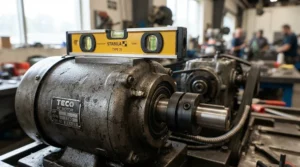
Hot tubs imported from the USA and Canada often carry the American smooth-bodied Executive 48. A UK supplier lists this Waterway Executive Euro 48 as the direct European replacement. It’s a 2HP two-speed motor on a 4HP-rated wet end with a 2.5″ inlet, rated at 2.2A/6.8A and 1440/2850 rpm on 50Hz.
The sting in the tail is size. The same supplier says a European Executive 48 can be fitted “nine times out of ten” but is considerably taller and has a square electrical box. Measure cabinet height before ordering, because the spec sheet won’t warn you that your pump bay is shallow.
It’s best for owners of imported tubs who want a fresh, matched motor and wet end running on UK frequency.
For review sentiment, the Euro version has no verifiable reviews I could find. A US retailer’s page for the American 2HP Executive 48 (a 60Hz sibling, not this model) showed 28 reviews, about nine in ten top-rated. Recurring themes were easy installation and quieter running than the original. Treat that as indicative only.
Pros:
- ✅ Built as the UK/EU equivalent of the US original
- ✅ 50Hz-appropriate speeds and amps
- ✅ Matched motor and wet end
Cons:
- ❌ Taller than the American version
- ❌ Square electrical box may not clear
Price isn’t verified here; check current price. It’s good value if it fits.
3. 48 Frame Smooth Body US Motor (2HP, 2-Speed) — motor-only for compact cabinets
This 48 Frame Smooth Body US Motor is for owners whose wet end is healthy and whose cabinet is tight. The supplier says it replaces 48 frame motors from Franklin Electric, Century Laser, AO Smith and Emerson. It fits 48 frame wet ends from Waterway, Aqua-flo, Sta-Rite, Vico, HydroAir and Balboa.
Listed figures are 2.9-3.2A low and 9.0-8.6A high, at 1425/2850 rpm on 50Hz. The body measures roughly 285mm long (excluding shaft) x 210 x 145mm. Those high-speed amps are about a third above the Euro-style motors above, so confirm your tub’s circuit and controller are comfortable with the draw.
No cable is supplied, so you’ll swap over your existing one. The analysis is simple: if your wet end isn’t leaking or whining, a motor-only job keeps your plumbing untouched.
I could verify no independent reviews for this listing.
Pros:
- ✅ Smooth body fits tight bays
- ✅ Broad cross-brand 48 frame compatibility
- ✅ Keeps your existing wet end
Cons:
- ❌ Higher listed amps than Euro motors
- ❌ Cable not supplied
Pricing varies by supplier, so check current price and compare against a complete pump. Some suppliers price motors uncomfortably close to full pumps.
4. ITT HydroAir GC150-2XJ-B Replacement Motor — the rescue for old blue wet ends
The GC150-2XJ-B solves a very specific, very annoying problem. The blue wet end of the HydroAir Genesis GC150 is discontinued. Its successor, the HA440, has 2-inch connections that don’t fit directly into the 1.5″ plumbing left behind. A motor-only swap sidesteps the re-plumbing entirely.
Listed specs are a 48 frame, 1.5HP pump, motor 0.3/1.5HP, 0.4/1.1kW, and 1.5A/6.5A (newer units may show 1.9/6.8A). Translate that as a gentle low speed that sips power and a high speed with plenty of jet punch for a modest tub. It’s aimed squarely at older Spaform-type tubs.
The honest caveat is that this only helps if the wet end is sound. If the seal has leaked into the motor repeatedly, you’re polishing a sinking ship.
I found no verifiable independent reviews.
Pros:
- ✅ Avoids re-plumbing from 1.5″ to 2″
- ✅ Sensible low-speed power draw
- ✅ Targeted at a known discontinued pump
Cons:
- ❌ Only useful for matching GC150 pumps
- ❌ Doesn’t cure a failing wet end
Around £200 at the time of research; check current price. Strong value for the right tub.
5. HS Pro Flow 48F 2HP 2-Speed — compact 2″ side-discharge swap
The HS Pro Flow is a straightforward complete pump: 2HP, two-speed, 48 frame motor, 2″ inlet and outlet, side discharge. Listed dimensions are 430 x 200 x 230mm. That’s about 70mm longer than the Waterway Hi-Flo, which matters enormously in a bay that was cut tight around the original.
Cable isn’t included, though the listing says your existing one can be fitted. Amps and rpm weren’t shown on the page I found, so copy the nameplate figures from your old pump and compare with the supplier before ordering.
It suits tub owners with 2″ side-discharge plumbing who want a modern pump without OEM pricing.
The listing I found carried no customer reviews, so there’s no sentiment to report.
Pros:
- ✅ Standard 2″ side-discharge layout
- ✅ Existing cable can be reused
- ✅ Complete motor-and-wet-end unit
Cons:
- ❌ Longest 48F body in this list
- ❌ Electrical specs not shown on listing
Check current price; this tends to sit in the mid-range tier. Good value if the dimensions clear.
6. Waterway Executive 56F (PF-20-2N22X) — cooler-running 56 frame option
The Waterway Executive 56F is a 2HP, two-speed pump on a 2″x2″ wet end. A UK supplier describes it as the most common Waterway pump used by many hot tub brands over the years. It uses an Italian EMG motor designed for Europe, and it can replace pumps with US smooth-bodied motors where space allows.
Frame size matters here. A spa-parts guide notes that 56 frame units tend to run cooler than 48 frame, which can mean longer service life. That’s the practical case for stepping up, though it’s a rule of thumb rather than a guarantee. Cable isn’t supplied, so keep your old lead.
It’s best for tubs with generous equipment bays and owners tired of replacing hot-running motors.
I found no verified independent reviews for this exact part.
Pros:
- ✅ Larger frame runs cooler per spa-parts guidance
- ✅ Euro-designed EMG motor
- ✅ Common across many tub brands
Cons:
- ❌ Needs more cabinet space than 48 frame
- ❌ Cable not supplied
In the £350-£450 range once VAT is added; check current price. It’s solid value for longevity.
7. Aqua-Flo Flo-Master XP2e Smooth Body 2HP — the exact-match premium pick
The Flo-Master XP2e is the “get it right the first time” option. A UK supplier lists it as a smooth-body 2.0HP two-speed pump with 2″x2″ (79mm) connections. Other listings describe the 48 frame Waterway EX2 as a direct replacement for the XP2 and XP2e, which confirms the 48 frame size.
You pay for the match. If your tub’s manufacturer specified an XP2e, ordering the identical pump removes every doubt about hole spacing, plumbing and controller behaviour. If your tub didn’t, you’re paying more than double the price of a Waterway Hi-Flo for peace of mind you may not need.
I could verify no independent buyer reviews for this exact listing.
Pros:
- ✅ Exact OEM match for XP2e tubs
- ✅ Smooth-body compact styling
- ✅ Two-speed 2HP spec
Cons:
- ❌ Premium price versus alternatives
- ❌ Little verified review evidence
Around £800 at the time of research; check current price. It’s good value only if exactness matters.
Top 7 Specs and Value at a Glance
| Product | Amps (low/high) | RPM (low/high) | Size (mm) | Price range | Best For |
|---|---|---|---|---|---|
| Waterway Hi-Flo | 2.2 / 6.8 | 1440 / 2850 | 360 x 175 x 220 | Mid-£300s | Spaform-type swaps |
| Waterway Executive Euro 48 | 2.2 / 6.8 | 1440 / 2850 | Check supplier | Check current price | Imported US tubs |
| 48 Frame Smooth Body US Motor | 2.9-3.2 / 9.0-8.6 | 1425 / 2850 | 285 x 145 x 210 | Check current price | Motor-only swaps |
| GC150-2XJ-B | 1.5 / 6.5 | Check supplier | Check supplier | Around £200 | 1.5″ plumbing tubs |
| HS Pro Flow | Check nameplate | Check nameplate | 430 x 200 x 230 | Check current price | 2″ side discharge |
| Waterway Executive 56F | Check supplier | Check supplier | Check supplier | £350-£450 | Cooler running |
| Flo-Master XP2e | Check supplier | Check supplier | Check supplier | Around £800 | Exact OEM match |
Where suppliers gave figures, notice how closely the Euro-spec pumps agree on amps and speeds. That consistency is reassuring for anyone matching a nameplate. The GC150-2XJ-B is the budget standout, and the Flo-Master XP2e is the premium outlier. The “check” cells are deliberate: I’d rather flag a gap than guess.
What Is a Hot Tub Pump Motor?
A hot tub pump motor is the electric motor bolted to the wet end of your spa pump. It spins the impeller that pushes water through the heater, filter and jets. In most UK tubs it’s a 230v single phase hot tub pump motor with two speeds: low for filtration and heating, high for massage jets.
Think of the wet end as the lungs and the motor as the heart. The wet end moves the water, but the motor decides how hard and how long it moves. That’s why pump failures often look like heating or filtration faults first.
Two speeds exist for a practical reason. Running jets at full tilt all day would be noisy and wasteful, so low speed quietly circulates water for hours while high speed is reserved for when you’re actually soaking. A single-speed pump has no such gear, which is why the replacement type matters.

How to Choose a Hot Tub Pump Motor
Follow these seven steps and you’ll avoid most return parcels.
- Read the nameplate first. Note voltage, frequency, amps, HP and speeds. These are the truth; the sales description is the marketing.
- Confirm the frame size. A 48 frame and a 56 frame are not interchangeable, so measure before you shop.
- Match the speed layout. A two-speed motor should have common, high and low terminals. Photograph the wiring before disconnecting.
- Decide motor only or complete pump. If the wet end is leaking or noisy, replace both.
- Check physical fit. Length, height and junction box shape decide whether it clears the bay.
- Match plumbing. 1.5″, 2″ and 2.5″ connections are not interchangeable without adapters.
- Budget for extras. Cables, unions and capacitors are often sold separately.
Motor Frame Sizes: How to Measure Yours
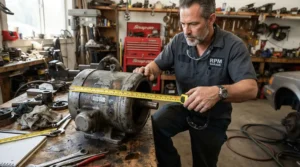
Motor frame sizes sound academic until the new motor won’t bolt on. In spa pumps you’ll meet two: 48 and 56. The numbers follow a US motor-industry convention describing mounting dimensions, not a literal measurement.
Spa-parts guidance says a 48 frame is roughly 5.5 inches across and a 56 frame about 6.5. It also gives a bolt-spacing check: under 4 inches means 48 frame, over means 56.
A UK supplier offers a diagonal shortcut. Remove the four bolts joining wet end to motor, then measure diagonally between two bolt-hole centres. On a 48 frame that’s 130mm. A square pattern with a 130mm diagonal works out at roughly 92mm, or 3.6 inches, which agrees with the under-4-inch rule. Always check the old motor’s ID plate too.
| Feature | 48 frame | 56 frame |
|---|---|---|
| Approx. diameter | About 5.5″ | About 6.5″ |
| Bolt spacing | Under 4″ | Over 4″ |
| Running temperature | Warmer | Tends to run cooler |
| Best For | Tight cabinets | Roomy bays, longevity |
The table shows a classic trade-off: compactness versus thermal comfort. If your bay can take a 56 frame, the cooler running is a genuine argument for the Waterway Executive 56F. If it can’t, a 48 frame hot tub pump motor is the sensible default.
48 Frame Hot Tub Pump Motor: What Fits and What Doesn’t
A 48 frame hot tub pump motor is the most common size in modern tubs, and suppliers describe a single modern 48 frame standard that fits current 48 frame wet ends. That makes motor-only swaps like the 48 Frame Smooth Body US Motor realistic.
The traps are elsewhere. Smooth-body US motors and European ribbed-body motors share a frame but not an envelope. Remember that the European Waterway Executive Euro 48 is considerably taller and has a square electrical box. Likewise, a 48 frame hot tub pump motor from a 60Hz market runs at different speeds on UK 50Hz, so always insist on 50Hz-rated parts.
The simple rule is to match frame, then voltage and frequency, then physical envelope, then plumbing. Skip any of the four and you’re gambling.
Hot Tub Pump Motor Replacement 2 Speed: Wiring and Behaviour
A hot tub pump motor replacement 2 speed job is mostly about terminals. Two-speed motors have three connections: common, high and low. Get them right and the tub behaves; get them wrong and your heater runs on the noisy speed.
Spa-parts guidance has a useful tip. After replacement, if filtration comes on at high speed instead of low, simply swap the high and low wires. It’s also worth knowing that a two-speed pump can serve single-speed duty, common in dual-pump tubs. Use the common and high terminals and leave low unconnected.
Why 1440/2850 rpm? Pole-changing windings let one motor run at roughly half and full speed on 50Hz. Low speed handles heating and filtration; high speed is for jets. Doing a hot tub pump motor replacement 2 speed carefully means photographing the old wiring first, labelling each wire, and checking the new nameplate diagram. When shopping for hot tub pump motor replacement 2 speed parts, confirm the speeds match, because a single-speed unit will quietly remove your low-speed filtration.
230v Single Phase Hot Tub Pump Motor: Reading the Nameplate
Almost all domestic UK tubs use a 230v single phase hot tub pump motor. Industry guidance notes that most, if not all, domestic hot tubs are designed for single-phase 230V AC operation. Three-phase motors are a different animal and you’ll rarely meet them at home.
Here’s what to check on any 230v single phase hot tub pump motor:
- Frequency. UK supply is 50Hz. US motors at 60Hz run 3450/1725 rpm, whereas 50Hz Euro motors show about 2850/1425.
- Amps. Low and high figures tell you the real load, far better than HP.
- Terminals. Look for common, high and low.
The amps are the sneaky number. The Waterway Hi-Flo lists 6.8A on high, while the 48 Frame Smooth Body US Motor lists up to 9.0A. Same HP label, noticeably different electrical appetite. A well-chosen 230v single phase hot tub pump motor stays within what your tub’s circuit and controller expect.
Capacitor and Start Winding: What Actually Fails
Single-phase motors can’t start themselves. They need a second winding, offset in phase, to kick the rotor into motion. In a capacitor motor, this auxiliary winding runs through a capacitor, and many designs then disconnect it with a centrifugal switch at roughly 75-80% of rated speed.
Understanding capacitor and start winding behaviour turns a mystery into a checklist. Reference sources note that a weak capacitor can make a motor fail to start or fail to reach full power, and that when a motor won’t start, the capacitor is far more likely the culprit than the switch. A hum with no spin is the classic clue.
The worse outcome involves the start winding. If a centrifugal switch fails to open, the start winding can overheat and burn out. Spa motors vary, and one UK retailer notes that capacitor location may be external or internal depending on the motor maker.
Treat capacitor and start winding faults in two tiers. A cheap, weak capacitor is replaceable. A burnt winding (a smell, a trip, a motor that’s hot to the touch) means a new motor. Capacitors can hold charge, so leave testing to someone competent.
Can I Fit It Myself? A Step-by-Step Guide
Can I fit it myself? For the mechanical swap, many competent DIYers do. The electrical side is where caution matters.
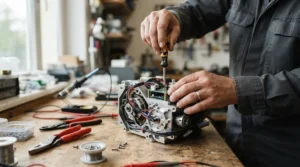
- Isolate. Switch off at the isolator and consumer unit, and prove it dead. Don’t rely on the tub’s control panel.
- Photograph everything. Wiring, terminals, cable clamp, orientation.
- Release the pump. Spa-parts guidance says the pump can be lifted out with the power cable still attached to the control system.
- Separate wet end from motor. Remove the four bolts, then check frame size.
- Swap the cable. Reuse the old one if it’s in good condition. Most replacement motors ship without cable.
- Fit, seal, reconnect. Fit the new motor or pump, check the seal and wire common, high and low carefully.
- Test. Check for leaks, correct speeds, then ensure RCD protection is working.
On the legal side, Part P governs electrical safety in dwellings. Approved Document P explains who may carry out electrical work and when a professional electrician must be hired. Swapping a motor inside the cabinet is usually appliance repair rather than altering your fixed installation, but your warranty may demand otherwise. This isn’t legal advice. If you’re unsure about can I fit it myself? where wiring is concerned, hire a registered electrician.
✨ Don’t Miss These Carefully Chosen Picks!
🔍 Take your hot tub pump motor replacement to the next level with these thoughtfully selected parts. Click on any highlighted item to check current pricing and availability. These picks will help you get quiet, reliable results your whole soak circle will love!
Problem to Solution: Diagnosing Common Pump Faults
Not every sulky tub needs a new motor. Here’s a quick triage, using only widely documented failure patterns.
- Hums but won’t spin. Suspect the capacitor first, then seized bearings. A weak capacitor is the cheaper fix.
- Trips the RCD. Moisture or winding insulation failure is likely. Stop and call an electrician.
- Grinding or screeching. Bearings in the motor, or a failing wet end. If the seal has leaked into the motor, replace both, as with the Waterway Hi-Flo.
- Filtration runs on high speed. After a swap, reverse the high and low wires.
- Weak jets. Check filters, air locks and valves before blaming the motor.
- Smell of hot varnish. A burnt winding. Motor replacement territory, like the GC150-2XJ-B for older tubs.
The theme: diagnose before you buy. A £10 capacitor is a much nicer surprise than a £400 pump, and a burnt winding is a much worse one than either.
Real-World Scenarios: Matching Pumps to Tubs
Three owner profiles, three sensible routes.
The Spaform-era owner. Tub is eight years old, plumbed in 2″, pump is screaming. Budget is moderate. The Waterway Hi-Flo is the natural match because the supplier calls it the best replacement for that generation of pump.
The imported-tub owner. Canadian tub, smooth-body motor, snug bay. Measure height first. The Waterway Executive Euro 48 is the formal replacement, but if height defeats it, the 48 Frame Smooth Body US Motor is the motor-only fallback.
The legacy plumbing owner. An old GC150 blue wet end with 1.5″ plumbing and no appetite for re-plumbing. The GC150-2XJ-B keeps the wet end and swaps just the motor.
Notice the pattern: the environment drives the decision more than the brand. Frequency of use matters too. A tub used daily justifies the cooler-running Waterway Executive 56F, whereas a weekend-use tub may not.
Motor Only vs Complete Pump
| Factor | Motor only | Complete pump | Best For |
|---|---|---|---|
| Plumbing | Untouched | May need new unions | Motor-only: stable plumbing |
| Cost | Can be close to a full pump | Often better value than expected | Complete: ageing wet ends |
| Seal and impeller | Old ones remain | All new | Complete: leaking seals |
| Fit certainty | Depends on frame match | Depends on plumbing match | Either, if measured |
One supplier notes you may pay less for a complete new pump than some charge for a replacement motor alone. Always price both. If the wet end has seen better days, a complete unit such as the Waterway Hi-Flo removes the biggest hidden risk. If the wet end is spotless, the GC150-2XJ-B or 48 Frame Smooth Body US Motor keeps the job small.
Long-Term Cost and Maintenance
Purchase price is only the opening move. Running cost and longevity decide the real bill.
Take the GC150-2XJ-B‘s listed 0.4kW low and 1.1kW high. As an illustration only (use your own tariff), at 25p per kWh an hour of high speed is about 28p, while an hour of low is about 10p. That’s why low-speed filtration matters, and why a 2-speed hot tub pump motor beats a single-speed one for economy.
Maintenance costs are mostly preventive:
- Keep the cabinet ventilated, because heat shortens motor life.
- Fix drips fast, because water in the motor ruins bearings and windings.
- Keep filters clean so the pump isn’t straining.
Heat is the quiet killer, which is why the cooler-running Waterway Executive 56F can justify its extra bulk over a decade. Cheap now and costly later is a real pattern with motors.
Safety, Regulations and Compliance
Water and electricity deserve respect. The IET’s guidance on domestic electrical supplies to hot tubs says all work should comply with BS 7671. It notes that BS 7671 has no dedicated hot tub section but points to swimming pool principles in Section 702, plus the product standard BS EN 60335-2-60.
Practical takeaways:
- A tub should have its own dedicated, RCD-protected circuit.
- Compliance must be verified for every addition or alteration.
- Never bypass thermal protection or earth connections.
When replacing a motor, you’re working inside that safety envelope. Fit like-for-like, use the right cable glands, and test the RCD afterwards. If anything about the supply looks doubtful, stop and call a registered electrician.
FAQ
❓ How much does a hot tub pump motor replacement cost in the UK?
❓ Can I use a single speed pump in place of a 2 speed pump?
❓ How long should a hot tub pump motor last?
❓ Is a 48 frame motor interchangeable with a 56 frame?
❓ Should I replace the wet end at the same time as the motor?
Conclusion
Choosing a hot tub pump motor comes down to four checks: frame, frequency, speeds and fit. Get those right and everything else is detail. The Waterway Hi-Flo is the sensible all-rounder for Spaform-era tubs, while the Waterway Executive Euro 48 is the formal answer for imported American tubs. If your wet end is healthy, the 48 Frame Smooth Body US Motor and the GC150-2XJ-B keep the job small and the plumbing intact. The HS Pro Flow suits standard 2″ side-discharge layouts, the Waterway Executive 56F rewards owners who have room and want cooler running, and the Flo-Master XP2e is the premium choice when exactness is everything.
Remember the honest bits: I couldn’t verify independent reviews for most of these exact models, I haven’t tested them, and prices are ranges that move. Match the nameplate, understand your capacitor and start winding, respect the electrics, and your tub will be back to bubbling before the weekend.
✨ Ready to Get Your Tub Bubbling Again?
🔍 Click any highlighted product name to check current pricing and availability, and match it against your nameplate before you order. A properly chosen hot tub pump motor means quieter jets, steadier heat and soaks you’ll actually look forward to!
Recommended for You
- 1hp Vs 1.5hp Hot Tub Air Blower: 7 Smart Picks (2026)
- Quiet Hot Tub Air Blower: 7 Best Picks For UK Gardens (2026)
- Hot Tub Air Blower: 7 Best Replacements For UK Spas (2026)
Disclaimer: This article contains affiliate links. As an Amazon Associate, I earn from qualifying purchases. If you purchase products through these links, we may earn a small commission at no additional cost to you.
✨ Found this helpful? Share it with your friends! 💬🤗
