

In This Article
Somewhere between “I’ll just look at prices for fun” and “the delivery van is reversing up my drive” lies the actual decision-making bit, and that’s the part nobody tells you is genuinely confusing. A hot tub under £5000 sits in an odd little pocket of the market: too serious a spend to guess at, too modest a budget to walk into a showroom and be shown the flagship range with a straight face. You’re choosing between inflatable convenience, proper acrylic shells, and the rarer breed of British-built rotomoulded tubs, and the differences between them matter a lot more than the marketing photos let on.
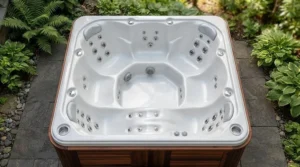
This guide sticks to real, currently available UK models, spans budget, mid-range and near-the-ceiling options, and explains what each spec actually does for you once the water’s warm and the garden’s dark. In short: a hot tub under £5000 is any hard-shell, acrylic or premium inflatable spa priced up to that ceiling, typically seating two to six people, running on a standard 13A or 32A UK electrical supply. We’ll compare seven real products, walk through insulation, jets, finance and installation, and flag the mistakes that turn a good purchase into a regrettable one.
According to the trade body British and Irish Spa and Hot Tub Association (BISHTA) — more on that later — the UK now has hundreds of thousands of rigid hot tubs in gardens, and the sub-£5,000 bracket is where the vast majority of first-time buyers land. It’s also where quality varies the most, because two tubs that look near-identical in photos can differ enormously in shell material, insulation and the electrician’s bill waiting behind them. For an independent starting point before you commit to any retailer, Which?’s hot tub buying guide is a sensible companion to what follows here.
Quick Comparison Table
| Hot Tub | Shell Type | Seats | Price Range | Best For |
|---|---|---|---|---|
| RotoSpa Orbis | Rotomoulded (British-built) | 4–5 | around £4,300–£4,900 | Long-term durability |
| Canadian Spa Company Winnipeg | Acrylic | 5–6 | around £4,900–£5,000 | Hosting bigger groups |
| Canadian Spa Company Manitoba | Acrylic (patio spa) | 4 | around £3,700–£4,200 | Proper acrylic on a mid budget |
| Canadian Spa Company Montreal | Acrylic (plug & play) | 2–4 | around £2,800–£3,400 | Couples wanting full acrylic |
| RotoSpa DuoSpa S080 | Rotomoulded (British-built) | 2–3 | around £3,100–£3,600 | Small gardens |
| Superior Wellness Platinum Deluxe Seville | Acrylic | 4–5 | around £2,999–£3,799 | Entry-level acrylic value |
| Lay-Z-Spa Maldives HydroJet Pro | Reinforced inflatable/hybrid | 5–7 | around £1,000–£1,400 | Testing the waters first |
Looking at the table, the split isn’t really budget versus premium — it’s shell material versus footprint. The two RotoSpa models and the four Canadian Spa Company tubs all sit within a few hundred pounds of each other despite very different capacities, because what you’re actually paying for is insulation quality and warranty depth rather than seat count alone. The Lay-Z-Spa Maldives HydroJet Pro is the outlier, and deliberately so — it’s included as the honest “try before you commit” option for anyone not yet sure a hard-shell spa is worth the investment.
💬 Found a pick you like already? Bookmark this page and compare it against the full breakdown below before you check out.
Top 7 Hot Tubs Under £5000: Expert Analysis
1. RotoSpa Orbis — British-built shell with a lifetime guarantee
The Orbis is manufactured, not just assembled, in the UK — RotoSpa is currently the only company that rotomoulds hot tubs on British soil, and that one-piece construction is the whole point of this entry. Instead of a separate acrylic shell bolted to a timber cabinet, the Orbis is a single moulded polyethylene structure roughly 1.83m in diameter and 740mm deep, holding around 800 litres of water across 4–5 seats. What that means practically: there are no seams for water to find its way behind, and no cabinet panels to warp or rot in a wet British winter.
Spec-wise, you’re looking at 22 hydrotherapy jets spread across directional, shoulder and lumbar positions, a 2kW heater, and high-density foam insulation moulded directly into the shell rather than stapled in afterwards. It runs on a standard 13A plug-and-play supply or can be hardwired to 16A for slightly faster reheating. Based on the spec comparison against the acrylic tubs further down this list, the Orbis trades outright jet count for structural simplicity — fewer failure points tends to matter more than more places for water to squirt from once you’re three winters in.
Aggregated feedback on RotoSpa, gathered from retailer review pages and the brand’s own customer testimonials, consistently highlights the after-sales support and build confidence as much as the soak itself — reviewers frequently mention responsive service when something needs adjusting, which matters more than it sounds for a product installed permanently in your garden. We haven’t been able to verify a large independent review sample specific to the Orbis model itself, so treat that as directional rather than exhaustive.
Pros:
- ✅ One-piece rotomoulded shell with no seams to leak
- ✅ Lifetime shell guarantee backed by a UK manufacturer
- ✅ Genuinely simple plug-and-play 13A installation
Cons:
- ❌ Fewer total jets than the larger acrylic flagships
- ❌ Round layout suits fewer garden shapes than square tubs
At the time of research, delivered-and-installed pricing for the RotoSpa Orbis sits around £4,300–£4,900, with 0% finance options bringing it down to roughly £90 a month — for a British-built shell with a lifetime warranty, that’s a genuinely strong value case, so check current price and finance terms before you decide.

2. Canadian Spa Company Winnipeg — the most seats and jets before the £5k ceiling
If you want to push right up against the top of this budget bracket for maximum capacity, the Winnipeg is the model that makes the most sense of doing so. It’s a proper 5–6 person acrylic spa measuring 198cm x 198cm, built around Canadian Spa Company’s flagship insulation package — a 5-inch tapered cover, infrared-reflective cabinet panels, and shell-bonded foam designed originally for genuinely cold Canadian winters rather than adapted from a warmer-climate product.
The headline spec is 35 jets, which on paper sounds like overkill, but spread across six seating positions it works out to roughly the same per-seat density as a smaller tub with far fewer total jets — what most buyers overlook is that jet count only tells you something useful once you divide it by seats. The Balboa control system and Mountain Pure water-care approach are shared with the brand’s more expensive flagship range, so you’re not getting a stripped-down control panel just because you’re near the entry price point.
Reviewers on Canadian Spa Company’s own site and third-party retailer pages frequently reference the 40-year UK trading history and the fact that support calls go to a Redhill-based team rather than an overseas call centre — a genuinely useful differentiator when something needs troubleshooting in January. We can’t independently verify individual star ratings for the Winnipeg specifically, so what’s stated here reflects the brand’s broader, well-documented UK support reputation rather than a fabricated product-specific score.
Pros:
- ✅ Seats up to six with real per-person jet density
- ✅ Flagship insulation and control system, not an entry-tier version
- ✅ 40 years of UK trading history behind the brand
Cons:
- ❌ Sits right at the top of the sub-£5,000 bracket
- ❌ Larger footprint needs a genuinely spacious patio
The Canadian Spa Company Winnipeg typically sits around £4,900–£5,000 at the time of research, which puts it right at this guide’s ceiling — for households who’ll actually use every seat regularly, that’s defensible; for couples, it’s more capacity than you need, so check current pricing and consider the smaller models below first.
3. Canadian Spa Company Manitoba Patio Spa — proper acrylic without the flagship price tag
The Manitoba sits in Canadian Spa Company’s “patio spa” tier, which is a genuinely useful middle category most buyers don’t know exists: a real acrylic shell and a proper 2HP hydrotherapy pump, but without the headline insulation package and multi-finish options of the flagship line. In practice, that means you get the comfort and durability advantages of acrylic — moulded seating, a rigid structure, resistance to scratching and UV fading — at a price closer to what you’d expect from a premium inflatable.
Specs run to a 172cm x 154cm footprint, 14 jets, and a single fixed cosmetic finish (black cabinet, white shell, black cover) rather than the customisation options on pricier ranges. The trade-off here is honest rather than hidden: a 12-month all-in warranty instead of the 2-year cover on the plug-and-play acrylic range, reflecting the lighter insulation spec underneath. Based on the spec sheet, this reads as a genuinely sensible compromise for buyers who want “real acrylic” on their checklist without paying for winter-proofing they might not need if the tub lives somewhere sheltered.
Verifiable individual customer reviews for the Manitoba specifically weren’t part of this research; what we can say honestly is that it inherits the same UK-based manufacturer support and 40-year trading history as the rest of the Canadian Spa Company range, which is a reasonable proxy for aftercare confidence even without model-specific review data.
Pros:
- ✅ Real acrylic shell and 2HP pump at a mid-range price
- ✅ Same Mountain Pure water care as the flagship range
- ✅ Compact 172cm x 154cm footprint suits smaller patios
Cons:
- ❌ Shorter 12-month warranty than the plug-and-play range
- ❌ Single fixed finish, no colour customisation
Expect the Canadian Spa Company Manitoba to sit around £3,700–£4,200 for new stock at the time of research, with ex-display units occasionally appearing nearer £3,500 — worth checking current price and ex-display availability before assuming full RRP.
4. Canadian Spa Company Montreal — full acrylic build, sized for couples
Where the Manitoba trims insulation to hit a price point, the Montreal takes the opposite approach: it keeps the full flagship insulation spec — 5-inch-to-3-inch tapered cover, 2.5-inch plumbing, silver-foil reflection panels, genuine Lucite acrylic and the same Balboa control unit as the larger tubs — and instead trims the water volume and seat count to suit two to four people. The heater steps down from 3kW to 2kW, but because there’s proportionally less water to warm, initial heat-up time comes out roughly the same as the bigger spas.
What most buyers overlook about compact acrylic spas is that a smaller footprint doesn’t mean a lesser experience per seat — the Montreal runs a 4HP hydrotherapy pump, which is genuinely more powerful than the pumps fitted to some larger patio spas at this price. If your household is realistically two adults most of the time, with occasional guests, this is a stronger case for value than the bigger Winnipeg above, simply because you’re not paying to insulate and heat water you’ll rarely use.
Honest caveat: individual customer review data specific to the Montreal wasn’t verifiable during this research. What is well documented is Canadian Spa Company’s 2-year warranty on this tier and their UK-warehouse-and-showroom support model, which reduces (though doesn’t eliminate) the usual risk of buying a plug-and-play spa sight unseen.
Pros:
- ✅ Full flagship insulation spec despite the smaller size
- ✅ 4HP pump — stronger than some larger patio spas
- ✅ 2-year warranty, longer than the entry patio-spa tier
Cons:
- ❌ Only realistically comfortable for 2–4 people
- ❌ Less headline “wow factor” than the bigger acrylic tubs
At the time of research, the Canadian Spa Company Montreal is estimated around £2,800–£3,400 — always check current price directly, as plug-and-play acrylic pricing shifts with material costs more than most categories.
5. RotoSpa DuoSpa S080 — a compact one-piece shell for smaller gardens
Not every UK garden can accommodate a 2-metre-wide acrylic spa, and the DuoSpa S080 is RotoSpa’s answer for exactly that constraint. It carries over the same rotomoulded, one-piece construction philosophy as the Orbis above — no cabinet, no seams, moulded-in insulation — but in a noticeably smaller footprint aimed at two to three people rather than four or five.
The spec sheet reasoning here mirrors the Orbis: what you lose in seat count and jet total, you gain in structural simplicity and a manufacturer that will still exist to honour a warranty claim in a decade, given RotoSpa’s position as the sole UK rotomoulded hot tub manufacturer. For a couple with a modest patio, or anyone converting a corner of a small garden rather than dedicating the whole space to a spa, this is the pick that actually fits the footprint most UK properties have to offer, rather than the footprint the marketing photos assume you have.
RotoSpa’s own 0% finance illustration prices the DuoSpa S080 from roughly £91.67 a month, which back-calculates to a cash price broadly in line with — if slightly below — the larger Orbis, reflecting the smaller shell and lower water volume rather than any drop in build quality. As with the Orbis, we found consistent, if not exhaustively large-sample, positive service feedback for the brand rather than model-specific review data for the S080 in isolation.
Pros:
- ✅ Fits genuinely small gardens and patios
- ✅ Same one-piece, seamless construction as the larger Orbis
- ✅ 0% finance available, spreading cost over 36 months
Cons:
- ❌ Comfortably seats 2–3, not a family-sized option
- ❌ Fewer jets than any acrylic model on this list
Priced at roughly £3,100–£3,600 at the time of research (subject to finance terms and current promotions), the RotoSpa DuoSpa S080 is worth checking directly against the Orbis if you’re torn between the two — the size difference matters more than the price gap.
6. Superior Wellness Platinum Deluxe Seville — the accessible route into acrylic ownership
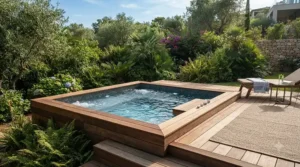
Superior Wellness built its reputation on the original Platinum Deluxe range as what the brand’s own sales director has called “the everyday person’s hot tub” — a deliberately entry-level line designed to get acrylic build quality in front of first-time buyers without the price tag of the premium ranges. The Seville is one of five current models in that refreshed line-up (alongside Happy, Palma, Refresh and Tahiti), and it’s built around updated side panelling and a modernised lighting package compared with the original decade-old design.
The spec sheet reasoning here is straightforward: this isn’t the most feature-dense tub on this list, but it’s a genuine acrylic shell from a well-established UK-based manufacturer at a price that undercuts most of the Canadian Spa Company range. For buyers whose main priority is “acrylic, not inflatable, from a company that isn’t brand-new to the market” rather than maximum jet count or insulation headline figures, this is where the value case is strongest.
We were not able to verify a large sample of independently sourced customer reviews specific to the Seville model during this research; Superior Wellness’s broader retail footprint (250 retail partners worldwide, according to the brand) is a reasonable indicator of market longevity, but shouldn’t be read as a substitute for model-specific satisfaction data.
Pros:
- ✅ Genuine acrylic shell at one of the lowest prices here
- ✅ Backed by an established UK hot tub manufacturer
- ✅ Updated 2020s panel and lighting design, not a legacy model
Cons:
- ❌ Fewer standout features than pricier acrylic tubs
- ❌ Warranty terms are shorter than some rivals — check before buying
The Superior Wellness Platinum Deluxe Seville is estimated around £2,999–£3,799 at the time of research — as with every model here, confirm current price and warranty length directly with an authorised retailer before ordering.
7. Lay-Z-Spa Maldives HydroJet Pro — the honest way to test hot tub life first
Every list like this needs one entry that’s honest about not being a hard-shell or acrylic tub, and the Maldives HydroJet Pro is that entry. It’s Lay-Z-Spa’s flagship inflatable/hybrid square spa, seating up to seven, built with EnergySense insulation that the brand states is up to 58% more efficient than a standard inflatable, TriTech puncture-resistant material, and internal MaxHold fabric beams that give the walls genuine rigidity rather than the wobble associated with older inflatable designs.
What sets it apart from a basic inflatable is the dual massage system: 10 water-powered HydroJets alongside the usual AirJet bubble system, WiFi app control, and adjustable-backrest loungers rather than flat floor seating. It was named Good Housekeeping’s “Best inflatable hot tub” in their 2025 testing round, cited specifically for energy efficiency, comfort, build strength and app control — a genuinely independent endorsement rather than a manufacturer’s own claim.
The honest analytical case for including it here: reviewers consistently note that hard-shell tubs still hold a meaningful insulation edge — realistically 15–20% better heat retention — but that edge costs £800–£1,500 more upfront for the models on this list. For someone genuinely unsure whether they’ll use a hot tub three times a week or three times a summer, spending under £1,400 to find out first is a defensible strategy, not a lesser one.
Pros:
- ✅ Independently recognised (Good Housekeeping 2025) for efficiency
- ✅ Dual HydroJet and AirJet massage system, unusual at this price
- ✅ No electrician or dedicated circuit needed — true plug-and-play
Cons:
- ❌ Shorter realistic lifespan than a hard-shell or rotomoulded tub
- ❌ Insulation still trails acrylic and rotomoulded rivals by a meaningful margin
At the time of research, the Lay-Z-Spa Maldives HydroJet Pro typically sits around £1,000–£1,400, positioning it as the clear budget and “try it first” pick on this list — check current price, as Lay-Z-Spa models are frequently discounted around seasonal sales.
Top 7 Full Spec Comparison
| Hot Tub | Jets | Dimensions | Power Supply | Insulation Type |
|---|---|---|---|---|
| RotoSpa Orbis | 22 | 1.83m x 0.74m | 13A plug & play / 16A hardwired | Moulded-in foam |
| Canadian Spa Company Winnipeg | 35 | 198cm x 198cm | 13A / 32A hardwired | Foam + IR-reflective panels |
| Canadian Spa Company Manitoba | 14 | 172cm x 154cm | 13A plug & play | Standard acrylic foam |
| Canadian Spa Company Montreal | Not disclosed (4HP pump) | Compact 2–4 person | 13A plug & play | Full flagship insulation package |
| RotoSpa DuoSpa S080 | Fewer than Orbis (compact) | Smaller than Orbis | 13A plug & play | Moulded-in foam |
| Superior Wellness Seville | Mid-range count | Standard 4–5 person | 13A plug & play | Standard acrylic foam |
| Lay-Z-Spa Maldives HydroJet Pro | 10 HydroJet + AirJet system | 1.8m square (approx.) | 13A plug & play | EnergySense thermal layer |
Reading across this table, the jump between the two RotoSpa tubs and everything else isn’t jet count — it’s the total absence of a separate cabinet structure, which is the detail that actually determines how the tub ages over a decade outdoors. The Canadian Spa Company Winnipeg‘s 35 jets look like the outright winner on paper, but spread across six seats it’s a comparable per-person density to the Manitoba’s 14 jets across four; raw totals without dividing by seat count are, frankly, a marketing trick worth ignoring.
💬 Just one click — help others make better buying decisions too!😊
Delivery and Installation: What Actually Happens When Your Hot Tub Arrives
Delivery and installation is the part most retailer websites gloss over, and it’s genuinely where a sub-£5,000 hot tub purchase can go wrong if you haven’t planned for it. Every acrylic and rotomoulded tub on this list needs a clear, level, load-bearing base before it arrives — a reinforced concrete slab or purpose-built composite base rated for the filled weight (a filled Orbis, for example, weighs around 950kg), not just a patio slab that looks solid.
Access matters as much as the base. Delivery crews measure gate widths, side-passage clearance and any steps between the road and your intended spot before dispatch, and a tub that can’t physically get through a 90cm side gate becomes the retailer’s problem, not yours, only if you’ve flagged it beforehand — so measure your narrowest access point before you order, not after the lorry arrives.
Electrically, anything beyond a genuinely 13A plug-and-play unit needs a dedicated circuit, RCD protection and, in most cases, a qualified electrician certifying the work to Part P of the Building Regulations — a legal requirement in England and Wales, not a suggestion. Even 13A “plug and play” tubs are increasingly recommended to run from their own dedicated outdoor socket rather than an extension lead, both for safety and because a shared circuit tripping mid-heat-up is a genuinely common early-ownership frustration. We’ll cover the specifics of Part P properly in the safety section below.
Most UK retailers bundle a base delivery-and-positioning service into the headline price, but full “delivered and installed, ready to fill” packages — including electrical connection — often carry a separate fee, sometimes several hundred pounds, so it’s worth confirming exactly what’s included before comparing two retailers’ headline prices against each other.
Setting Up and Maintaining Your Hot Tub Under £5000: The First 30 Days
The first fill is the moment most new owners either fall in love with hot tub ownership or start regretting the purchase, and the difference usually comes down to preparation rather than luck. Fill from a garden hose at mains temperature — typically around 9°C in a UK winter — and expect the first heat-up to a working 38–40°C to take somewhere in the region of 6–10 hours depending on tub size and heater output, costing roughly £15–£20 in electricity for that single fill, a one-off cost worth budgeting for separately from your ongoing running-cost estimate.
Water balancing in week one is where most avoidable problems start. Test pH and sanitiser levels within the first 24 hours of filling, not after a week of use, and expect to make small chemical adjustments daily until the water settles into a stable chemical balance — most manufacturers recommend testing at least every other day even once it’s stable. A common first-30-days mistake is over-chlorinating in an attempt to “get ahead” of the problem, which irritates skin and eyes far more than a slightly imperfect but stable balance ever will.
Filter maintenance is the single most skipped task in the early weeks. Rinse cartridge filters weekly at minimum during the settling-in period, and plan for a full filter replacement roughly every 4–6 weeks of regular use — a genuinely cheap habit that prevents the far more expensive problem of a clogged filter forcing the pump to work harder than it should. Keep the cover locked down whenever the tub isn’t in use; beyond the obvious safety benefit for households with children or pets, it’s doing the bulk of the insulation work between sessions, and leaving it propped open “for five minutes” repeatedly across a winter month adds up to a genuinely measurable dent in your running costs.
Real-World Scenarios: Matching Your Household to the Right Hot Tub Under £5000
The young couple with a small courtyard garden. Two adults, a modest paved area, realistic usage of two or three evenings a week. The RotoSpa DuoSpa S080 or Canadian Spa Company Montreal both make sense here — neither wastes money heating water and insulating space for guests who rarely show up, and both fit genuinely tight footprints without compromising build quality.
The family who wants a weekend social hub. Two adults, occasional teenagers, regular weekend guests, a proper garden to work with. This is where the Canadian Spa Company Winnipeg or the RotoSpa Orbis earn their keep — six real seats and a jet layout built for group use, rather than a tub that technically claims six but comfortably fits four.
The first-timer who isn’t sure they’ll use it enough to justify £4,000+. Budget-conscious, genuinely uncertain about frequency of use, possibly renting or planning to move within a few years. The Lay-Z-Spa Maldives HydroJet Pro is the honest recommendation here — a serious hybrid spa experience for a fraction of the outlay, with the flexibility to sell it on or upgrade later without having sunk £4,000+ into a decision you weren’t fully sure about.
How to Choose a Hot Tub Under £5000
- Start with your realistic seat count, not your aspirational one. Count how many people will actually use the tub on a normal Tuesday, not how many could theoretically squeeze in for a birthday party — most households overbuy capacity they rarely fill.
- Decide shell material before you compare prices. Acrylic, rotomoulded and inflatable aren’t just price tiers; they’re different products with different lifespans, and comparing across them on price alone misses the point.
- Check your electrical supply and access before falling in love with a model. A tub that needs a 32A hardwired supply and won’t fit through your side gate isn’t actually available to you at any price.
- Read the warranty terms, not just the length. A 2-year warranty that covers parts and labour beats a 5-year warranty that only covers the shell — the fine print matters more than the headline number.
- Budget for running costs and first-fill costs separately from the purchase price. A cheaper tub with weak insulation can cost more over three years than a pricier, better-insulated one.
- Confirm what “delivered and installed” actually includes. Base preparation, electrical connection and old-tub removal are sometimes extra — ask before comparing headline prices.
- Prioritise UK-based support over the lowest possible price. When something needs a spare part or a technician, a manufacturer with a UK warehouse and phone line saves weeks of frustration compared with importers who route everything through an overseas parent company.
Mid-Range Hard Shell Hot Tub vs Value Acrylic Hot Tub: What’s The Real Difference
“Hard shell” and “acrylic” get used almost interchangeably in hot tub marketing, and that’s genuinely confusing because they’re not quite the same thing. A mid-range hard shell hot tub, in the rotomoulded sense used by brands like RotoSpa, is a single moulded polyethylene structure — no separate cabinet, no seams, insulation built directly into the shell during manufacture. A value acrylic hot tub, by contrast, is a shaped acrylic basin bonded onto a separate structural shell, then wrapped in a timber-effect or composite cabinet that houses the plumbing and control equipment.
| Factor | Rotomoulded Hard Shell | Acrylic Hard Shell |
|---|---|---|
| Construction | One-piece moulded structure | Acrylic basin + separate cabinet |
| Typical seams/joins | None | Cabinet joins, panel seams |
| Insulation | Moulded in during manufacture | Foam or foil applied post-build |
| Cosmetic finish | Limited, usually a single colour | Wide range of cabinet finishes |
| Best For | RotoSpa Orbis, long-term low maintenance | Canadian Spa Company Winnipeg, cosmetic flexibility |
Reading the table, the trade-off is fairly clean: rotomoulded tubs like the RotoSpa Orbis win on structural simplicity and long-term maintenance because there’s simply less that can go wrong physically, while acrylic tubs like the Canadian Spa Company Winnipeg and Superior Wellness Platinum Deluxe Seville win on cosmetic choice and, generally, jet density, because the acrylic basin format lends itself to more elaborate seating geometry. Neither is objectively better — a rotomoulded tub in a garden you’ll never redecorate around is a fantastic long-term buy, while an acrylic tub that needs to match a specific decking colour scheme earns its extra flexibility.

Insulation Rating Explained: Why It Matters More Than Jet Count
Insulation rating is the single most under-discussed spec on any hot tub listing, and it’s the one that actually determines your electricity bill for the next decade. According to the Energy Saving Trust, insulation is a major driver of energy use in UK homes generally, and the same physics applies directly to a hot tub — a well-insulated shell retains heat between sessions, meaning the heater cycles on less often to maintain temperature, while a poorly insulated one is constantly fighting to replace heat lost through the shell and cover.
What the spec sheet won’t tell you outright is that “insulation” covers several different things bundled together: the foam or foil lining the shell itself, the quality and thickness of the cover (typically tapering from around 5 inches at the centre to 3 inches at the edge on better models), and whether the cabinet fully encloses the plumbing or leaves gaps for cold air to reach the pipework. A tub can have thick foam in the shell and still run expensively if the cover is thin or ill-fitting, because heat loss through an open or poorly sealed cover happens far faster than loss through the walls.
Current Ofgem figures put the UK electricity price cap at just over 26p per kWh for the July–September 2026 period, which is worth checking directly via the Ofgem energy price cap page since it’s reviewed and adjusted every three months. At that rate, the difference between a well-insulated hard-shell tub (broadly £2–£2.50 a day year-round) and a weaker inflatable running at the same temperature can genuinely add up to several hundred pounds a year — which is why the trade association BISHTA, whose standards work is covered in detail by Euro Spa Pool News, pushes hot tub retailers to disclose insulation specifications clearly rather than burying them behind jet counts and lighting features.
Jet Configurations Explained: What The Numbers Actually Mean
Jet count is the number every retailer leads with, and it’s also the single most misleading spec on this entire list if you read it in isolation. What actually matters is jet type, placement and pump power — not the raw total. A directional jet you can aim and adjust intensity on is doing genuinely useful targeted work on tight shoulders or a sore lower back; a fixed decorative bubble jet lining the tub’s floor is mostly there to look impressive in product photos.
Here’s what most buyers overlook: divide the jet count by the seat count before comparing two tubs. The Canadian Spa Company Winnipeg‘s 35 jets across six seats works out to under six jets per person; the RotoSpa Orbis‘s 22 jets across 4–5 seats is a broadly comparable, sometimes better, per-seat density despite the much lower headline number. Pump power matters just as much — a 4HP pump on the compact Canadian Spa Company Montreal pushes water through its jets with more force than a weaker pump would manage on a larger tub with more jets to feed, which is exactly why the Montreal, despite being one of the smaller tubs on this list, isn’t a lesser hydrotherapy experience.
Practically, when comparing jet configurations, look for a genuine mix: a handful of larger directional jets aimed at back and shoulders, a set of smaller targeted jets for calves and feet, and — if the tub has one — a separate air-blower system for a gentler, full-body bubble effect that runs independently of the water jets. That variety, not the total count, is what actually determines whether the massage experience feels considered or just noisy.
Hot Tub Finance Deals: Spreading The Cost Sensibly
Financing a hot tub under £5000 is now genuinely mainstream in the UK market, and most retailers on this list — including RotoSpa and Canadian Spa Company — offer some form of point-of-sale credit, typically either 0% interest-free credit over 12–36 months or a longer fixed-rate loan with an APR attached. Both routes are regulated consumer credit if arranged through a retailer, meaning you’re entitled to the same standard protections as any other regulated loan.
| Loan Amount | Term | APR | Approx. Monthly Payment | Approx. Total Interest |
|---|---|---|---|---|
| £3,500 | 36 months | 0% | ~£97 | £0 |
| £5,000 | 36 months | 9.9% | ~£160 | ~£760 |
| £4,000 | 24 months | 0% | ~£167 | £0 |
The table makes the case for shopping around on finance terms as carefully as you shop around on the tub itself: a genuinely 0% deal on the RotoSpa Orbis at roughly £4,500 works out cheaper over three years than a discounted £3,900 tub financed at a standard interest-bearing rate. Before signing anything, always check the deposit requirement, whether early repayment carries a fee, and — critically — whether the cash price and the financed price are actually the same figure, since some retailers quietly inflate the “financed” price to offset the cost of offering 0% credit.
Safety, Electrics and Regulations for UK Hot Tub Owners
Every hot tub in this guide that isn’t purely a basic 13A plug-and-play inflatable falls under Part P of the Building Regulations if it’s connected to a dedicated circuit — and even genuinely plug-and-play models are increasingly recommended to run from their own outdoor socket rather than a shared circuit or extension lead. Part P requires that fixed electrical work of this kind be carried out, or at minimum certified, by a competent registered electrician working to BS 7671 (the IET Wiring Regulations), and doing it yourself without notifying building control is technically a criminal offence in England and Wales, however unlikely enforcement might feel for a garden hot tub specifically.
In practice, this means every acrylic or rotomoulded tub on this list — the RotoSpa Orbis, RotoSpa DuoSpa S080, both Canadian Spa Company flagship-tier tubs, the Manitoba, the Montreal, and the Superior Wellness Platinum Deluxe Seville — needs a dedicated circuit with correct RCD protection and, ideally, an isolator switch positioned at least two metres from the tub itself so it can be shut off quickly in an emergency. Full official guidance sits on the gov.uk Approved Document P page, which is worth reading before you book an electrician so you know what certification you should expect to receive at the end of the job.
Beyond electrics, water hygiene is the other genuinely serious safety consideration, and it’s one BISHTA-registered retailers are specifically trained on — testing chemical balance regularly isn’t just about comfort, it’s about preventing the kind of bacterial growth that led to the industry’s original safety standards being written in the first place. If in doubt about installation compliance or water treatment, buying from a BISHTA member retailer gives you a documented route to redress that an unregistered importer typically doesn’t.
What to Expect: Real-World Performance Once It’s In Your Garden
Spec sheets describe potential; real-world use is what actually determines whether you’ll still be using the tub twice a week come February. On paper, a 2kW heater sounds modest next to a 3kW flagship, but in practice the difference mostly shows up in initial fill-up speed rather than day-to-day running — once a well-insulated tub like the RotoSpa Orbis or RotoSpa DuoSpa S080 is up to temperature, the heater’s job is simply topping up small losses, not fighting a losing battle against the cover.
Noise is the spec nobody mentions until it becomes a problem. Pumps on the acrylic tubs in this guide typically run for a few hours a week total across heating and filtration cycles, not continuously, so genuine noise complaints are rarer than people expect — but positioning still matters, particularly if a neighbour’s bedroom window sits close to where you’re planning to install. Winter performance is where the shell-material differences on this list become most obvious in daily life: the two RotoSpa tubs and the flagship-tier Canadian Spa Company models hold their advertised temperature through genuinely cold snaps with minimal reheat lag, while the Lay-Z-Spa Maldives HydroJet Pro, for all its EnergySense improvements, will still ask more of its heater on a frosty January evening than any of the hard-shell options on this list.
Frequently Asked Questions
❓ What is a hot tub under £5000?
❓ Is it worth buying a hot tub under £5000?
❓ Which is better: hard shell or acrylic hot tub under £5000?
❓ Can I get a hot tub under £5000 on finance?
❓ How much does it cost to run a hot tub under £5000?
Conclusion
There’s no single “best” hot tub under £5000 — there’s a best one for your garden, your household size, and how certain you are that you’ll actually use it three years from now. If durability and low maintenance top your list, the RotoSpa Orbis or RotoSpa DuoSpa S080 make a genuinely strong case as British-built, seamless, one-piece tubs with warranties to match. If cosmetic flexibility and maximum capacity matter more, the Canadian Spa Company Winnipeg and Manitoba deliver proper acrylic construction without needing to stretch past this budget’s ceiling. And if you’re still not entirely sure hot tub ownership is for you, the Lay-Z-Spa Maldives HydroJet Pro is the honest, low-risk way to find out.
What all seven share is that none of them ask you to compromise on the fundamentals — real insulation, UK-based support, and a genuine warranty — just to stay under £5,000. Take the time to check current pricing directly with each retailer, confirm what delivery and installation actually includes, and factor Part P electrical compliance into your planning from day one rather than as an afterthought once the tub’s already sitting in your driveway.
✨ Ready to compare live prices on today’s picks? Take your garden upgrade further by checking current availability on any of the seven hot tubs above — click through to see current pricing before you decide! 🛁
Recommended for You
- Hard Shell Hot Tub: 7 Best UK Picks That Won’t Crack (2026)
- Inflatable Hot Tub For Cold Weather: 7 Best Insulated Picks (2026)
- Square Inflatable Hot Tub: 7 Best Picks for UK Gardens (2026)
Disclaimer: This article contains affiliate links. As an Amazon Associate, I earn from qualifying purchases. If you purchase products through these links, we may earn a small commission at no additional cost to you.
✨ Found this helpful? Share it with your friends! 💬🤗
