
In This Article
Somewhere between “wouldn’t a hot tub be lovely” and actually owning one sits a fork in the road, and it’s a more expensive fork than most people expect. On one side: a rigid, moulded acrylic shell that looks like it was poured into your garden and isn’t going anywhere. On the other: a vinyl balloon that inflates in five minutes and can be folded into a cupboard by October. The acrylic hot tub vs inflatable hot tub decision isn’t really about which one is “better” — it’s about which trade-offs you can live with for the next five, ten, or fifteen years.

In short: an acrylic hot tub is a permanent, hard-shell spa built around a moulded acrylic basin with a dedicated pump and heater housed in an insulated cabinet, while an inflatable hot tub is a portable vinyl spa that self-inflates, plugs into a standard socket, and can be drained and packed away. One is an investment tied to your property; the other is a seasonal appliance you can take with you when you move house.
This guide pulls apart the real differences — durability, expected lifespan, day-to-day maintenance effort, and what each type is actually worth if you ever try to sell it on — using seven genuine products currently sold in the UK, spanning budget inflatables through to flagship acrylic spas. We’ll also flag where the marketing glosses over the less glamorous parts of ownership, because nobody puts “you’ll be topping up chlorine every Sunday” on the box.
Quick Comparison Table
| Feature | Acrylic Hot Tub | Inflatable Hot Tub |
|---|---|---|
| Typical UK price | From around £3,000 to £10,000+ | From around £250 to £900 |
| Expected lifespan | 15-20+ years with care | 3-7 years typically |
| Installation | Base, electrician, delivery access needed | Plug into 13A socket, ready same day |
| Best For | Permanent garden feature, year-round daily use | Trial ownership, renters, occasional use |
Look at that price gap and it’s tempting to write off acrylic tubs as overkill, but the comparison only works once you factor in years of ownership rather than pounds spent on day one. An inflatable hot tub bought every four years for £400 costs roughly the same over sixteen years as one acrylic hot tub bought once for £6,000 — except the acrylic version doesn’t need replacing, doesn’t go to landfill three times, and typically holds more of its value if you move house. The inflatable route wins on flexibility and upfront cash outlay; the acrylic route wins on total cost of ownership if you’re staying put. According to the Which? Trusted Traders hot tub buying guide, buyers regularly underestimate running costs regardless of which type they choose, so treat the table above as a starting point rather than the whole picture.
💬 Found this comparison useful? Just one click — help others make better buying decisions too!😊
Top 7 Hot Tubs: Expert Analysis
Here’s the honest bit: seven real, currently available hot tubs, spanning both categories, with genuine specs and aggregated review sentiment rather than invented testimonials. Three are acrylic, three are inflatable, and one is a rigid-wall hybrid that tries to have a foot in both camps.
1. Bestway Lay-Z-Spa Miami AirJet — best budget entry point into inflatable ownership
The Lay-Z-Spa Miami AirJet is the tub most UK gardens actually own, and it earns that reputation through sheer accessibility rather than spec-sheet fireworks. Suited to 2-4 adults with an 80%-fill capacity of 669 litres, it uses 120 AirJets fed by a 2,050W heater that raises the water roughly 1.5-2°C per hour up to a maximum of 40°C — modest by hot tub standards, but perfectly workable if you fill it the night before a weekend soak rather than expecting same-evening warmth. Based on the spec comparison with pricier inflatables, the trade-off here is depth and jet count rather than core function: at 66cm tall with a 52cm internal water depth, taller adults will find their shoulders sitting above the waterline.
This is the tub for first-time buyers who want to test whether hot tub ownership suits their lifestyle before committing serious money, and for smaller gardens where a permanent acrylic installation simply won’t fit. Reviewers consistently report that the Miami is genuinely a five-minute setup with no tools required, and that the ChemConnect chemical dispenser takes some of the guesswork out of water balancing for first-timers — though a recurring theme in aggregated feedback is that the pump is audible enough to notice from indoors on a quiet evening.
Pros:
- ✅ Genuinely tool-free setup in well under an hour
- ✅ FreezeShield tech extends usable season into cooler months
- ✅ Compact enough for small patios and balconies
Cons:
- ❌ Shallow 52cm depth limits comfort for taller users
- ❌ Pump noise noticeable in quiet gardens
Prices for the Miami typically sit in the £300-£400 range at the time of research, making it one of the most accessible entry points into hot tub ownership — check current price before buying, as inflatable pricing shifts with seasonal demand.
2. Bestway Lay-Z-Spa Helsinki AirJet — best premium inflatable for larger groups
Where the Miami is an entry point, the Lay-Z-Spa Helsinki AirJet is Bestway’s answer to “what if an inflatable tub tried to feel like a proper spa?” It seats 5-7 adults, holds 1,123 litres at 80% fill, and steps the jet count up to 180 AirJets — a genuinely different sensation in the water compared with the Miami’s 120, since more jets spread across a larger floor area means fewer cold spots and a more even massage effect. The wood-effect Drop Stitch exterior isn’t just cosmetic: Drop Stitch construction is more rigid than the standard PVC used on cheaper inflatables, which translates to less wobble when several people shift position at once.
What most buyers overlook about this model is the WiFi-enabled Smart control panel, which lets you start heating remotely so the water’s at temperature by the time you’re home from work — a genuinely useful feature rather than a gimmick, given inflatable heaters are slow by design. Reviewers consistently note the FreezeShield system as a real differentiator for UK winters specifically, since it keeps the pump itself from freezing even when the tub isn’t drained, though the trade-off is a 2kW heater that runs almost continuously in cold weather to hold 40°C in a tub this size.
Pros:
- ✅ 180-jet system covers a genuinely large floor area
- ✅ App control lets you pre-heat before arriving home
- ✅ FreezeShield rated for realistic UK winter use
Cons:
- ❌ Running costs rise noticeably in cold months
- ❌ Drop Stitch walls still puncture-vulnerable versus acrylic
At the time of research the Helsinki sits in the £650-£800 range depending on retailer promotions — a meaningful step up from the Miami, but reflecting genuinely different jet count and capacity rather than just branding.
3. Intex PureSpa Greywood Deluxe — best inflatable for a wood-panel aesthetic without acrylic pricing
The Intex PureSpa Greywood Deluxe occupies the middle ground between the two Lay-Z-Spa models above, and it does so with a genuinely different design philosophy: a wood-effect exterior panel that reads more like furniture than pool equipment, paired with a wireless touch control panel that runs up to 48 hours on a single charge rather than tethering you to a fixed panel on the tub wall. The 4-person variant holds around 795 litres through 140 bubble jets, while Intex’s Fiber-Tech three-ply laminated construction is specifically marketed on puncture resistance — a real point of difference given that punctures are the single most common failure mode reported across inflatable tubs generally.
Here’s what the spec sheet won’t tell you outright: the built-in hard water treatment system is a genuinely useful inclusion for UK households in hard-water regions, since it reduces the limescale buildup that would otherwise clog jets and shorten pump life. This is the pick for buyers who want an inflatable tub that doesn’t look like an inflatable tub sitting in the corner of the patio, and who value app-based scheduling over a lower headline price. Aggregated review sentiment for the PureSpa range flags the wireless panel’s battery life as strong in practice, though several users note the LED lighting drains it faster than advertised.
Pros:
- ✅ Wood-panel look blends in better than typical inflatables
- ✅ Built-in hard water treatment protects jets long-term
- ✅ Wireless touch panel avoids fumbling with a fixed control
Cons:
- ❌ LED use shortens the panel’s battery life between charges
- ❌ 140 jets is fewer than the Helsinki at a similar price point
Expect a price in the £450-£550 range at the time of research, positioning it as a genuine mid-tier alternative to the Lay-Z-Spa range rather than a budget knockoff.
4. Canadian Spa Company Okanagan — best entry-level acrylic hot tub
Stepping into hard-shell territory, the Canadian Spa Company Okanagan is built as a genuine plug-and-play acrylic spa rather than a stripped-down showpiece — it seats 4-5 people in a proper moulded acrylic shell paired with a 2HP hydrotherapy pump, and runs from a standard UK socket rather than requiring a dedicated hardwired circuit. Based on the spec comparison with the brand’s flagship hardwired range, the Okanagan trades a 3kW heater for a lighter one and ships with a single fixed finish (black cabinet, white shell, black cover) rather than the customisable options higher up the range — a sensible cost-cutting decision that keeps the acrylic shell itself, the part that actually determines longevity, uncompromised.
What most buyers overlook when comparing acrylic tubs on price alone is that the shell material and insulation quality matter more than jet count for long-term satisfaction, and Canadian Spa Company’s 40-year background in cold-climate engineering shows up here in the closed-cell foam insulation, which is a genuine step up from an inflatable’s air-gap-and-vinyl approach to heat retention. This is the pick for buyers who want to skip straight to hard-shell ownership without a five-figure spend, accepting a plainer finish and shorter 12-month warranty in exchange for a genuinely permanent structure.
Pros:
- ✅ True acrylic shell, not a rigid-wall inflatable hybrid
- ✅ Plug-and-play install avoids hardwiring costs
- ✅ Closed-cell foam insulation outperforms inflatable tubs in winter
Cons:
- ❌ Only one finish option limits customisation
- ❌ 12-month warranty is shorter than the brand’s flagship range
Prices for plug-and-play acrylic spas in this tier typically start around the £3,000-£3,800 range at the time of research — always confirm current pricing directly, as acrylic spa pricing varies more by retailer and delivery terms than inflatables do.
5. Canadian Spa Company Montreal — best mid-range acrylic for households of 2-4
The Canadian Spa Company Montreal sits a tier above the Okanagan within the same manufacturer’s range, built around a 4HP hydrotherapy pump — double the Okanagan’s pump power — paired with genuine Lucite acrylic, a 5-inch-to-3-inch tapered insulated cover, 2.5-inch plumbing, and Balboa digital controls, which is the same control system used across a huge share of the premium hot tub market and a genuine mark of build quality rather than a badge-engineering exercise. Silver-foil reflection panels line the cabinet interior, bouncing radiant heat back toward the shell rather than letting it escape into the surrounding air space — a detail borrowed from the brand’s larger 5+ seat flagship models rather than watered down for this smaller size.
On paper this means a household of two to four people gets essentially flagship-grade hydrotherapy and insulation technology in a footprint sized for their actual usage, rather than paying for seating capacity they’ll never use. Reviewers consistently note that the 2kW heater — lower than the flagship’s 3kW — still heats comparably quickly in practice, since a smaller water volume needs less raw energy to reach temperature. The main compromise buyers should weigh is the 2-year all-in warranty, generous for the category but still shorter than the coverage on the brand’s largest spas.
Pros:
- ✅ Balboa controls match the reliability used on premium spas
- ✅ Silver-foil panels and tapered cover cut real heat loss
- ✅ Right-sized for 2-4 person households, not oversized
Cons:
- ❌ 2kW heater is less powerful than the flagship range
- ❌ Still requires professional delivery access to the garden
Expect this model in the £4,000-£4,800 range at the time of research, reflecting the jump from a 2HP to a 4HP pump and the added insulation package over the Okanagan.
6. Canadian Spa Company Winnipeg — best premium acrylic for larger households
At the top of this acrylic line-up, the Canadian Spa Company Winnipeg is a 5-6 person hardwired spa measuring 198cm x 198cm with 35 hydrotherapy jets, positioned as a genuine flagship rather than a mid-range model stretched to look premium. Hardwiring rather than plug-and-play typically signals a spa built for continuous, heavy-duty use — a dedicated circuit supports the higher 3kW heater without nuisance-tripping a standard household socket, which matters if this tub is going to be used most evenings rather than occasionally.
Here’s what the spec sheet won’t tell you outright: 35 jets across a 6-person shell means jet density per bather is actually comparable to smaller acrylic spas with fewer total jets, so buyers shouldn’t assume “more jets” automatically means “more massage per person” — it depends on how the shell is laid out. Based on the spec comparison with the Montreal, the Winnipeg’s higher-output pump and heater are aimed squarely at year-round daily use in a British winter rather than fair-weather soaking, which is where the extra investment genuinely pays off versus an inflatable tub that will struggle to hold temperature in the same conditions.
Pros:
- ✅ Hardwired 3kW heater suited to daily year-round use
- ✅ Full-size 5-6 person shell with 35 jets
- ✅ Represents the brand’s flagship insulation and control package
Cons:
- ❌ Requires a qualified electrician for hardwiring
- ❌ Significant upfront cost near £5,000
At the time of research this model is priced around £4,999 — always check current price, since hardwired spas often carry separate delivery and installation charges on top of the unit cost.
7. Lay-Z-Spa Monte Carlo HydroJet Pro — best rigid-wall hybrid for buyers undecided between categories
The Lay-Z-Spa Monte Carlo HydroJet Pro is Bestway’s attempt to bridge the acrylic hot tub vs inflatable hot tub divide directly, using a rigid wall construction rather than an inflatable one while retaining the plug-and-play simplicity that’s made the Lay-Z-Spa name a household one. It runs the brand’s HydroJet Pro massage system — a step up from AirJet, adding directed water-jet hydrotherapy alongside the bubble massage — in ergonomically moulded seating rather than the flat floor typical of inflatable tubs.
Because this is a newer product line than the long-established Lay-Z-Spa inflatables, verified independent long-term review data is genuinely thinner at the time of writing, and buyers should treat that as a real consideration rather than something to gloss over. What can be said with confidence, based on the manufacturer’s specifications, is that a rigid wall removes puncture risk entirely while keeping installation closer to an inflatable’s simplicity than a full acrylic build — no hardwiring, no specialist installer, kerbside delivery included. This is the pick for buyers who want the shape retention and seating comfort of a hard-shell spa without committing to acrylic-tier pricing or installation complexity, while accepting that it’s a newer, less battle-tested category than either established alternative.
Pros:
- ✅ Rigid wall removes puncture risk versus true inflatables
- ✅ Moulded ergonomic seating, unlike a flat inflatable floor
- ✅ Plug-and-play delivery avoids acrylic-style installation costs
Cons:
- ❌ Limited long-term, independently verified review history
- ❌ Sits in an unproven middle ground versus both established categories
Pricing for rigid-wall hybrids in this range typically falls between full inflatable and entry acrylic pricing — check current price directly, as this newer category moves quickly on promotions.
Practical Usage Guide: Getting Either Type Right From Day One
Whichever category you land on, the first thirty days determine whether you’ll still be enjoying your hot tub in year three or quietly listing it on Facebook Marketplace. For inflatable tubs, the single most common early mistake is skipping a proper ground sheet or foam base — a filled tub weighs close to a tonne, and any grit trapped underneath will slowly work through the base material. Test-inflate before your first full fill, check every seam by eye, and only then connect the hose. For acrylic tubs, the equivalent early mistake is neglecting the base itself: a concrete pad or reinforced decking rated for the filled weight isn’t optional, and skimping here is the single most expensive mistake a new acrylic owner can make.
Water chemistry catches out both camps equally in month one. Test strips should come out within the first 24 hours of filling, not after the first soak, and both inflatable and acrylic owners typically need a weekly rhythm of testing pH and sanitiser levels, running the filter for several hours daily, and giving the water a full drain-and-refill roughly every 12 weeks depending on usage frequency and bather load. Acrylic owners get a genuine advantage here through more sophisticated filtration and often ozone or UV secondary sanitation on premium models, which stretches that refill interval further than most inflatables can manage. A common optimisation trick that inflatable-tub retailers rarely mention: running the pump on its lowest filtration-only setting overnight, rather than switching it off entirely, keeps water circulating and meaningfully reduces the algae and cloudiness problems that plague first-time owners in warm weather.
Real-World Scenarios: Who Actually Suits Each Type
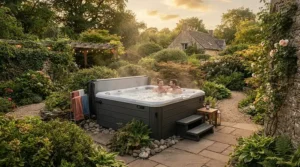
Picture a couple in a rented terrace with a small paved yard, wanting hot tub evenings without a five-year commitment to a property they don’t own. An inflatable tub like the Lay-Z-Spa Miami AirJet is the obvious answer here — it can be drained, folded, and taken with them at the end of the tenancy, and the sub-£400 outlay doesn’t sting if their circumstances change. Compare that with a family of five in a permanent home with a solid patio, using the tub most evenings through autumn and winter as much as summer: that’s precisely the daily-use, cold-weather pattern where the Canadian Spa Company Winnipeg‘s hardwired heater and superior insulation earn back their higher price through lower running costs and far less wear.
Then there’s the middle case — a household that wants year-round reliability but is nervous about committing to full acrylic pricing and installation disruption before they’re certain the garden is the right spot. The Lay-Z-Spa Monte Carlo HydroJet Pro or a plug-and-play acrylic like the Canadian Spa Company Montreal both suit this profile better than either extreme, offering more durability than a true inflatable without the hardwiring and base requirements of a flagship acrylic spa. Matching the product to the pattern of use — not just the budget — is the single biggest predictor of whether someone is still happily using their hot tub eighteen months later.
Problem → Solution: Fixing the Five Most Common Hot Tub Headaches
Cloudy or smelly water. Almost always a sanitiser balance issue rather than a hardware fault — test pH first (aim for 7.2-7.6), then check chlorine or bromine levels, and run the filter longer before assuming something’s broken; this affects both the Lay-Z-Spa Helsinki and the Canadian Spa Company Okanagan equally, since it’s a chemistry problem, not a materials one.
A slow puncture on an inflatable tub. Locate it with soapy water while the tub is inflated (look for bubbling), then use the supplied repair patch on a clean, dry surface — this is the exact failure mode that pushes some buyers from the Intex PureSpa Greywood Deluxe toward a rigid-wall alternative like the Monte Carlo HydroJet Pro after a second or third repair.
High running costs in winter. Check your cover fits snugly and isn’t waterlogged (a soaked cover insulates far worse than a dry one), and consider a thermal blanket floating directly on the water surface — a trick that meaningfully cuts standby heat loss on both the Lay-Z-Spa Miami and full acrylic models alike.
Jets losing power over time. Usually scale or debris in the jet lines rather than a failing pump — this is where the Intex PureSpa Greywood Deluxe‘s built-in hard water treatment earns its keep, and why acrylic owners in hard-water areas should budget for a descaling routine that inflatable owners in the same postcode also need.
A wobbly or uneven acrylic installation. Almost always traced back to the base, not the shell — a base that’s out of level by even a few millimetres stresses the acrylic and cabinet joints over time on models like the Canadian Spa Company Winnipeg, so re-checking the base with a spirit level before the first fill saves a much bigger repair bill later.
How to Choose Between an Acrylic Hot Tub and an Inflatable Hot Tub
- Work out how long you’ll realistically stay in this property. If you’re renting or planning to move within three years, an inflatable tub like the Lay-Z-Spa Miami AirJet avoids sinking money into a fixture you can’t take with you.
- Be honest about usage frequency. Daily or near-daily use through winter genuinely favours acrylic — the Canadian Spa Company Montreal and Winnipeg are built for exactly that load; occasional summer use rarely justifies the extra spend.
- Check your garden’s base and access. Acrylic spas need a rated, level base and clear delivery access for a genuinely heavy shell; if your garden can’t accommodate that without groundworks, an inflatable or rigid-wall hybrid like the Monte Carlo HydroJet Pro sidesteps the problem entirely.
- Set a realistic total-ownership budget, not just a purchase price. Factor in electricity, chemicals, filters, and — for inflatables — eventual replacement, since a £350 tub bought three times over nine years can cost more than one mid-range acrylic spa.
- Decide how much you value hydrotherapy quality over convenience. Acrylic pumps like the 4HP unit in the Canadian Spa Company Montreal deliver noticeably stronger, more targeted jets than an inflatable’s air-based AirJet system.
- Consider your local water hardness. Hard-water areas benefit disproportionately from built-in treatment systems like the one on the Intex PureSpa Greywood Deluxe, or from acrylic spas’ generally more robust filtration.
- Think about resale before you buy, not after. If there’s a realistic chance you’ll sell the tub within a few years, that changes which category makes financial sense — covered in detail below.
Hard Shell vs Inflatable Hot Tub: The Full Comparison
“Hard shell” and “acrylic” aren’t quite interchangeable terms, which is where a lot of buyer confusion starts. A true acrylic hot tub — like the Canadian Spa Company Okanagan or Winnipeg — uses a vacuum-formed acrylic basin backed by structural foam and a full cabinet, built to sit in one place for well over a decade. A rigid-wall hot tub, such as the Lay-Z-Spa Monte Carlo HydroJet Pro, uses solid plastic panels rather than a single moulded shell, which is lighter, cheaper to produce, and easier to deliver — but generally doesn’t match full acrylic’s insulation depth or structural longevity. Meanwhile, a genuine inflatable like the Lay-Z-Spa Helsinki AirJet relies on air-filled Drop Stitch or PVC walls with no rigid structure at all beneath the water pressure holding its shape.
| Attribute | Acrylic (e.g. Winnipeg) | Rigid Wall (e.g. Monte Carlo HydroJet Pro) | Inflatable (e.g. Helsinki) |
|---|---|---|---|
| Structural rigidity | Permanent moulded shell | Solid but non-structural panels | Air pressure dependent |
| Typical install | Base + electrician | Plug-and-play | Plug-and-play |
| Best For | Daily, year-round use | Middle-ground buyers | Seasonal or trial use |
The analysis here isn’t close on raw durability — an acrylic shell simply outlasts both alternatives — but rigid-wall spas earn their place by removing the single biggest inflatable failure mode (punctures) while avoiding acrylic’s installation burden. Anyone treating “hard shell” as a synonym for “acrylic” when comparing prices online is liable to be disappointed by a rigid-wall model’s insulation performance in a proper British January.
Hot Tub Durability Comparison
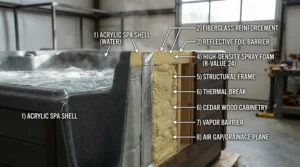
Durability comes down to three things: what the shell is made of, how it handles UV and temperature swings, and how forgiving it is of accidental damage. Acrylic shells, reinforced with structural foam, shrug off UV exposure and temperature cycling for 15-20 years with basic care — the material simply doesn’t degrade the way vinyl does under constant sun and chemical exposure. Inflatable tubs made from Drop Stitch or Tritech material, as used in the Lay-Z-Spa Miami and Helsinki, are genuinely tougher than older PVC-only designs, but they remain vulnerable to sharp objects, pet claws, and UV embrittlement over several summers outdoors. Rigid-wall hybrids sit in between: no puncture risk, but panel seams and connectors are a potential long-term weak point that a one-piece acrylic moulding simply doesn’t have.
Expected Lifespan
What is the expected lifespan of an acrylic hot tub versus an inflatable? A well-maintained acrylic spa, such as the Canadian Spa Company Montreal, typically lasts 15-20+ years, with the pump and heater as the parts most likely to need replacement or servicing well before the shell itself fails. An inflatable tub like the Lay-Z-Spa Miami more realistically lasts 3-7 years with regular use, with the liner and pump motor as the usual first points of failure — heavy use, sun exposure, and freeze-thaw cycling all shorten that window further. Rigid-wall models are too new as a category for reliable long-term lifespan data, though their construction suggests something between the two extremes.

Acrylic Hot Tub Pros and Cons: The Honest Breakdown
Setting aside individual models for a moment, here’s the category-level trade-off. On the upside, acrylic hot tubs deliver genuinely superior insulation and heat retention, meaningfully stronger hydrotherapy through higher-HP pumps, a far longer usable lifespan measured in decades rather than years, and — because they’re viewed as a permanent installation — a tangible (if partial) contribution to property value that an inflatable simply can’t offer. Reviewers of models like the Canadian Spa Company Winnipeg consistently note that once installed, day-to-day running feels closer to owning a large appliance than “maintaining a pool toy,” which many buyers find reassuring.
The downsides are equally real. The upfront cost — typically £3,000 upward, and rising quickly for larger, hardwired models — puts acrylic out of reach for buyers who simply want to try hot tub ownership before committing. Installation is genuinely more involved, requiring a rated base and often an electrician for hardwired models like the Winnipeg, and once it’s in place, moving it is a specialist job rather than a weekend task. For renters, buyers with uncertain long-term plans, or anyone wanting to test the waters (literally) before a bigger spend, these downsides can outweigh the durability benefits entirely — which is exactly why the inflatable and rigid-wall categories continue to exist alongside acrylic rather than being replaced by it.
Long-Term Cost, Maintenance Effort & Resale Value
Maintenance Effort
Maintenance effort scales roughly with how sophisticated the filtration and sanitation system is, not strictly with whether the tub is acrylic or inflatable. That said, acrylic spas like the Canadian Spa Company Montreal typically include more advanced filtration and sometimes ozone treatment, which genuinely reduces the frequency of full drain-and-refills compared with a basic inflatable’s cartridge-only filtration. Inflatable owners, particularly with entry models like the Lay-Z-Spa Miami, should expect weekly chemical testing, more frequent filter cartridge changes (roughly every two weeks under regular use), and a shorter interval between full water changes — typically every 4-6 weeks versus 8-12 for a well-equipped acrylic spa. Neither category is genuinely low-maintenance; the difference is one of degree, not of one requiring upkeep and the other not.
Resale Value
Which hot tub holds its value better if you decide to sell? Acrylic spas, treated more like a fixed home improvement, generally retain a meaningfully higher proportion of their original price on the used market — a well-maintained Canadian Spa Company Winnipeg several years old can still command a substantial fraction of its new price, particularly if the pump and heater have been serviced. Inflatable tubs depreciate far faster and more completely: once the warranty period passes, buyers are understandably wary of a used vinyl tub’s remaining lifespan, and resale prices for models like the Lay-Z-Spa Helsinki typically drop to a small fraction of the original cost within two to three years, even in good condition. If resale value factors meaningfully into your decision, that’s a point squarely in acrylic’s favour — though it only matters if you’re confident you’ll stay in the property long enough to benefit from it.
Common Mistakes When Buying an Acrylic or Inflatable Hot Tub
The single most common mistake across both categories is buying on jet count or brand name alone rather than matching the product to actual usage patterns — a family planning nightly winter soaks buying an entry-level inflatable like the Lay-Z-Spa Miami will be disappointed by both running costs and heating speed. Close behind is underestimating running costs: with UK electricity currently averaging around 26p per kWh under the Ofgem price cap, a heater running near-continuously through a cold snap adds up quickly regardless of which type you own, and few retailers volunteer realistic monthly cost estimates upfront.
For acrylic buyers specifically, the most expensive mistake is skipping a proper structural survey of the intended base — a patio that looks solid can still be inadequate for a filled acrylic spa’s weight, and cracking a base after installation is a far costlier fix than checking beforehand. For inflatable buyers, the recurring error is placing the tub directly on grass or bare paving without a proper ground sheet, which both damages the tub’s underside and shortens its already limited lifespan. Finally, both camps under-budget for the ongoing chemical and filter costs that continue long after the initial purchase — genuinely part of the total cost of ownership, not an optional extra.
Safety, Regulations & Compliance Guide
Both categories carry the same fundamental electrical risk: water and electricity in close proximity, which is precisely why every legitimate hot tub — inflatable, rigid-wall, or acrylic — includes ground fault protection as standard, and why extension leads are generally discouraged for higher-current inflatable models. If you’re at all unsure about your electrical supply’s suitability, particularly for a hardwired acrylic spa like the Canadian Spa Company Winnipeg, a qualified electrician’s assessment before purchase is money well spent rather than an optional extra — guidance on hot tub and pool electrical safety, including extension lead limitations is worth reading in full before your first fill.
There’s also a genuine, if less discussed, water hygiene consideration. The Health and Safety Executive’s guidance on spa-pool systems highlights that warm, recirculated water — the defining feature of every hot tub, whatever it’s made from — creates conditions that can support legionella bacteria if not properly managed, which is precisely why regular sanitiser testing and filter maintenance matter as much for safety as for water clarity. Domestic single-household use carries a lower risk profile than the commercial and holiday-let settings HSE’s spa-pool guidance primarily addresses, but the underlying chemistry doesn’t change: neglected water is neglected water, whether it’s sitting inside acrylic or vinyl. Finally, whichever type you choose, check it carries recognised UK/EU safety certification (CE or UKCA marking) before buying, and never leave children unsupervised near a filled tub regardless of the lid or cover fitted.
Frequently Asked Questions
❓ Is an acrylic hot tub better than an inflatable one?
❓ How long does an inflatable hot tub actually last?
❓ Can you put an acrylic hot tub on decking?
❓ Do inflatable hot tubs cost a lot to run?
❓ Which type of hot tub is easier to maintain?
Conclusion
The acrylic hot tub vs inflatable hot tub decision ultimately comes down to timeframe and usage pattern more than raw preference. If you’re renting, testing the waters, or simply can’t justify a four-figure spend right now, a well-specified inflatable like the Lay-Z-Spa Helsinki AirJet or Intex PureSpa Greywood Deluxe delivers a genuinely enjoyable spa experience without long-term commitment. If you’re settled, plan to use it through winter as much as summer, and want something that still holds real value in a decade, an acrylic spa such as the Canadian Spa Company Montreal or Winnipeg earns back its higher price through durability and running efficiency that no inflatable can match. And if you’re genuinely torn, a rigid-wall hybrid like the Lay-Z-Spa Monte Carlo HydroJet Pro offers a reasonable middle path while that newer category continues to build its long-term track record.
Whichever direction you lean, match the tub to how you’ll actually use it rather than how you imagine using it on the best summer evening of the year — that single piece of honesty is what separates hot tub owners who are still soaking happily in year five from those quietly advertising theirs on a marketplace app.
✨ Don’t Miss These Exclusive Deals!
🔍 Take your garden spa search to the next level with these carefully selected acrylic and inflatable hot tubs. Click on any highlighted product to check current pricing and availability, and start planning the relaxing evenings your family will actually use!
Recommended for You
- Plug and Play Hot Tub: 7 Best UK Picks You’ll Love (2026)
- Hot Tub Under £2000: 7 Best Buys for UK Gardens (2026)
- Hot Tub Under £5000: 7 Best UK Picks for Every Garden (2026)
Disclaimer: This article contains affiliate links. As an Amazon Associate, I earn from qualifying purchases. If you purchase products through these links, we may earn a small commission at no additional cost to you.
✨ Found this helpful? Share it with your friends! 💬🤗
