
In This Article
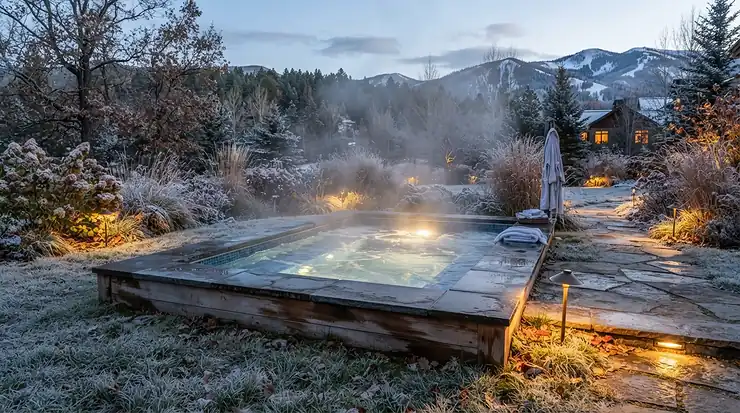
There’s a particular kind of daydream that hits every British homeowner at least once: stepping straight out of the kitchen door and sinking into hot water without wrestling an inflatable liner into shape first. That’s the appeal of a built-in hot tub for garden spaces — a spa that looks like it grew there, seated into decking or sunk flush with the patio rather than perched on top of it like an oversized paddling pool. It’s a bigger commitment than plugging in an inflatable, but done properly, it’s also the difference between “the hot tub we own” and “the hot tub that makes the whole garden feel finished.”
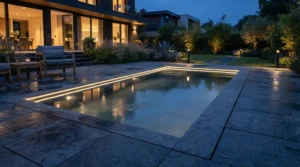
A built-in hot tub for garden use is, put simply, a spa unit installed so its rim sits level with the surrounding decking or ground, either partially sunk or framed flush by a purpose-built structure, rather than left freestanding on a slab. The seamless look comes at a cost: groundwork, drainage, and — depending on how far you sink it — a possible planning conversation with your local authority.
This guide walks through seven real products that UK buyers actually use to get that built-in look, from budget-friendly inflatable spas that can be boxed into decking, through rigid foam and hard-shell units better suited to permanent siting, to the groundwork materials — ground screws, decking tiles, and sub-base aggregate — that make the installation possible in the first place. Before you fall in love with a particular model, it’s worth a quick check on the planning permission rules for garden hot tubs, because the moment you start sinking a spa into the ground rather than sitting it on top, the rules can shift under your feet.
Quick Comparison Table
| Product | Type | Best For |
|---|---|---|
| Lay-Z-Spa Hawaii HydroJet Pro | Inflatable, boxed-in | Budget-first decking builds |
| WAVE Osaka Rigid Foam Hot Tub | Rigid foam, semi-permanent | Sturdier build without hard-shell cost |
| WAVE Adriatic | Rigid foam, aluminium frame | Matching a built-in timber aesthetic |
| Canadian Spa Kelowna 21-Jet | Hard-shell, permanent | True sunken or fully built-in installs |
| Shire Gorilla Base DIY 6 Ground Screw Kit | Foundation system | No-dig raised decking foundations |
| CLICK-DECK Composite Decking Tiles | Decking surface | Fast, tool-free surrounds |
| MOT Type 1 Sub-Base Bulk Bag | Groundwork aggregate | Sunken installs and slab prep |
Looking across the table, the split is really between the tub itself and what sits underneath it. Budget-conscious buyers can start with an inflatable or rigid foam unit boxed into decking, while anyone planning a genuinely sunken hot tub will spend as much thought (and money) on the MOT Type 1 Sub-Base Bulk Bag and the Shire Gorilla Base DIY 6 Ground Screw Foundation Kit as on the tub itself. Skipping the groundwork products to save money upfront is the single most common regret we found reflected in installation forums and supplier guidance during research for this piece.
Found a combination that works for your garden? A quick save now saves a lot of scrolling later.
Top 7 Products for a Built-In Hot Tub Garden Setup: Expert Analysis
Getting the built-in look right is really two separate purchases layered together: the spa unit, and the groundwork or decking system that frames it. We’ve covered both below, ordered from the most budget-friendly full spa through to the sub-base material that many sunken installations rely on but few articles ever mention.
1. Lay-Z-Spa Hawaii HydroJet Pro — cheapest genuine route to a boxed-in built-in look
Bestway’s Hawaii HydroJet Pro is the spa most UK buyers reach for first, and its square 180 x 180 x 71cm footprint makes it unusually easy to box into a decking frame for that sunken appearance. It holds around 795 litres at 70% capacity, runs on a standard 220-240V socket, and combines eight directional HydroJet nozzles with 140 AirJets for a two-tier massage system that inflatable rivals in this price band rarely match.
The DuraPlus and TriTech wall construction is what allows the shape to hold under the pressure of being boxed in on multiple sides, and FreezeShield technology keeps the pump running through UK winters rather than forcing a seasonal drain-down. This is the pick for first-time built-in buyers who want to test the concept before committing serious money to groundwork — it’s for the household that wants the garden centrepiece this year, not the one prepared to wait for a hard-shell delivery slot.
Aggregated owner reviews across major UK retailers consistently praise the plug-and-play setup and the ChemConnect dispenser for cutting weekly maintenance faff, while a recurring complaint centres on running costs during cold snaps and the liner needing extra care against sharp decking edges once it’s boxed in permanently.
Pros:
- ✅ Square shape boxes neatly into a decking frame
- ✅ Dual HydroJet and AirJet massage system
- ✅ FreezeShield allows year-round outdoor use
Cons:
- ❌ Inflatable liner is less forgiving of tight, permanent boxing
- ❌ Running costs rise noticeably in winter
At the time of research, prices typically sat in the £550-£900 range depending on retailer and seasonal offers, against a higher RRP — always check current pricing before ordering, and watch for genuine seasonal sales rather than assuming the listed price is fixed.
2. WAVE Osaka Rigid Foam Hot Tub — sturdier build for a semi-permanent sunken look
Where the Hawaii uses an inflatable wall, the WAVE Osaka self-assembles from rigid foam panels finished in a faux-leather PVC outer, and independent testing by Ideal Home found it took around 40 minutes to build and reached a genuine 41°C on first use. That rigidity matters enormously once you’re boxing a tub into decking, because a rigid foam wall doesn’t rely on internal water pressure to hold its shape the way an inflatable does — it can sit snugly against a timber surround without distorting.
Specs from the manufacturer put the heat-up time at roughly 27 hours from cold to 40°C maximum, which is slower than some inflatables but reflects genuinely better insulation once it’s running. This suits buyers who want the “boxed-in” built-in aesthetic with less risk of puncture from stray decking screws or inquisitive garden cats — a concern several reviewers mentioned by name.
Ideal Home’s tested review rated it sturdy, comfortable and thermally efficient, while flagging that the setup instructions could be clearer and the drainage hose felt on the short side; separately, aggregated WAVE Spas customer reviews across independent platforms sit around a 4.8-star average with 98% saying they’d recommend the brand.
Pros:
- ✅ Rigid foam walls resist damage from decking edges
- ✅ Thermal-efficient lid helps cut running costs
- ✅ Independently tested by Ideal Home with strong results
Cons:
- ❌ Setup instructions criticised as unclear by testers
- ❌ Costs noticeably more than an inflatable equivalent
WAVE’s own foam-model pricing spans roughly £450 to £1,200 depending on size and finish, with the Osaka sitting in the middle of that bracket at the time of research — confirm the current figure before buying.
3. WAVE Adriatic — best design match for a timber-framed built-in surround
The WAVE Adriatic swaps the softer faux-leather look of some rigid foam spas for a black wood-effect finish over an aluminium frame, which is a genuinely useful detail if your built-in project involves a timber or composite decking surround you want the tub to blend into rather than fight against visually. It seats up to six, runs an 80-jet massage system, and WAVE states the foam-walled construction is up to 60% more thermally efficient than a comparable inflatable — a meaningful figure if the tub will be sitting exposed on three sides once boxed into decking, since heat loss through the walls is exactly what built-in framing can’t fully solve.
The integrated filtration and drop-stitch cover are aimed squarely at reducing the maintenance overhead that puts some buyers off permanent installations in the first place. What most buyers overlook with square, aluminium-framed units like this is that the corners need slightly more precise decking cuts than a round inflatable — worth factoring into your groundwork requirements planning before the tub arrives.
Specific verified customer review data for the Adriatic model by name was limited in our research; the wider WAVE Spas brand sentiment, drawn from thousands of aggregated reviews, runs strongly positive on build quality and customer service responsiveness.
Pros:
- ✅ Wood-effect finish suits timber decking surrounds
- ✅ 80-jet massage system across a 6-person layout
- ✅ Claimed 60% better thermal efficiency than inflatables
Cons:
- ❌ Square corners demand more precise decking cuts
- ❌ Model-specific review volume is thinner than sister products
WAVE’s six-person foam models are commonly listed from around £459 up to roughly £1,199 depending on finish and bundle — check the current listing rather than relying on any figure printed here.
4. Canadian Spa Kelowna 21-Jet Hot Tub — the genuine hard-shell option for permanent, sunken installs
If your goal is a true sunken hot tub rather than a boxed-in portable unit, the Canadian Spa Kelowna is a different category of product entirely. It’s a rigid-shell patio spa measuring roughly 211 x 152 x 79cm for up to four adults, built around 21 adjustable hydrotherapy jets on a WhiteWater Jet Delivery System powered by a 4HP pump — considerably more hydrotherapy hardware than any inflatable or foam unit on this list.
The Balboa heater includes smart shut-off sensors, the shell uses high-density closed-cell foam insulation, and the ThermalSprings heat reclamation system recycles warmth from the filtration cycle rather than venting it, which genuinely matters for a tub that’s going to sit outdoors permanently rather than get drained for winter.
Reviewers consistently note the Aurora LED lighting and built-in Bluetooth speakers as standout extras, though the honest analytical read is that these are nice-to-haves layered on top of a fundamentally serious piece of hydrotherapy equipment. Canadian Spa Company carries an “Excellent” 4.3-4.5 out of 5 Trustpilot rating across roughly 2,000 aggregated reviews at the brand level, though model-specific review volume for the Kelowna itself wasn’t independently verifiable in our research — treat brand-level sentiment as a strong signal, not a substitute.
Pros:
- ✅ True hard shell suited to genuine sunken installation
- ✅ 21-jet WhiteWater system with a proper 4HP pump
- ✅ ThermalSprings heat reclamation aids winter running costs
Cons:
- ❌ Considerably heavier and harder to reposition once sited
- ❌ Model-specific review data is thinner than brand-level sentiment
Hard-shell spas in this class typically run from around £2,000 up into the £4,000-plus range depending on retailer, finish and any installation package — always confirm current pricing rather than assuming a fixed figure.
5. Shire Gorilla Base DIY 6 Ground Screw Foundation Kit — no-dig foundation for a raised built-in deck
This is where the article moves from spa units to the groundwork requirements that actually make a built-in installation possible. The Shire Gorilla Base DIY 6 Ground Screw Foundation Kit creates six structural timber frames, each roughly 1.2m x 1.2m, for a total coverage of up to 8.64 square metres — enough for most single-tub decking platforms once you account for surrounding walkway space.
Crucially, it uses galvanised ground screws driven into the soil rather than a poured concrete pad, which means no digging, no curing time, and — per the manufacturer — same-day installation and same-day building on top. For a built-in hot tub project, that translates into a raised, ventilated timber base that a decking hot tub installation can sit directly on, sidestepping the multi-day wait that a concrete sub-base demands.
What the spec sheet won’t tell you outright is that ground screws also make the whole structure removable and reusable if you ever relocate the tub, which a poured slab simply doesn’t allow. Verified customer review volume specific to this exact kit was limited in our research, though the ground-screw foundation method itself is well documented across UK decking suppliers as a faster, lower-disruption alternative to concrete.
Pros:
- ✅ No digging or concrete curing time required
- ✅ Covers up to 8.64m² across six structural frames
- ✅ Ground screws are removable and reusable later
Cons:
- ❌ Not rated for the heaviest hard-shell spa models unsupported
- ❌ Independent model-specific reviews are scarce
At the time of research, this kit was listed at around £900-£1,000 through UK garden retailers — confirm current pricing, as ground screw kits vary by frame count and coverage.

6. CLICK-DECK Composite Decking Tiles — fast, tool-free surrounds for the finished look
Once the foundation is down, CLICK-DECK Composite Decking Tiles are one of the more practical ways to finish the visible surface around a built-in hot tub without committing to full board-and-joist carpentry. Each tile measures 30 x 30cm and uses a male/female interlocking system, so tiles click together over a solid, level base without screws or adhesive — genuinely useful for the fiddly, irregular shapes that form around a sunken or boxed-in tub.
They’re available in several finishes including grey, ebony, Colorado and teak, which gives buyers real flexibility to match or contrast against a hard-shell spa’s exterior panelling. The manufacturer states the composite material resists weathering and requires minimal maintenance compared with timber decking, a claim broadly consistent with how composite decking is described across the wider UK decking industry.
Where this product genuinely earns its place on a built-in project is around tight curves and access panels, where full-length boards would need extensive cutting; the modular tile format handles those awkward zones far more forgivingly. The retailer’s own listing describes being trusted by “over 1 million customers” — a company claim rather than an independently verified review figure, so treat it as marketing context rather than a rating.
Pros:
- ✅ Tool-free interlocking installation
- ✅ Handles awkward shapes around a tub better than full boards
- ✅ Multiple finishes to match or contrast the spa exterior
Cons:
- ❌ Requires a solid, level base underneath to perform well
- ❌ Composite tiles cost more per square metre than basic timber
Small starter packs are typically priced under £50, with total decking cost for a hot tub surround scaling up considerably depending on the area covered — get an accurate area measurement before ordering to avoid under-buying.
7. MOT Type 1 Sub-Base Bulk Bag — the unglamorous material behind every sunken install
No built-in hot tub for garden project involving a genuinely sunken tub gets far without MOT Type 1, a crushed limestone or granite aggregate graded from 40mm down to dust and produced to Clause 803 / BS EN 13242 standards — the same specification used under driveways and pathways across the country. A single bulk bag typically holds somewhere between 800kg and a full tonne, enough to form a compacted 100-150mm sub-base layer beneath a small-to-medium hot tub footprint once installed correctly with a plate compactor.
What most first-time buyers overlook entirely is that this material isn’t decorative or structural on its own — it needs compacting in thin layers, ideally with proper drainage falls built in, before anything else goes on top, whether that’s a concrete pad, paving slabs, or a timber sub-frame. Skipping proper compaction is one of the most common reasons sunken hot tub installations settle unevenly within the first year, according to installation guidance from UK groundworks specialists reviewed during research for this article.
As a raw building material rather than a consumer product, MOT Type 1 isn’t the kind of thing that attracts star ratings or customer reviews in the usual sense — its track record comes from decades of standard use in UK groundworks rather than retail feedback.
Pros:
- ✅ Meets recognised UK sub-base standards (Clause 803)
- ✅ Provides genuine drainage and load-bearing properties
- ✅ Available in manageable bulk-bag quantities for DIY projects
Cons:
- ❌ Needs proper compaction equipment to work as intended
- ❌ Not a standalone solution — still needs a top layer
Bulk bags were typically priced somewhere in the £40-£80 range at the time of research, excluding delivery, though this varies significantly by region and supplier — get a local quote before budgeting your groundwork costs.
Practical Usage Guide: Decking Hot Tub Installation From Groundwork to First Soak
Getting from an empty patch of garden to a working built-in hot tub follows a fairly consistent sequence, whatever tub you choose. Start with a proper site survey: check the ground isn’t sloping more than a few degrees, confirm there’s a route for drainage away from the tub base, and mark out clearance space for accessing the pump and filter housing later — a mistake we see repeated often is boxing a tub in so tightly that routine filter changes become a wrestling match. Next comes the sub-base. For anything beyond a lightweight inflatable sitting on existing solid ground, compact a layer of MOT Type 1 or an equivalent aggregate, checking it’s level across the whole footprint with a spirit level or laser line before anything else goes down.
From there, the build order depends on your chosen approach: a ground screw foundation kit goes in next if you’re building a raised deck platform, followed by the decking boards or interlocking tiles, with the tub’s electrical supply chased in by a registered electrician before the final boards go down — never after. In the first 30 days of ownership, the most common mistakes are overfilling the tub past the marked line (which strains the pump), running the heater and bubble functions simultaneously on rigid foam and inflatable models (which slows heating considerably), and neglecting to shock-dose the water with chlorine on day one, which several manufacturer guides flag as essential before first use. A maintenance schedule of weekly chemical testing, a filter rinse every two weeks, and a full drain-and-refill every three to four months will keep most built-in units running cleanly through a typical British year.
Real-World Scenarios: Matching a Permanent Garden Spa to Your Situation
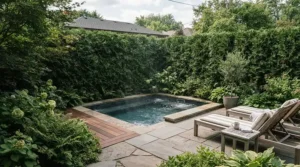
Consider three fairly typical UK buyers. First, a young family with a modest suburban garden and a budget under £1,000 — for them, the Lay-Z-Spa Hawaii HydroJet Pro boxed into a simple decking frame delivers the built-in look without the groundwork cost of a full sunken install, and its square shape fits neatly against a fence-line platform. Second, a couple renovating a garden they intend to stay in for a decade or more, with a budget stretching to £2,000-£3,000 — the WAVE Osaka or WAVE Adriatic, sat on a proper ground screw foundation from the Shire Gorilla Base kit, gives genuine permanence and better insulation without the full cost or weight of a hard-shell unit. Third, a household with a larger garden, a realistic £4,000-plus budget, and a clear intention to sink the tub flush into a purpose-built surround — here the Canadian Spa Kelowna, properly seated on a compacted MOT Type 1 sub-base and finished with CLICK-DECK tiles or full composite boards, is the combination that actually delivers a permanent garden spa rather than a portable one dressed up to look the part. In each case, the environment and frequency of use should drive the decision as much as the budget: a tub used twice a week through a British winter benefits far more from proper insulation and a hard shell than one used only for occasional summer evenings.
Problem → Solution: Common Sunken Hot Tub Installation Mistakes
A handful of problems come up repeatedly in installation guidance and forum discussions, and each has a fairly clear fix. Poor drainage around a sunken base is the most frequent complaint — the solution is a gentle fall built into the sub-base compaction, directing water away from the tub rather than pooling underneath it, which is exactly the kind of detail proper MOT Type 1 groundwork is designed to solve. Uneven settling within the first year usually traces back to inadequate compaction rather than a faulty tub, so a plate compactor used in thin layers, not one thick pour, is the fix rather than blaming the spa itself. Access problems for pump servicing come from boxing the unit in too tightly on all sides — leaving at least one removable panel or hatch solves this before it becomes an expensive callout. Electrical nuisance tripping, particularly after heavy rain, is most often down to a DIY electrical connection that wasn’t installed to the standard set out in Approved Document P of the Building Regulations, which specifically covers electrical installations in gardens and outbuildings — a registered electrician resolves this properly rather than a repeated trip-and-reset cycle. Finally, water quality problems in the first month typically stem from skipping the initial shock chlorine dose, easily solved by following the manufacturer’s day-one water treatment instructions exactly.
How to Choose a Built-In Hot Tub for Your Garden
- Confirm your groundwork budget first, not last. A tub that costs £700 can easily need £1,500 of groundwork to sit properly — decide the total project figure before falling for a specific model.
- Measure your actual usable footprint, including clearance for pump access and any surrounding decking, not just the tub’s stated dimensions.
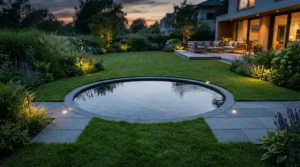
- Decide between boxed-in and genuinely sunken. Boxed-in inflatable or foam units are reversible and far cheaper; a true sunken hard-shell install is a permanent structural commitment.
- Check drainage before you dig or build anything. Standing water under a sunken base is the leading cause of long-term problems reported in UK installation guidance.
- Get quotes for electrical work early, since a registered Part P electrician is a genuine requirement, not an optional extra, for any fixed garden electrical supply.
- Weigh insulation against upfront cost. Rigid foam and hard-shell units cost more initially but consistently show lower running costs than inflatables over a full winter.
- Check local planning rules before committing to sinking anything into the ground, since permitted development rights generally cover freestanding spas but can change once engineering works are involved.
Sunken Hot Tub vs Decking-Mounted vs Freestanding: What Actually Differs
| Factor | Sunken | Decking-Mounted (Boxed) | Freestanding |
|---|---|---|---|
| Groundwork cost | Highest | Moderate | Lowest |
| Visual “built-in” effect | Strongest | Strong | Weak |
| Reversibility | Very low | Moderate | High |
| Best For | Canadian Spa Kelowna | WAVE Osaka, WAVE Adriatic | Lay-Z-Spa Hawaii HydroJet Pro |
The clearest takeaway from this comparison is that reversibility and visual impact sit at opposite ends of the same trade-off: a genuinely sunken install using something like the Canadian Spa Kelowna looks the most convincingly “built-in” precisely because it’s the hardest to undo later, while a freestanding Lay-Z-Spa Hawaii HydroJet Pro keeps every option open at the cost of never quite disappearing into the garden the way a sunken unit does. Decking-mounted setups genuinely split the difference, and for most UK gardens without an unlimited budget, that middle ground is where the sensible decision usually lands.
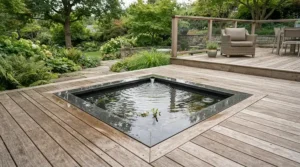
Groundwork Requirements Explained: What’s Underneath Really Matters
The phrase groundwork requirements covers more than most buyers expect before their first quote arrives. At minimum, it means a compacted sub-base — typically MOT Type 1 laid in stages and properly compacted — sitting beneath either a poured concrete pad or a raised timber frame such as the Shire Gorilla Base system. Ground conditions matter enormously here: heavy clay soils that retain water need more attention to drainage falls than free-draining sandy soil, and a structural engineer’s input becomes genuinely sensible for the heaviest hard-shell installations, particularly where the ground isn’t naturally level. Weight is the other variable buyers consistently underestimate — a filled hard-shell spa like the Canadian Spa Kelowna can weigh well over a tonne once full of water and occupants, which is an entirely different load-bearing requirement to an inflatable unit sitting on existing patio slabs. Getting this stage wrong doesn’t show up immediately; it shows up as cracking, settling or drainage problems eighteen months to two years later, by which point the fix involves lifting the decking or shell back out. Spending properly on groundwork at the outset is, in almost every case reviewed during research for this piece, cheaper than remediation after the fact.
Decking Cost and Long-Term Value for a Permanent Garden Spa
Decking cost for a built-in hot tub project varies enormously depending on approach, and it’s worth breaking down where the money actually goes rather than budgeting a single vague figure. A no-dig ground screw foundation kit covering a modest platform typically runs several hundred to around a thousand pounds, decking tiles or boards to finish the visible surface add a further sum scaling with area, and labour — if you’re not doing this yourself — can easily match or exceed the material cost on a project of any real size. Set against that upfront figure, a well-insulated, properly grounded built-in hot tub tends to have materially lower running costs than a freestanding inflatable exposed to wind on all sides, because ground and side insulation reduce the surface area losing heat to the surrounding air. Total cost of ownership over five years, then, isn’t simply the purchase price of the tub: it’s tub cost, plus groundwork, plus five winters of running costs, plus any resurfacing the decking needs. Buyers focused purely on the sticker price of the spa unit consistently under-budget for this full picture, according to the groundworks and decking guidance reviewed for this article, and it’s the single biggest source of mid-project budget overrun we found reflected across supplier advice.
Planning Permission and Safety Regulations for a UK Garden Spa
Planning permission for a hot tub is one of the more misunderstood areas of UK garden projects. In most cases, a freestanding or decking-mounted spa is treated as domestic equipment rather than a structure requiring consent, falling within permitted development rights much like garden furniture. That changes, per Planning Portal guidance, once the installation involves genuine engineering works — sinking a tub into excavated ground, for instance — or if you live in a listed building, conservation area, or a property where permitted development rights have been restricted by an Article 4 direction. Building regulations don’t normally apply to the hot tub itself, but any fixed electrical supply absolutely must meet Part P standards, and safe water management matters too: the Health and Safety Executive’s guidance on legionella in spa-pool systems explains why warm, aerated water needs consistent chemical treatment and regular testing, information that’s directly relevant to any household running a permanent garden spa rather than an occasional inflatable. None of this should put buyers off — it simply means a five-minute check with your local planning authority before groundworks begin is genuinely worth the peace of mind.
Common Mistakes When Buying a Built-In Hot Tub
The most frequent mistake is buying the tub before pricing the groundwork, which routinely leaves buyers choosing between a cheaper unit or an over-budget project halfway through. A close second is underestimating weight — checking a tub’s filled weight against what a proposed deck or sub-base is actually rated to carry avoids expensive structural surprises. Buyers also commonly skip getting a written quote from a registered Part P electrician early, assuming it can be arranged later, which frequently causes costly delays once decking is already down. Choosing a spa purely on jet count while ignoring insulation quality is another recurring pattern reflected in aggregated review sentiment — a well-insulated unit with fewer jets usually costs less to run than a heavily-jetted, poorly insulated one. Finally, several installation guides flag neglecting to check local drainage and water table conditions before excavating for a sunken install, which is precisely the kind of check that prevents the settling and standing-water problems covered earlier in this guide.
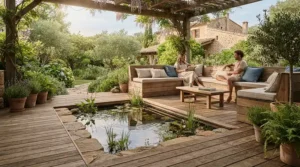
Frequently Asked Questions
❓ Do I need planning permission for a built-in hot tub in my garden?
❓ What is the typical groundwork requirement for a sunken hot tub?
❓ How much does decking cost for a hot tub installation?
❓ Can I put any hot tub on decking, or does it need to be built-in specifically?
❓ Do built-in hot tubs need an electrician for installation?
Conclusion
A built-in hot tub for garden use isn’t really one purchase — it’s two, layered together: the spa itself, and the groundwork that lets it sit properly, safely and permanently in your outdoor space. Get the balance right, and the payoff is a garden feature that looks considered rather than plonked down, with lower running costs and less faff than most people expect going in. Get it wrong — usually by underfunding the groundwork or skipping the electrical and planning checks — and the same project becomes an expensive lesson in sequencing. Whichever of the seven products above fits your garden and budget, the honest takeaway from researching this piece is consistent: spend proportionally on what’s underneath the tub, not just on the tub itself, and check the rules before you start digging.
Recommended for You
- Rotomoulded Hot Tub: 7 Best Tough Picks for UK Gardens (2026)
- Acrylic Hot Tub vs Inflatable Hot Tub: 7 Picks Compared (2026)
- Plug and Play Hot Tub: 7 Best UK Picks You’ll Love (2026)
Disclaimer: This article contains affiliate links. As an Amazon Associate, I earn from qualifying purchases. If you purchase products through these links, we may earn a small commission at no additional cost to you.
✨ Found this helpful? Share it with your friends! 💬🤗
