

In This Article
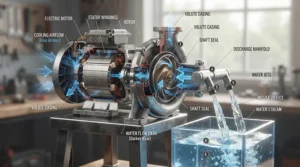
A quiet hot tub air blower is a compact fan-and-motor unit that pushes air through the air ports in your tub to make those champagne-style bubbles. It uses design tricks such as rubber motor mounts, baffled intakes and efficient motors to add fizz without adding a roar. Quieter, then, not silent.

Picture the scene. It’s 9 pm, the garden is still, the water is steaming, and you press the bubble button. What happens next decides whether you’ve bought a spa treatment or a leaf blower with a hobby. The motor whine, the rush of air and the vibration through the cabinet all add up. Over a fence on a calm evening, that sound travels further than you’d think.
This guide compares seven real blowers on their specs, their noise-reducing design and how they fit UK electrics. If you want the basics first, Hydropool’s explainer on how a hot tub blower works is a clear starting point. We then go deeper on the topics buyers ask about most: whether a variable speed hot tub air blower is realistic, what Balboa-style blowers actually are, where air induction fits in, and how to think about noise levels in a garden setting.
One honest note up front. Many of these blowers are sold mainly through spa-parts specialists, and stock on amazon.co.uk changes. Check current price and availability before you order. Every price here is an indicative range, not a quote.
Quiet Hot Tub Air Blower Comparison: The 7 Contenders at a Glance
| Product | Power & electrics | Standout quiet feature | Indicative price range | Best For |
|---|---|---|---|---|
| Air Supply Max Air 1.0HP 240V | 1HP, 240V, 2.4A | Baffled bottom air inlet | £100-£160 | Tight cabinets, tidy budgets |
| Air Supply Ultra 9000 1.0HP 240V | 1HP, 240V, 2.5A | Rubber-mounted motor | £110-£180 | Decked installs where vibration travels |
| Air Supply Ultra 9000 2.0HP 240V | 2HP, 240V | Headroom to run gently | £150-£250 | Large tubs with long air manifolds |
| Air Supply Silencer 1.5HP 240V | 1.5HP, 240V | Four-pole motor design | £150-£250 | Close-neighbour gardens |
| Air Supply Galaxy 1.0HP 240V | 1HP, 220/240V, 50/60Hz | Dual-voltage, 2″ outlet | £140-£220 | Systems with 2″ air plumbing |
| Balboa Water Genesis 1200W | 1200W | Balboa-ecosystem fit | £120-£220 | Balboa-style blowers swap-outs |
| LX APR 800 V2 | 230V, 50Hz, 880W, 4A | Gentler dual-stage fan | £120-£200 | Imported acrylic spas |
Looking at the table, the Air Supply Silencer 1.5HP 240V is the pick if neighbours are your main concern, while the Air Supply Max Air 1.0HP 240V is the sensible low-cost entry. The Balboa Water Genesis 1200W earns its place mainly when compatibility with your control system is the deciding factor. Buyers should note that a bigger motor is not automatically a quieter one, which is why the Air Supply Ultra 9000 2.0HP 240V only makes sense for tubs that genuinely need the airflow.
💬 Just one click — help others make better buying decisions too!😊
Top 7 Quiet Hot Tub Air Blowers: Expert Analysis
1. Air Supply Max Air 1.0HP 240V — compact and baffled for calmer cabinets
The headline here is the housing: its inlet sits at the bottom and forces air along a winding path, which traps noise inside the case. The manufacturer’s literature (model 2510231) lists 1HP, 240V and 2.4A, with a 1.5″ tapered outlet and a body of roughly 23 x 16.5 x 17 cm. It ships with both a four-foot AMP cord and a four-pin plug.
On paper, that compact footprint means it slots into cramped equipment bays where larger blowers won’t. The maker claims noise “as low as 65 dB” across the Max Air range, but it doesn’t state the measuring distance, so treat that as a ceiling-of-optimism figure. Based on the spec comparison, it’s a sensible match for small and mid-sized tubs with 1.5″ air plumbing.
I couldn’t find a meaningful body of independent reviews for this exact 240V variant. The wider Max Air line is a long-standing catalogue staple, but availability isn’t the same as satisfaction data, so weigh it accordingly.
Pros:
- ✅ Baffled inlet designed to trap noise
- ✅ Small footprint suits tight cabinets
- ✅ Includes AMP cord and four-pin plug
Cons:
- ❌ Independent review evidence is thin
- ❌ 1.5″ outlet limits upgrade headroom
Expect it in the low-to-mid £100s, with check current price advised. Good value for small tubs, less compelling if you need serious airflow.
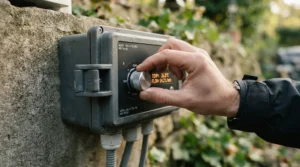
2. Air Supply Ultra 9000 1.0HP 240V — rubber-mounted motor for vibration control
What sets this apart is the unusual rubber motor mount, which isolates the motor from the housing so less vibration reaches your cabinet. The listing for model 3910231 cites 2.5A and airflow of 110 CFM at 80 inches of water column, with a redesigned intake that keeps debris out.
In practice, vibration is the sneaky half of blower noise. A buzzing motor bolted to a hollow timber base can turn the whole structure into a speaker. A rubber-isolated motor tackles that at source, which is why this model suits tubs on decking or raised platforms. The cord comes with an AMP plug, a common connection on spa packs that Air Supply says it supports, including Balboa, Brett Aqualine, Gecko and Len Gordon.
Reviews are sparse for this precise variant. A few affiliate-style roundups praise the Ultra 9000 family for quiet running, but with small review pools those are directional at best.
Pros:
- ✅ Rubber mount cuts vibration transfer
- ✅ Strong airflow for a 1HP unit
- ✅ AMP-plug cord included
Cons:
- ❌ Few verifiable independent reviews
- ❌ Still audible at full tilt
Roughly £110-£180 is a fair expectation. It’s a decent value pick where vibration, not just motor noise, is your enemy.
3. Air Supply Ultra 9000 2.0HP 240V — headroom for big tubs and gentler running
This is the muscle car of the line-up, listed by retailers as the top-of-the-range Ultra 9000. A review roundup lists model 3918220 at around 4.5A on 240V, so check the data plate before you size your supply.
Here’s the counter-intuitive bit: more power can help you be quieter. A strong blower throttled back to a gentle setting can run calmer than a small blower straining flat out. But there are two catches. First, a retailer guide notes that the maximum blower size for 1.5″ PVC pipe is 1HP, so a 2HP unit needs 2″ plumbing. Second, a spa-parts guide warns against increasing horsepower just to chase stronger bubbles.
Reviews for this variant are scarce, so I’d treat any “silent” claim sceptically until you’ve checked the ratings for your own configuration.
Pros:
- ✅ Ample airflow for six-to-eight-seat tubs
- ✅ Rubber-mounted motor design
- ✅ Useful headroom if speed is controlled
Cons:
- ❌ Needs larger-bore air plumbing
- ❌ Overkill for small tubs
Expect the mid-£100s to low £200s. It’s good value only if your tub truly needs the airflow.
4. Air Supply Silencer 1.5HP 240V — four-pole motor for the noise-conscious
The tag says it all: the Silencer range is Air Supply’s quiet-first line. A review roundup lists model 6316220F with a four-pole motor, which is more efficient and less noisy than a standard two-pole design. The wider Silencer family is pitched at both indoor and outdoor mounting.
What that means in practice is a lower, smoother hum instead of a high-pitched whine. High-pitched noise carries further and irritates more, so the character of the sound matters as much as the decibel figure. That’s why this is my analytical pick for gardens with neighbours close by.
On reviews, a US retailer’s page for a different Silencer variant (2HP, 120V) shows about a dozen ratings, mostly top marks. One reviewer reported hot air softening and bending PVC pipe on first use. That’s a different voltage and size, but it’s a useful reminder to check pipe specification and run times.
Pros:
- ✅ Four-pole motor reduces noise and whine
- ✅ Suits indoor or outdoor mounting
- ✅ Efficient 1.5HP middle ground
Cons:
- ❌ Warm air output needs suitable pipework
- ❌ Priced above basic 1HP units
Think mid-£100s to low £200s. Worth the premium if noise is your priority.
5. Air Supply Galaxy 1.0HP 240V — dual-voltage with a 2″ outlet
The twist here is the 2″ outlet combined with dual-voltage 220/240V, 50/60Hz ratings. The retailer’s listing for model 6510231 shows around 3.0A, though other text on the page mentions 4.0A, so confirm the data plate. The 50Hz rating matters because it matches UK mains.
A 2″ outlet means smoother air delivery on tubs plumbed for it, and that tends to mean less turbulence noise in the pipe. If your air plumbing is 1.5″, you’d need an adaptor, which I’d avoid, since changing pipe sizes can introduce whistle and restriction.
I couldn’t verify independent customer reviews for the Galaxy, so I’m not going to characterise owner satisfaction. That’s an honest gap in the public data.
Pros:
- ✅ UK-compatible 50Hz rating
- ✅ 2″ outlet suits larger air manifolds
- ✅ Dual-voltage flexibility
Cons:
- ❌ Listing amperage is inconsistent
- ❌ Little verified review data
Indicatively £140-£220. Solid value if your tub already has 2″ air plumbing, otherwise skip.

6. Balboa Water Genesis 1200W — the safe choice for Balboa-style systems
Balboa is the name behind a huge share of hot tub systems. One US spa-parts retailer states that Balboa produces an estimated 70% of hot tub systems worldwide, which I’d treat as a retailer claim rather than audited fact. Model G120-2NN-S is listed for compatible Balboa spa applications.
The wattage is the useful number. On the usual conversion, 1200W is roughly 1.6HP, so this sits between the 1HP and 2HP Air Supply units. The real selling point is fit: matching connector, control and airflow expectations to a system designed around Balboa components makes the difference between plug-and-play and head-scratching.
No verified independent review pool turned up, so the case for this model rests on compatibility rather than proven acoustic superiority.
Pros:
- ✅ Strong compatibility with Balboa systems
- ✅ Mid-range power for most tubs
- ✅ Easier parts sourcing
Cons:
- ❌ No independent noise data found
- ❌ Overpowered for very small tubs
Expect roughly £120-£220. A good-value fit if you’re replacing like-for-like.
7. LX APR 800 V2 — heated air from a dual-stage fan
The distinctive feature is warmth: a 700W motor paired with a 180W heater element, rated 230V, 50Hz, 880W and 4A. The dual-stage fan is described as suited to depths up to 1000mm. The retailer positions it for many imported spas, which covers a lot of UK acrylic tubs.
Heated air matters more than it sounds. In winter, cold air bubbles chill the water, so a gentle heated stream feels more comfortable. A similar heated blower, the Spatex SX 800, limits its heat to about 40°C and performs best with the right back-pressure.
Independent reviews weren’t verifiable, so treat suitability as spec-based. Also note the heater adds electrical load and complexity.
Pros:
- ✅ Heated air for winter comfort
- ✅ Matches UK 230V 50Hz supply
- ✅ Suited to many imported spas
Cons:
- ❌ Extra heater load and complexity
- ❌ Lower airflow than 1.5HP-plus units
About £120-£200. Good value for imported-spa owners, less so for those chasing maximum bubbles.
✨ Don’t Miss These Exclusive Deals!
🔍 Take your hot tub evenings to the next level with these carefully selected blowers. Click on any highlighted product to check current pricing and availability. A quieter blower will help you create the calm, bubbly soak your family will love!
How to Install a Quiet Hot Tub Air Blower for the Quietest Result
Installation is where a decent quiet hot tub air blower becomes a great one. Always have the electrical work done by a qualified electrician, because wiring near water isn’t a DIY gamble.
- Isolate the vibration. Mount the unit on rubber pads or the supplied feet, never rigidly onto hollow decking or panel work.
- Don’t seal it in a box. Spa-blower patents note that these motors are cooled by the air flowing through them, so a fully enclosed, unventilated cupboard invites overheating.
- Protect against backflow. A spa-parts guide stresses preventing water reaching the blower. Use an air loop above the waterline, or a check valve, as your tub’s manual advises.
- Match the pipe. Remember the 1HP limit for 1.5″ PVC pipe. Fit the right bore rather than forcing a larger blower on a smaller pipe.
- Use flexible connectors to stop vibration travelling along rigid plumbing.
In the first 30 days, listen for rattles, check pipework isn’t warm to the point of softening, and keep runs short. One retailer notes that its domestic blowers are intended to switch off after a maximum 20-minute run, and that brush wear isn’t covered by warranty. That’s a useful rule of thumb: bubbles in bursts, not all night.

Real-World Scenarios: Which Quiet Hot Tub Air Blower for Which Garden?
The terraced-house family. A six-seater sits eight feet from the neighbour’s bedroom wall, used four evenings a week on a £200 blower budget. The Air Supply Silencer 1.5HP 240V is the logical match: lower-pitched sound, efficient motor, and enough headroom to run gently. Pair it with a “bubbles before 9 pm” house rule.
The decked-garden couple. A four-seat tub on a raised timber deck, used twice a week, budget around £150. Here vibration is the real foe, so the Air Supply Ultra 9000 1.0HP 240V with its rubber-mounted motor is the sensible pick, plus isolation pads under the tub’s equipment bay.
The imported-spa owner. A five-seat acrylic tub with a 230V spa pack from an online importer, weekend use, and a £150 budget. The LX APR 800 V2 fits the electrical profile and adds winter-friendly warmth, though you’ll sacrifice some raw airflow.
The Balboa-system owner. If your tub runs a Balboa pack and original parts, the Balboa Water Genesis 1200W keeps things simple. Compatibility beats cleverness when you’re replacing a failed unit on a Sunday afternoon.
Problem → Solution: Fixing a Loud Hot Tub Air Blower
Problem: a buzz or rattle. Usually vibration, not the motor. Add rubber isolation, check the mounting screws and make sure pipes aren’t touching the cabinet. The Air Supply Ultra 9000 1.0HP 240V was designed with exactly this in mind.
Problem: the bubbles are too fierce. A common complaint, and the cause is often an oversized unit. If your controller can’t slow the blower, an air-control valve or a shorter run time can tame it. Davey’s own notes suggest an air-switch controller can give a single-speed blower three steps.
Problem: warm, uncomfortable air. Blowers heat the air they move, and a retailer review of one Silencer variant mentioned softened PVC. Check pipe specification and don’t run for long stretches.
Problem: uneven bubbles. A blower-design patent notes that jets furthest from the blower can be choked by water pressure, especially at reduced speed. If remote jets die when you slow the blower down, you’ve found the limit of speed control.
Problem: rising whine. A tired motor or clogged intake. Clean the intake, check for debris, and consider a replacement like the Air Supply Max Air 1.0HP 240V if the unit is elderly.
How to Choose a Quiet Hot Tub Air Blower
- Match the electrics. UK mains is 230V at 50Hz. Many US listings are 120V, which is useless here, so confirm voltage and plug type (AMP or mini JJ).
- Match the plumbing. Check your air line bore before buying, because blower size and pipe size need to agree.
- Don’t chase horsepower. A spa-parts guide advises using the original specification rather than upsizing for stronger bubbles.
- Look for quiet design. Rubber mounts, baffled intakes and four-pole motors are tangible features, unlike vague “super quiet” labels.
- Decide how you’ll control speed. More on that below, because the answer depends on your control system.
- Check thermal protection and warranty. Features like integral thermal cut-outs earn their keep over years.
- Think about location. A blower in the equipment bay is quieter than one under a thin panel.
For wider context on buying a tub itself, the Which? Trusted Traders guide to buying the best hot tub covers costs, installation and what to ask retailers.
Variable Speed Hot Tub Air Blower: What’s Real and What’s Marketing
Here’s the awkward truth: a true variable speed hot tub air blower is rarer than the phrase suggests. Davey’s SpaPower Davey SpaPower 5602 variable-speed model is listed as obsolete, with the retailer noting Davey discontinued variable-speed blowers. Another retailer observes that no approved blower currently on the market offers old-style three-speed control, recommending a three-speed air switch controller instead.
There’s a physics reason. A blower-patent history explains that motor speed was once controlled with rheostats, but the motor is self-cooled by its own airflow, so slowing it can cause overheating. That’s why you should never wire a household dimmer to a spa blower.
So how do you get speed control? Three routes: a spa pack that supports stepped blower control, an air-switch controller feeding a single-speed blower, or an air-control valve to throttle bubbles. Check your pack’s manual before buying anything marketed as a variable speed hot tub air blower. Remember the patent’s warning too: slower blowing can starve the farthest jets.
Balboa-Style Blowers: What the Label Means and What Fits
“Balboa-style blowers” is a shorthand rather than a standard. It generally means a blower whose electrical connection, power rating and air outlet suit systems built around Balboa spa packs. Air Supply states its blowers are used with Balboa, Brett Aqualine, Gecko and Len Gordon packs, which shows how interchangeable the ecosystem has become.
Where you can get caught out is connectors. Retailers sell otherwise identical blowers with either an AMP plug or a mini J&J plug. The wrong one means an adaptor or a rewire, so read the listing twice.
Then there’s installation. The Balboa Quiet Flo 1HP is described by one retailer as designed to be fitted inside the spa cabinet directly to a portable-style spa, and not recommended for outdoor use or distances above 2m from the spa. That’s a reminder that Balboa-style blowers aren’t universal. If you’re swapping like-for-like, the Balboa Water Genesis 1200W is the obvious route. If you’re upgrading for noise, the Air Supply Silencer 1.5HP 240V is often compatible with the same pack types.
Air Induction vs Blower: Which Gives Better Bubbles Quietly?
Air induction is the quieter cousin. Instead of a motor forcing air in, your water pump’s flow draws air through the jets via the venturi effect, or through an air-control valve, with no blower involved at all. A spa-parts guide describes the air-control valve route clearly: it lets air be drawn into certain jets without using a blower.
| Factor | Blower-fed bubbles | Air induction (venturi) |
|---|---|---|
| Noise | Adds motor and airflow noise | No extra motor |
| Bubble feel | Fine, champagne fizz | Coarser, jet-driven mix |
| Heat loss | Cooler air pushed in | Less air volume |
| Running cost | Extra electrical load | Included in pump use |
| Best For | Fizz lovers, Air Supply Silencer 1.5HP 240V owners | Quiet-first minimalists |
The table shows air induction wins on silence and simplicity, while a blower wins on the gentle, spread-out sparkle. If you adore that champagne feel, a quiet blower such as the Air Supply Max Air 1.0HP 240V is the best compromise. If you mainly want hydrotherapy, you could happily live with air induction alone.
Noise Levels in a Garden Setting: Decibels, Decking and Neighbours
Noise levels in a garden setting behave differently from noise in a showroom. Outdoors, there are no soft furnishings to absorb sound, so hard surfaces such as patios, fences and house walls bounce it around. Decking can amplify equipment noise, which is why vibration isolation matters.
A few handy principles. In open air, every doubling of distance cuts the level by roughly 6 dB, so moving the equipment bay away from the boundary helps more than you’d expect. The Max Air line’s claimed 65 dB is roughly conversation level, but since the measuring distance isn’t stated, assume your real-world figure is higher close up.
Legally, there is no neat decibel cut-off. Councils assess whether noise is a statutory nuisance case by case, and GOV.UK’s guidance on complaining about noise to the council says you should try talking to the neighbour first, then explains what happens if a council issues a noise abatement order. In practice, the real offenders are usually voices and music. But a droning blower at 11 pm doesn’t help. Use short bubble bursts, earlier in the evening, and keep the equipment away from bedroom windows.
Features That Actually Matter (And Those That Don’t)
Matter: noise-reducing construction (rubber mounts, baffled intakes, four-pole motors), thermal overload protection, the right plug and voltage, and a warranty from a supplier who’ll still exist in three years. The Waterco / Dega 1200W is a good example of sensible engineering, with an integral thermal cut-out and electronic noise suppression listed in its features, though it’s sold mainly in Australia.
Don’t matter as much as marketing implies: peak horsepower, headline “up to 25% more air” claims (which compare against the maker’s own older motors), and the word “silent”. Nothing with a fan and motor is silent.
Situational: heated air. It’s lovely in winter on a LX APR 800 V2, but pointless in July. Fit is also situational: an unbeatable blower that won’t connect to your tub is an expensive paperweight.
Common Mistakes When Buying a Quiet Hot Tub Air Blower
The classic blunder is buying American 120V stock for a British 230V tub. It looks identical on the page and is useless at the socket.
Another is upsizing. A bigger blower feels like insurance but can produce hot air, harsher noise and plumbing stress, and the spa-parts guidance says to resist it.
Third, ignoring mounting. A quiet motor screwed to a resonant panel can still drone.
Fourth, trusting a single decibel claim. Without the measuring distance, a figure like 65 dB is marketing, not measurement.
Fifth, skipping the control question. If you’re hoping for a variable speed hot tub air blower, confirm your pack supports it before you buy. Otherwise plan for an air-control valve or an air-switch controller.
Last, forgetting backflow protection. Water in a blower is an expensive lesson. Fit the loop or check valve your manual specifies.
Long-Term Cost & Maintenance of a Quiet Hot Tub Air Blower
Blowers are cheap to run when used sensibly. A 1HP unit draws roughly 0.75kW, so a 20-minute session uses about 0.25kWh. At an illustrative 28p per kWh (check your own tariff), that’s around 7p. Cheap fun.
The hidden cost is heat. An aerated surface loses heat faster than calm water, as Euro Spa & Pool News’ discussion of BISHTA running costs notes. It also reports that, in BISHTA members’ experience, a well-insulated acrylic tub used for half an hour a day typically costs £1.50 to £2.50 a day to run. So long bubble sessions nudge that figure upwards.
Maintenance is simple: keep intakes clear, check mounts every few months and listen for changes. Brushed motors wear, so don’t treat the blower as an all-night feature.
| Tier | Indicative range | Product | Best For |
|---|---|---|---|
| Budget | £100-£160 | Air Supply Max Air 1.0HP 240V | Small tubs |
| Mid | £120-£220 | Balboa Water Genesis 1200W | Balboa-style systems |
| Premium | £150-£250 | Air Supply Silencer 1.5HP 240V | Noise-sensitive gardens |
Over the long run, the premium tier often wins on satisfaction because you stop noticing the blower. The budget tier suits occasional users, and the mid tier is the safest bet for like-for-like swaps. Remember these are indicative figures, so check current price.
Frequently Asked Questions
❓ How loud is a quiet hot tub air blower at night?
❓ Can I fit Balboa-style blowers to a non-Balboa spa pack?
❓ How long should I run a hot tub air blower for?
❓ Does a quiet hot tub air blower use much electricity?
❓ Can I slow down a loud hot tub air blower myself?
Conclusion
The best quiet hot tub air blower is the one that fits your tub, your electrics and your garden. For close neighbours, the Air Supply Silencer 1.5HP 240V is the standout on design. For decked installs, the Air Supply Ultra 9000 1.0HP 240V and its rubber mount tackle the vibration that often does the damage. The Air Supply Max Air 1.0HP 240V is the sensible budget entry, the Balboa Water Genesis 1200W suits like-for-like swaps, and the LX APR 800 V2 brings winter warmth to imported spas.
Remember the bigger lessons too. A variable speed hot tub air blower is rarer than the marketing suggests, so check your control system first. Balboa-style blowers are about connectors and compatibility as much as brand. Air induction is the quiet alternative if you can live without the fizz. And noise levels in a garden setting depend on mounting, distance and timing as much as the product on the label.
Choose carefully, install it properly, keep the bubble sessions short, and the only thing your neighbours will hear is a very faint hum.
Recommended for You
- Hot Tub Air Blower: 7 Best Replacements For UK Spas (2026)
- 1.5hp Vs 2hp Hot Tub Jet Pump: 7 Ultimate Picks (2026)
- Hot Tub Jet Pump For Strong Massage: 7 Best UK Picks (2026)
Disclaimer: This article contains affiliate links. As an Amazon Associate, I earn from qualifying purchases. If you purchase products through these links, we may earn a small commission at no additional cost to you.
✨ Found this helpful? Share it with your friends! 💬🤗
