
In This Article
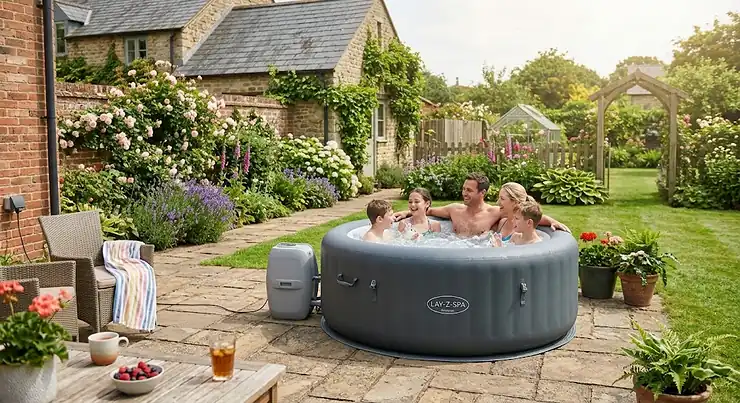
An affordable inflatable spa is a portable, air-filled hot tub that heats and filters water through a plug-in pump unit, typically seating two to six people, and it costs a fraction of a hardshell spa to buy and install. That’s the whole idea in one breath — no groundworks, no scaffolding of pipework under the patio, just a box that arrives on a pallet and a garden that, three hours later, has become considerably more interesting. Prices for a genuinely affordable inflatable spa in the UK currently span from around £250 for a compact entry-level model to roughly £650 for a premium, better-insulated option, and which end of that scale suits you depends far more on how often you’ll actually use it than on how much you’re willing to spend.
Here’s the bit nobody tells you before you buy: the sticker price is only half the story. The other half turns up quietly on your electricity bill every month, and it’s the difference between a hot tub you love and one that becomes a very expensive storage box by November. This guide digs into seven genuine models available in the UK right now, weighs them honestly against real specifications and aggregated buyer feedback, and — because “affordable” only means anything once you factor in running costs — spends proper time on the numbers that actually determine whether a cheap inflatable hot tub stays cheap once it’s plugged in.
We’ll cover the difference between a cheap inflatable hot tub and a properly affordable one (they’re not the same thing), how to time your purchase around seasonal sales, and what entry-level models can and can’t do for you. Grab a cuppa. This is the long version, and it’s worth it.
Quick Comparison Table
| Model | Price Range | Best For | Rating¹ |
|---|---|---|---|
| MSpa Lite Round | Around £250-£300 | Absolute lowest entry cost | 3.5-4/5 |
| Aoxun 208R | Around £250-£390 | Best running-cost efficiency | 4-4.5/5 |
| Lay-Z-Spa Milan AirJet Plus | Around £450-£650 | Year-round, best insulation | 4.5/5 |
¹Ratings reflect aggregated Amazon UK buyer review scores at the time of research and may vary.
Even in this shortlist of three, the spread tells its own story: the cheapest tub and the best-insulated tub sit roughly £400 apart, and that gap is almost entirely about how much heat escapes through the walls and cover rather than how many bubbles come out of the jets. If your soaking season is June to August, the gap barely matters. If you want the tub running in November, it’s the whole ballgame — which is exactly why “affordable” needs unpacking properly, not just taken at face value from the price tag.
💬 Found a model here you like the look of? Bookmark this page and compare prices before you commit — deals shift week to week.🤗
Top 7 Affordable Inflatable Spas: Expert Analysis
Before the individual write-ups, here’s the full seven side by side. Specs are drawn from manufacturer listings and cross-checked against buyer feedback gathered during research; prices are ranges, since exact Amazon pricing shifts too often to quote reliably.
| Model | Capacity | Heater | Price Range | Best For |
|---|---|---|---|---|
| MSpa Lite Round | Up to 6 | Standard PTC | £250-£300 | Tightest budget |
| Aoxun 208R | 4-6 | 1800W, high-efficiency | £250-£390 | Low running costs |
| Lay-Z-Spa Miami AirJet | 2-4 | Standard AirJet | £300-£380 | Couples, small gardens |
| Intex PureSpa Plus 85 | 6 | Fiber-Tech 3-ply | £350-£450 | Overall value |
| Lay-Z-Spa Vegas AirJet | 6 | AirJet + Freeze Shield | £380-£480 | Family all-rounder |
| Lay-Z-Spa Paris AirJet | 4-6 | AirJet + LED | £400-£450 | Evening ambience |
| Lay-Z-Spa Milan AirJet Plus | 6 | DuraPlus + WiFi pump | £450-£650 | Year-round insulation |
Reading this table left to right rather than top to bottom is the useful trick: capacity tells you who fits in, but the heater column tells you what it’ll cost to keep them warm. The Aoxun 208R and Lay-Z-Spa Milan AirJet Plus are the two standouts on efficiency despite sitting at opposite ends of the price range, because both were designed around insulation rather than just raw jet count. Everything in between is a trade-off between brand trust, feature list, and how much you’re willing to spend chasing marginal gains in comfort.
1. MSpa Lite Round — cheapest way into hot tub ownership
The clue’s in the name: the MSpa Lite Round strips things back to the essentials, and that’s precisely its appeal. It’s a six-person round tub with roughly 130-140 air jets, a straightforward control panel, and an insulated cover included in the box — no frills, no app, just inflate, fill, and heat. Set-up is genuinely quick, typically under ten minutes from box to first fill, which matters more than it sounds like it should when you’re eager to get in the water on a Friday evening. Based on the spec comparison, this is squarely an entry-level model built for people testing whether inflatable spa ownership suits their lifestyle before committing serious money to it. Reviewers consistently report that the tub delivers solid value for the price and that basic operation is straightforward, though a recurring theme in aggregated feedback is intermittent heater fault codes on some units, with owners noting mixed experiences around reliability after the first few months — worth flagging honestly rather than glossing over. Priced around £250-£300, the value verdict is simple: brilliant for a first tub or occasional summer use, less convincing if you want years of dependable service from one unit.
Pros:
- ✅ Lowest realistic entry price in this list
- ✅ Fast, tool-free inflation and setup
- ✅ Comfortable six-person capacity for the price
Cons:
- ❌ Some buyers report heater fault codes over time
- ❌ Thinner insulation means higher winter running costs
2. Aoxun 208R — best entry-level pick for running costs
What most buyers overlook about the Aoxun 208R is that “energy efficient” isn’t just marketing copy here — the manufacturer’s claimed 60% efficiency improvement over older budget tubs lines up with a genuinely well-thought-out heater and insulation package for the price bracket. The 1800W heater paired with roughly 130 air jets across a 208cm tub means it heats respectably fast without drawing the sort of current that turns your electricity meter into a slot machine. Practically, it comes with a full accessory kit — insulated cover, ground sheet, filter cartridges and an inflation hose — so there’s no surprise second order for bits you assumed were included. Reviewers note the ground sheet is a genuinely useful inclusion many rivals charge extra for, protecting both the tub base and the patio beneath it. On paper this means fewer hidden costs than most budget alternatives, and the compact footprint (available in both 185cm and 208cm diameters) means it’ll fit through a standard UK doorway if you fancy using it as an indoor plunge tub through winter, not just a garden feature. At around £250-£390 depending on size, it’s arguably the shrewdest buy in this entire list for anyone prioritising long-term running costs over brand recognition.
Pros:
- ✅ Genuinely efficient heater for the price bracket
- ✅ Complete accessory kit included, no hidden extras
- ✅ Compact enough for small gardens or indoor use
Cons:
- ❌ Less brand recognition than Lay-Z-Spa or Intex
- ❌ Smaller review pool makes long-term reliability harder to verify
3. Lay-Z-Spa Miami AirJet — best budget brand-name pick
If you want the reassurance of the UK’s best-known inflatable spa brand without paying for the flagship features, the Lay-Z-Spa Miami AirJet is where that logic lands. It’s built for two to four people, which instantly narrows its audience to couples or small households rather than anyone hoping to squeeze in the whole extended family, but within that niche it does its job without fuss. The AirJet massage system delivers a solid bubble massage, and DuraPlus material construction — Bestway’s puncture-resistant PVC — means the build quality doesn’t feel noticeably cheaper than pricier siblings in the range. Here’s what to weigh: buying into the Lay-Z-Spa ecosystem at entry level still gives you access to the brand’s widely available spare parts, accessories and online community, which genuinely matters when a filter cartridge needs replacing at 11pm on a bank holiday. Aggregated reviewer sentiment across the Lay-Z-Spa range skews strongly positive on ease of setup and reliability, reflecting the brand’s position as the most reviewed inflatable spa maker in the UK. Priced around £300-£380, it’s a sensible middle path between the ultra-budget unbranded options and the pricier six-person Lay-Z-Spa models further down this list.
Pros:
- ✅ Trusted brand with widely available spares
- ✅ Solid AirJet massage system for the price
- ✅ DuraPlus build quality feels sturdier than rivals
Cons:
- ❌ Two-to-four person capacity limits it for families
- ❌ Fewer jets than the brand’s six-person models
4. Intex PureSpa Plus 85 — best all-round value
The Intex PureSpa Plus 85 earns its “best overall” reputation the boring but reliable way: strong specs across the board rather than one standout gimmick. It seats up to six, holds around 210 gallons of water, and runs 180 bubble jets around the base — noticeably more than most rivals at this price, which translates into a fuller, more even massage rather than bubbles concentrated in one corner of the tub. The three-ply laminated Fiber-Tech construction is genuinely puncture-resistant rather than just labelled as such, and the insulated cover does a respectable job of holding heat between sessions. Based on the spec comparison, this is the tub to pick if you want the broadest capability without committing to premium pricing. Aggregated review data — around 2,100+ ratings on Amazon averaging four stars — points to easy setup instructions and reassuringly solid-feeling walls once inflated as the most repeated positives, while independent testing by consumer media has noted the jet pump can make normal conversation difficult when running at full power, a fair trade-off given the massage strength on offer. At roughly £350-£450, it undercuts the equivalent six-person Lay-Z-Spa models while matching or beating them on jet count.
Pros:
- ✅ 180 jets deliver a genuinely full-tub massage
- ✅ Puncture-resistant three-ply construction
- ✅ Strong track record across thousands of buyer reviews
Cons:
- ❌ Jet pump runs loud at full power
- ❌ Less UK-specific brand support than Lay-Z-Spa
5. Lay-Z-Spa Vegas AirJet — best mid-range family all-rounder
Ask a Lay-Z-Spa owner which model to buy and there’s a decent chance they’ll say Vegas, and the reasoning holds up under scrutiny. It seats up to six, runs 140 AirJet massage nozzles, heats to 40°C, and — critically for UK weather — includes Freeze Shield technology that stops the water freezing solid on a cold night, meaning the tub doesn’t need to be fully drained and stored the moment autumn arrives. The DuraPlus circular-beam wall construction gives it real structural rigidity once filled, which matters more than it sounds: cheaper tubs can bow and wobble under a full load of water and people, while this one holds its shape properly. What most buyers overlook here is the massage-while-heating capability — many rival tubs force you to choose between running the heater or the jets, but the Vegas can do both simultaneously, so you’re not stuck choosing between a warm soak and a proper massage on any given evening. Reviewers consistently flag the built-in drinks holders and energy-saving timer as small but genuinely useful touches. Priced around £380-£480, it sits comfortably as the family-sized sweet spot in the Lay-Z-Spa range.
Pros:
- ✅ Freeze Shield extends usable season into autumn
- ✅ Can run heater and massage jets simultaneously
- ✅ Sturdy DuraPlus construction holds shape when full
Cons:
- ❌ Six-person capacity feels snug with four adults in practice
- ❌ Pricier than the Miami for a similar brand experience
6. Lay-Z-Spa Paris AirJet — best for evening ambience
Some purchases are about function, and some are about how good the garden looks on an Instagram story at 9pm — the Lay-Z-Spa Paris AirJet leans hard into the second category without sacrificing much of the first. Alongside the expected 140-strong AirJet massage system and Freeze Shield protection, it adds a built-in LED light system that cycles through seven colours via remote control, turning an ordinary soak into something that feels genuinely occasion-worthy on a Friday night. Reviewers note this isn’t the cheapest way into a Lay-Z-Spa, but it isn’t marketed as a first step into ownership either — it’s a treat-yourself upgrade for people who already know they enjoy hot tub life and want the sensory extras. Honest analysis says the lighter-coloured exterior shell shows dirt and staining more visibly than darker rivals, which is a genuinely practical downside worth knowing before you commit to a lifestyle of garden cleaning on top of water maintenance. Aggregated buyer feedback also flags that the pump runs audibly at full power, since this model skips the brand’s quieter pump technology found in premium siblings. At around £400-£450, it’s priced for people who’ve already decided ambience is worth paying for.
Pros:
- ✅ Seven-colour LED light system for evening soaks
- ✅ Full 140-jet AirJet massage with Freeze Shield
- ✅ Strong DuraPlus build quality throughout
Cons:
- ❌ Light-coloured shell shows dirt more easily
- ❌ Noticeably louder pump than premium Lay-Z-Spa models
7. Lay-Z-Spa Milan AirJet Plus — best for year-round, low running costs
This is the model to buy if “affordable” means total cost of ownership rather than just the number on the price tag. The Lay-Z-Spa Milan AirJet Plus sits at the top of this list on price, but what most buyers overlook is that it’s frequently the cheapest tub here to actually run, because DuraPlus material combined with an upgraded freeze-guard insulation system means less heat bleeds out overnight — and heat loss, not jet count, is what drives your electricity bill. It seats six, runs 140 Airjet massage nozzles, and includes Bestway’s Wi-Fi-enabled pump, letting you fire up the heater from your phone on the drive home so the water’s ready by the time you’re through the door. The spec sheet won’t tell you this, but user reports suggest the insulation genuinely holds temperature noticeably longer overnight than the brand’s standard-tier tubs, which is exactly the difference that matters once October arrives. Reviewers across the Lay-Z-Spa range consistently rate the app control and insulation as the standout reasons to pay the premium over cheaper siblings. At roughly £450-£650, it’s the most expensive tub on this list to buy, and — for anyone planning to use it across autumn and winter rather than just June to August — plausibly the cheapest one to own over a full year.
Pros:
- ✅ Best-in-range insulation reduces winter running costs
- ✅ WiFi app control for remote heating
- ✅ Handles simultaneous heating and massage smoothly
Cons:
- ❌ Highest upfront price of any model here
- ❌ Overkill if you only plan to use it in summer
How to Choose an Affordable Inflatable Spa
The short answer: match capacity to your actual household, prioritise insulation over jet count if you want year-round use, and treat the accessory kit as part of the real price. Here’s the fuller reasoning, broken into seven practical steps.
- Start with real capacity, not marketed capacity. A “six-person” tub is comfortable for four adults in practice — buy one size up from what you think you need if space allows.
- Weigh insulation before jets. More air jets feels exciting in the showroom photos, but insulation quality is what actually determines your running costs across the year.
- Check what’s included in the box. Cover, filters, ground sheet and pump hose vary wildly between listings — a cheaper headline price with a thin accessory list can end up costing more once you buy the missing bits separately.
- Confirm your outdoor power setup first. If you don’t already have a weatherproof, RCD-protected outdoor socket, budget for that before you budget for the tub itself.
- Decide your season honestly. Summer-only use makes almost any budget tub a good buy; year-round ambitions justify spending more on a better-insulated model like the Milan.
- Factor in your water source and softening needs. Hard water areas benefit from tubs with built-in treatment systems, reducing scale build-up on the heater element over time.
- Read the accessory and filter cost separately from the tub price. Ongoing filter cartridges and chemicals are a genuine running cost that rarely appears on the box.
Cheap Inflatable Hot Tub vs Hardshell Spa: What’s the Real Difference?
The phrase cheap inflatable hot tub gets used loosely, often lumping genuinely capable budget models in with flimsy, unbranded sub-£200 tubs that give the whole category a bad name. It’s worth separating the two before comparing inflatables against hardshell spas properly, because “cheap” and “affordable” aren’t quite synonyms here — a cheap inflatable hot tub can be a false economy if the walls are too thin to hold heat, while an affordable one, like several on this list, is simply a well-specified tub sold without the overheads of a permanent installation.
| Factor | Inflatable Spa | Hardshell Spa |
|---|---|---|
| Upfront cost | £250-£650 | £3,000-£10,000+ |
| Installation | Plug-and-play, DIY | Professional, often notifiable |
| Insulation | Moderate to good | Excellent |
| Lifespan | 2-6 years typical | 10-20 years typical |
| Portability | Fully portable, deflates for storage | Permanent fixture |
The gap in lifespan is the number that should give budget-focused buyers pause: a hardshell spa costing ten times more might genuinely work out cheaper per year of use if you’re certain you’ll want a hot tub for the next decade. For anyone less certain — renters, people who move house every few years, or simply those who want to try hot tub ownership without a five-figure commitment — an inflatable spa remains the more sensible entry point, provided expectations about longevity are realistic from the outset. According to general background on hot tub design and history, the category has always split roughly along these lines between portable and fixed installations, and inflatable models are simply the modern, more affordable evolution of the portable side.
💬 Weighing up inflatable versus hardshell? Compare a couple of the models above side by side before deciding — the right answer depends entirely on how long you’ll keep it.
Entry-Level Models: What First-Time Buyers Should Know
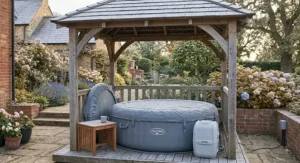
Entry-level models exist for a reason, and it isn’t just to hit a lower price point on a comparison chart. They’re genuinely the sensible starting point for anyone who has never owned a hot tub and isn’t yet sure how much use they’ll get out of one. The MSpa Lite Round and the smaller Aoxun 208R both sit firmly in this category, and the honest advice is to treat your first tub as a two-year trial rather than a decade-long commitment.
What entry-level models sacrifice is mostly insulation and pump refinement, not core function — you’ll still get a genuinely hot, genuinely bubbly soak, just with a slightly higher electricity draw to get there and hold it. The trade-off is worth it if it means the difference between trying inflatable spa ownership this summer versus saving for another year toward a premium model. First-timers should also budget mentally, if not financially, for a learning curve around water chemistry: chlorine or bromine dosing, pH balancing and filter changes are the same regardless of which tub you buy, and nobody enjoys their first cloudy-water surprise. Start simple, get comfortable with the maintenance rhythm, then decide whether to upgrade.
Running Costs on a Budget: The Real Numbers
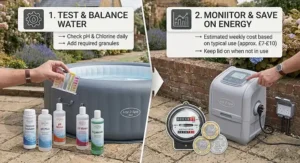
This is the section that separates a genuinely affordable inflatable spa from one that quietly costs a fortune. Under the current Ofgem price cap for Direct Debit customers, UK households pay around 26p per kilowatt hour for electricity, and an inflatable spa heater typically draws somewhere between 1,500W and 2,200W while actively heating. Run that heater for, say, six hours to bring a cold fill up to temperature, and you’re looking at roughly £2.30-£3.40 in electricity for that single heat-up — before ongoing maintenance heating is even factored in.
| Scenario | Approx. Weekly Running Cost |
|---|---|
| Summer use, cover always on, 2-3 soaks/week | £4-£8 |
| Autumn use, cover always on, 2-3 soaks/week | £8-£15 |
| Winter use, cover left off between soaks | £20-£35+ |
The pattern in that table matters more than any single number: the cover is doing most of the financial heavy lifting, not the heater’s wattage. A tub with better insulation, like the Aoxun 208R or the Lay-Z-Spa Milan AirJet Plus, loses heat more slowly between uses, meaning the pump spends less time playing catch-up and your weekly bill stays closer to the lower end of each range regardless of season. Skimping on the cover, or buying a tub with a thin, poorly fitted one, is the single most common way an affordable inflatable spa turns into an expensive one.
Budget Hot Tub Deals: How to Actually Save Money
Finding genuine budget hot tub deals takes a bit more patience than searching “cheap inflatable spa” and clicking the first result, but the savings are real if you know where to look. Amazon Warehouse listings — open-box or lightly damaged packaging units sold at a discount — are worth checking for every model on this list before buying new, since inflatable spas are bulky enough that box damage during transit is common and rarely affects the product inside. Manufacturer refurbished listings, particularly from Bestway (Lay-Z-Spa’s parent company), often carry the same warranty terms as new stock at a meaningfully lower price.
It’s also worth knowing your consumer rights before you buy on any sort of sale or clearance listing, since a discounted price doesn’t reduce your legal protection if a unit arrives faulty. As consumer rights guidance on returning goods makes clear, faulty items purchased on sale carry exactly the same refund, repair or replacement rights as full-price ones. Bundle deals — tub plus cover, chemical starter kit and steps included — are usually genuine savings versus buying separately, but always tot up the individual component prices first to check the bundle discount is real rather than just a repackaged full-price offer.
✨ Grab the Deal While It Lasts!
🔍 Prices on inflatable spas shift constantly with stock levels and seasonal demand. Check current pricing on any of the seven models above before you decide, and set a personal budget ceiling so you’re not tempted upward once you start browsing accessories too!
Seasonal Sales: When to Buy for the Lowest Price
Timing an inflatable spa purchase around seasonal sales can meaningfully change what you pay, and the pattern is fairly predictable year to year. Late summer, roughly August through September, is when retailers start discounting garden and outdoor leisure stock to clear space for autumn ranges — demand has dropped from its June-July peak, but the tubs themselves are exactly as good, so this is consistently one of the strongest windows for genuine price cuts. Black Friday and the following Cyber Monday period, in late November, is the other major opportunity, though stock of the most popular sizes can sell out quickly once the discounts land.
Counter-intuitively, buying in the depths of winter — January and February — can also turn up decent budget hot tub deals, simply because demand is at its lowest and retailers are keen to shift remaining stock before the spring restock. The one time to actively avoid buying at full price is May through July, when demand peaks alongside the first genuinely warm weekends of the UK summer and retailers have little incentive to discount. If your purchase timing is flexible, patience through late summer or the Black Friday window is worth considerably more than chasing the “cheapest” individual listing on any given day.
Common Mistakes When Buying an Affordable Inflatable Spa
Even sensible buyers trip over the same handful of pitfalls repeatedly, and most of them are avoidable with a bit of forward planning rather than more spending.
- Underestimating the water bill, not just the electricity bill. Filling a six-person tub uses several hundred litres, and refilling it every few weeks for hygiene reasons adds up on a water meter.
- Ignoring the base surface. Placing a tub on grass or gravel without a proper ground sheet risks punctures and uneven settling, which strains seams over time.
- Skipping the outdoor socket question until delivery day. Realising too late that there’s no RCD-protected outdoor socket nearby is one of the most common and easily avoidable setup delays.
- Buying on jet count alone. A tub with more jets but worse insulation can end up costing more to run than a better-insulated model with fewer bubbles.
- Forgetting ongoing costs entirely. Filters, chemicals and the electricity itself typically add up to more than the tub’s purchase price across a couple of years of regular use.
Real-World Scenarios: Who Should Buy Which Tub
The couple in a terraced house with a small patio: limited space and a two-person household point straight toward the Lay-Z-Spa Miami AirJet — compact footprint, sensible price, no wasted capacity sitting unused.
The family of four wanting weekend use through most of the year: capacity and freeze protection both matter here, making the Lay-Z-Spa Vegas AirJet the sensible mid-range pick, with the Lay-Z-Spa Milan AirJet Plus worth the extra spend if winter use is genuinely on the cards.
The budget-conscious first-timer testing the waters, literally: the MSpa Lite Round or Aoxun 208R make the most sense — low upfront risk, decent core function, and no guilt if it turns out inflatable spa ownership isn’t for you after all.
The renter or frequent mover: portability trumps everything else, and the Aoxun 208R‘s compact deflated size and doorway-friendly dimensions make it genuinely practical to take from one property to the next.
Practical Setup & Your First 30 Days
Getting an affordable inflatable spa from delivery box to first soak properly, without early mistakes, makes a real difference to how long it lasts. Start by choosing a flat, debris-free base — concrete, decking or a dedicated hot tub pad all work, but always add the ground sheet even on smooth surfaces, since UV exposure and minor grit both shorten a tub’s life over time. Inflate fully before filling with water; an underinflated tub loses structural rigidity once weighted down, which stresses the seams.
During the first 30 days, expect to balance water chemistry more frequently than you will later on, since a brand-new fill needs its pH and sanitiser levels dialled in from scratch. Run the filter pump daily, even on days you’re not soaking, since stagnant water encourages bacterial growth far faster than circulating water. A common early mistake is leaving the cover off between uses in the first week out of enthusiasm for showing it off to visitors — resist the temptation, since that’s precisely when most of the “why is my bill higher than expected” surprises originate. Finally, note your model’s recommended water-change interval, typically every 4-6 weeks for moderate use, and stick to it rather than waiting for visibly cloudy water as your cue.
Safety, Electrics & Regulations for UK Gardens
This is the section that matters most and gets skipped most often. Every inflatable spa on this list is designed to run from a standard UK 13A socket, but that doesn’t mean any old socket will do. The manufacturer guidance across every major brand is consistent: always use a weatherproof, RCD-protected outdoor socket, never an ordinary extension lead trailed out from an indoor plug. A Residual Current Device cuts power within milliseconds if it detects a fault, and given that you’re combining mains electricity with a large volume of water sat in your garden, that protection is not optional.
If you don’t currently have a suitable outdoor socket, installing one properly is genuinely worth paying an electrician for rather than attempting as a DIY job, since new circuit work of this kind typically falls under notifiable electrical work in England and Wales. Full detail on what counts as notifiable is set out in Approved Document P of the Building Regulations, and getting this step right at the outset avoids both safety risk and paperwork headaches if you ever come to sell the house. Beyond electrics, basic water hygiene matters too: shower before entering, don’t use the tub while unwell, and keep sanitiser levels within the manufacturer’s recommended range rather than letting them drift — inflatable spas hold a relatively small water volume that heats up fast, which means bacteria can multiply quickly if maintenance slips.
Features That Actually Matter (And Those That Don’t)
Marketing copy on inflatable spa listings loves to lead with jet count, and it’s the single most overrated spec on the box. Beyond roughly 120-140 jets, additional numbers make little perceptible difference to the actual massage experience — insulation quality, heater wattage relative to tub size, and cover fit matter far more to your day-to-day experience and your annual running cost.
Features genuinely worth paying for include Freeze Shield or equivalent anti-freeze technology if you want any realistic chance of autumn or winter use, and a properly insulated, well-fitted cover, since heat loss through a loose-fitting lid is one of the biggest hidden running costs across every model in this category. WiFi app control, as found on the Lay-Z-Spa Milan AirJet Plus, is a genuine convenience rather than a gimmick, letting you pre-heat before you’re even home. LED lighting, on the other hand, is purely a lifestyle preference with zero functional benefit — lovely on the Lay-Z-Spa Paris AirJet, entirely skippable if budget is tight. Hard water treatment systems matter considerably more in the South and East of England than in naturally soft-water regions, so check your local water hardness before deciding whether that feature justifies its price premium.
Frequently Asked Questions
❓ What is the cheapest affordable inflatable spa in the UK?
❓ How much does it cost to run an inflatable hot tub per week?
❓ Do I need an electrician to install an inflatable spa?
❓ How long do inflatable hot tubs typically last?
❓ Is an inflatable spa worth it for occasional summer use only?
Conclusion
An affordable inflatable spa can genuinely deliver the hot tub experience without the hardshell price tag or the permanent commitment, but “affordable” only holds true once you look past the box price and into the running costs, accessory list and season you actually plan to use it in. Budget models like the MSpa Lite Round and Aoxun 208R are honest, sensible starting points for anyone testing the waters. Mid-range picks like the Intex PureSpa Plus 85 and Lay-Z-Spa Vegas AirJet strike a fair balance for families wanting reliable year-round-ish use. And if winter soaking is genuinely part of the plan, the Lay-Z-Spa Milan AirJet Plus earns its higher price tag back through lower running costs alone.
Whichever you land on, the same rules apply: get the outdoor electrics right from day one, respect the cover, keep on top of water chemistry, and buy for the season you’ll actually use it, not the one you imagine you might. Do that, and a genuinely affordable inflatable spa stays affordable for years, not just for the first electricity bill.
✨ Ready to Find Your Perfect Hot Tub?
🔍 Take the guesswork out of garden relaxation. Compare current pricing on any of the seven models above, factor in your realistic running costs, and pick the tub that matches how — and when — you’ll actually use it!
Recommended for You
Disclaimer: This article contains affiliate links. As an Amazon Associate, I earn from qualifying purchases. If you purchase products through these links, we may earn a small commission at no additional cost to you.
✨ Found this helpful? Share it with your friends! 💬🤗
